
Bees Suddenly Around Your House? Five Likely Causes
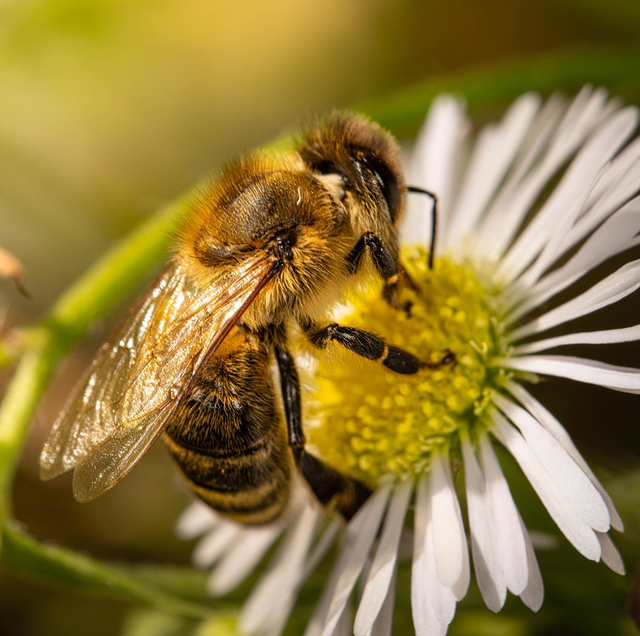
One week your yard has almost no bees in it. The next, you're seeing ten or twenty every time you step outside, and nothing on the property itself has changed. That gap between what you're seeing and what you can explain is what sends most people straight to the worst-case guess: there must be a colony hiding somewhere in the house. Most of the time that's not it. A sudden jump in bee traffic almost always traces back to something happening near your property rather than in it, and working through the likely causes in order, from most common to least, usually settles the question without anyone needing to open a wall.
A Water Source Nearby in Dry Conditions
Bees need water constantly, not just to drink but to cool the hive and to thin honey that's stored too thick to use. Foragers are sent out to find a reliable source, and once they find one, they return to it again and again rather than searching out a new spot every trip. The reliable sources on an ordinary property are specific: the tile line of a pool rather than its open middle, the pad of an evaporative cooler, an air conditioner's condensate line or drain pan, a drip emitter that runs on a timer at the same hour daily, the saucer under a potted plant.
This need spikes in hot, dry stretches, but it isn't only a summer pattern. Even in cooler months, a colony still has to dilute stored honey to feed brood, so a dependable water source keeps drawing foragers year-round; it just draws more of them when the weather is hot, and everything else nearby has dried up.
How to tell: Watch where the bees actually land. If they're clustering at the rim of a pool, the saucer under a potted plant, or one particular drip point and returning to that same spot rather than spreading across the yard, water is very likely the answer.
Something Newly in Bloom Close By
Bees forage wherever nectar and pollen are richest that week, and a single tree, hedge, or vine coming into bloom nearby, even on a neighbor's property, can pull a large number of foragers through your yard if it sits along their route. The heavy pullers are the ones that flower all at once rather than a few blooms at a time: citrus, rosemary, oleander, palo verde, and a mesquite in full flower. Each holds a short, intense window, so the traffic surge tracks it exactly, building as the flowers open, peaking for a week or two, and tapering off once the petals drop.
Most regions get more than one bloom push a year, often a spring flush and a second one after a good rain, so this cause can show up more than once on the same property without meaning anything has changed structurally.
How to tell: The bees are focused on flowers, not on the house. They move plant to plant rather than making repeat trips to one gap in the siding or eave, and the numbers rise and fall with what's actually blooming.
A Neighboring Colony That Was Recently Disturbed
A colony living nearby, in a tree hollow, a utility box, or a structure a few properties over, can have its foraging pattern disrupted by construction noise, tree trimming, fence work, or a pest treatment aimed at it. The colony itself usually doesn't relocate from a disturbance alone, but its foragers scatter and behave less predictably for several days to a couple of weeks while things settle.
How to tell: The increase in bees arrived abruptly and lines up with something you can recall happening nearby in the past week or two. It tends to level off on its own within a couple of weeks as the disturbed colony re-establishes its normal foraging pattern, without anything on your property being the trigger.
Note the date the increase started and check it again in two weeks. A disturbed neighboring colony's foragers settle back into their normal pattern inside that window, while traffic caused by a colony on your own property holds steady or grows instead.
More Bees in the Air This Time of Year
Colonies reproduce on their own schedule tied to local bloom and temperature cycles, and during that stretch, the overall number of bees flying through a neighborhood rises for everyone, not just one property. New colonies get established, existing ones forage harder to build up stores, and the background level of bee activity climbs for a period each year before settling back down. Exactly when that window falls shifts by climate, so it isn't tied to a single season everywhere, but it happens somewhere in the calendar wherever bees are established.
How to tell: This one shows up as a general, area-wide increase rather than something concentrated on your house specifically. Neighbors mention seeing more bees, too; there's no single nearby colony you or anyone else can point to, and the increase isn't tied to a single feature of your property, like a water source or a bloom.
An Actual Colony You Have Not Found Yet
This is the explanation most people reach for first, and it's real, but it's also the least common of the five once the others are ruled out. Established colonies get into gaps far smaller than most people expect: an eave return, a wall void behind a block wall, an irrigation valve box, a meter enclosure, and once inside, they can go unnoticed for weeks because the entry point itself is small and often out of sight.
How to tell: What separates this from the first four causes is where the activity is fixed. Water and bloom traffic moves around the yard and tracks conditions; a colony's traffic holds on one gap on the building itself and does not fade when the bloom ends, or the pool gets covered. That's the test, and it takes a week or two of ordinary noticing rather than any close inspection.
Leave a steady structural entrance alone once you find one. Sealing or spraying it drives the colony toward whatever other route the wall offers, removes no comb, and leaves the wax scent that draws the next swarm.
Frequently Asked Questions
Yes, though the shift is in timing more than in volume. In extreme heat, foraging concentrates toward the cooler ends of the day and thins through the middle of the afternoon, and strong winds suppress flight outright because they make a loaded return trip inefficient. A quiet scorching afternoon is foragers waiting out conditions rather than the situation resolving.
Bees need a place to land without drowning, so they concentrate on edges, skimmer baskets, and shallow, textured surfaces rather than open water. A pool's tile line or a fountain's rim gives them exactly that, which is why a handful of visible landing points can account for most of the bees you're seeing.
Yes. A forager that finds a reliable spot communicates its location to nestmates through movement patterns back at the colony, so the number of bees visiting a good source tends to climb over several days as more workers get recruited to it, then drop off once the source dries up or a bloom ends.
Not in the way people expect. Foraging bees at a flower have nothing behind them to defend, so mowing or blowing near a blooming hedge mostly displaces them rather than provoking them. What changes the answer is equipment run against a structure with a colony in it: vibration carried through a wall, a fascia board, or a block fence reaches the colony directly, and that is a different stimulus from noise moving through open air. If yard work near a specific spot on the building reliably brings out bees, that spot is worth looking at.
Not reliably, and it may not tell you anything about your property at all. A single healthy colony can field foragers by the hundreds in an hour during a strong bloom, and a colony's foragers routinely range a couple of miles, so the bees in your yard may be working from a nest several streets away. The count tells you about the bloom rather than about the nest.
Yes, in the opposite direction from what you'd expect. A hard rain can temporarily flood or wash out low, ground-level water and forage spots bees were already using, pushing foragers toward whatever dry, accessible water is still available nearby, a pool, a fountain, a hose bib, for a few days until conditions even out.
When Two Causes Stack
The awkward cases are the ones with more than one answer running at once. A bloom opening near a newly filled bird bath reads as a single big surge when it is really two smaller ones laid on top of each other, and the giveaway is that they end on different schedules: the water traffic holds as long as the water does, while the bloom traffic drops off with the petals. Watching for a week or two separates them in a way that one afternoon's count never will. Work the four ordinary causes in order first, and let whichever one is still running after the others have faded be the one you act on.
Get a locate before anyone cuts or patches anything — a technician finds where a colony is actually living and relocates it when a beekeeper can take it. Russell Pest Control serves the Phoenix Valley. Call (623) 469-7583.
