
Home Pest Inspection in Phoenix, AZ: Know Before You Buy, Sell, or Worry
Buying, selling, or just want a straight assessment? Call, a real person answers, and we'll tell you honestly what kind of inspection your situation needs.
Pre-Purchase - Pre-Listing - Written Reports.
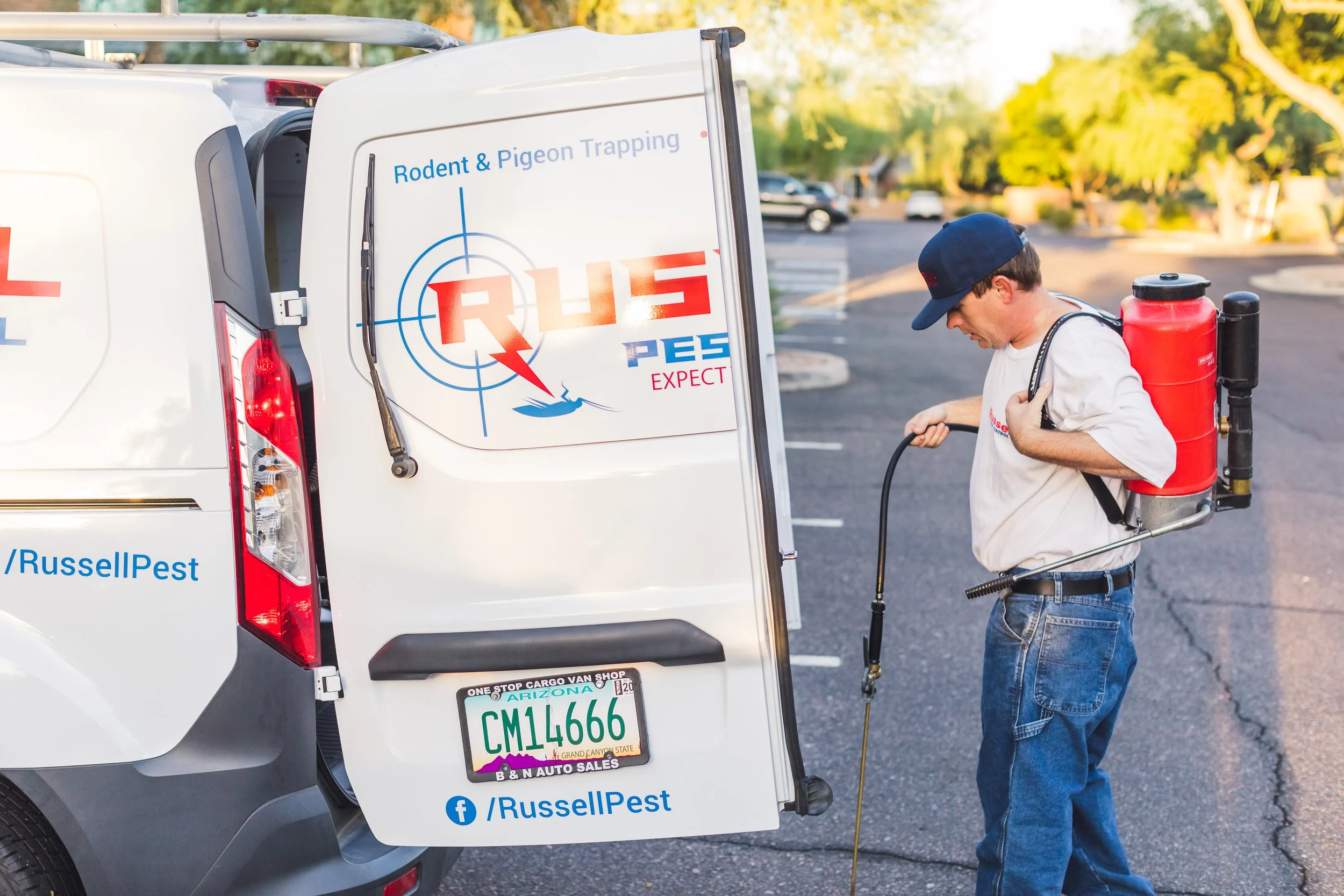
A home is the biggest purchase most people make, and pests are exactly the kind of expensive surprise a buyer shouldn't inherit blind: a roof rat colony in the attic, a scorpion-friendly property, a bee hive in a wall, conditions inviting trouble. Russell Pest Control has inspected Phoenix Valley homes since 1996, and our pest inspections do what a general home inspection often glosses over: a thorough, knowledgeable pest assessment with a written report you can act on, whether you're buying, selling, or just want to know what you're living with.
For real estate transactions, that report is leverage and peace of mind: buyers learn what they're getting and what it'll cost to address, sellers get ahead of problems before they derail a deal, and realtors get a trusted partner who turns reports around when escrow can't wait. For homeowners, a seasonal or pre-problem inspection catches pest pressure early, when it's cheap to handle instead of expensive to fix. Thirty years of reading Valley properties means we see the signs that an untrained eye walks past.
Thirty Years of Pattern Recognition
Real Estate Ready
Pre-purchase and pre-listing inspections with written reports, fast enough for escrow timelines.
30 Years of Pattern Recognition
We see the rodent sign, scorpion conditions, and bee risk, and an untrained eye walks right past.
Buyer's Leverage
Know what you're inheriting and what it costs before you sign, not after you move in.
Seller's Head Start
Catch and address pest issues before they surprise a buyer and stall your deal.
Honest About Termites
We're not termite-licensed; we flag conditions and refer a licensed specialist for the official termite report.
Free Where It Counts
General pest inspections are free; specialty attic or hive searches may carry a fee, waived if you hire us.
Three Reasons a Pest Inspection Pays for Itself
A General Home Inspection Isn't a Pest Inspection
Standard home inspectors are generalists checking roofs, plumbing, and electrical. They'll note obvious infestations, but they're not trained to read the subtle pest signs a specialist catches: the early rodent runway in the insulation, the scorpion-friendly conditions, the bee scout activity at a weep hole, the moisture pattern that means silverfish or roaches are coming. A dedicated pest inspection by people who control these pests for a living sees what the general public misses. For a major purchase, that knowledge gap is worth closing.
Pest Problems Are Cheaper to Find Than to Inherit
Discovering a rodent infestation, a wall hive, or scorpion pressure before you buy lets you negotiate, plan, or walk; discovering it after you've moved in makes it your bill, in full, with the moving boxes still packed. The inspection cost is trivial next to a five-figure attic remediation or a structural surprise, and for sellers, getting ahead of a problem prevents the last-minute renegotiation that costs far more than addressing it early. Information before the transaction is leverage; information after it is just an expense.
The Written Report Is the Deliverable
A verbal "looks fine" is worthless in a transaction: what buyers, sellers, and realtors need is documentation: what was found, where, the conditions present, and recommendations, in writing. Our inspection reports give you something to act on, negotiate with, or file, and we turn them around on the timelines real estate actually runs on. The report is the product, and a thorough, honest, well-documented one is exactly what a high-stakes decision deserves.
What a Russell Pest Inspection Examines
Inspection Types
- Pre-purchase inspection: for buyers, before closing
- Pre-listing inspection: for sellers, to get ahead of surprises
- Seasonal/preventive inspection: for current homeowners
- Targeted inspection: investigating a specific suspected problem
- Snowbird/vacation-home check: for properties sitting empty
What We Examine
- Attic and roofline: rodent sign, entry points, nesting, droppings
- Interior: kitchens, baths, closets, garages for pest activity and conditions
- Exterior: foundation, weep screeds, block walls, entry points
- Landscaping and yard: scorpion conditions, harborage, irrigation/moisture
- Bee and wasp activity: flight lines, nests, void colonies
- Moisture conditions: the driver behind silverfish, roaches, and more
- Conducive conditions: what's inviting future problems
What the Report Tells You
- What pests or pest signs were found, and where
- Active problems vs. conducive conditions vs. all clear
- Severity and what it means for the property
- Recommendations and what addressing it involves
- Documentation suitable for a real estate file
- Honest flags on anything outside our scope (e.g., termite, referred to a licensed specialist)
Schedule, Inspect, Report: the Process
Tell Us the Situation
Buying, selling, problem-investigating, or seasonal? The situation sets the scope and the timeline: a transaction inspection runs on escrow's clock, and a homeowner checks on yours. We'll tell you honestly which inspection fits and whether yours is the free general assessment or a specialty search with a fee.
The Thorough Walk-Through
We inspect the property top to bottom with thirty years of Valley pattern recognition: attic, interior, exterior, landscaping, and the moisture and entry conditions that predict future problems. We're reading for both active pests and the conditions inviting them, because conducive conditions are what a buyer most wants to know about.
Document Everything
Findings get documented as we go (locations, severity, photos where useful), building toward the written report rather than relying on memory. For transactions, especially, the documentation is the point, and we capture it to a standard that a real estate file can use.
The Written Report
You receive a clear written report: what was found, where, what it means, and what we'd recommend, turned around on the timeline your situation needs. It's written to be understood by a buyer, a seller, or a realtor, not buried in jargon, and it states plainly where something falls outside our scope.
Honest Scope on Termites
Straight talk: We are not licensed for termites, so our inspection includes a visual assessment that flags termite-conducive conditions or visible signs, but it is not a substitute for an official termite (WDIIR) report. If termites are a concern (and in a transaction, they often are), we'll refer you to a licensed termite specialist for that specific report. We tell you this up front so there's no gap in your due diligence.
The Path Forward
If the inspection finds something, you get options, not pressure: what it would take to address it, whether it's urgent, and how it fits your transaction or budget. And if you choose us for the work, any specialty inspection fee is waived. The inspection's job is to inform your decision honestly, whatever you decide.
Findings Become Fixes
Rodents, bees, and entry points found in the inspection route are routed straight to the services that handle them.
The Prevention Roadmap
Sealing the entry points the inspection flags is usually the highest-value next step.
What does an Inspection Cost?
Free General, Honest Specialty
- General pest inspections for service are free; if you want a treatment quote, the assessment that produces it costs nothing
- Specialty searches (attic rodent search, bee-hive locate) may carry a fee, and it's waived when you hire us for the resulting work
- Real estate transaction inspections with written reports scoped by the property and timeline
- Realtor and repeat-client arrangements available; ask about transaction turnaround
- No initial fees, no contracts, quote holds
Free vs. Paid, Plainly
A routine look to scope general pest service is free, and a deep specialty search (climbing an attic, locating a hidden hive, producing a documented transaction report) is real work that may carry a fee, refunded into the job if you hire us. You'll always know before anyone climbs a ladder.
No initial fees. No contracts. Inspections scheduled around your escrow deadline.
Schedule an InspectionWhen the Inspection Changed the Decision
The Attic That the Buyers Couldn't See
The inspections that earn their fee a hundred times over are the ones that find what a walk-through hides: a roof rat colony established in an attic the buyers never climbed into, with the contamination and entry points that come with it. Caught before closing, it became a negotiation and a plan; caught after, it would have been a five-figure surprise with the moving truck still in the driveway. That's the entire case for a pest inspection on a Valley home: the attic doesn't volunteer its secrets, but we go look.
The Seller Who Got Ahead of It
A pre-listing inspection turned up bee activity at a wall and some rodent sign, issues that, discovered by the buyer's inspector mid-escrow, would have triggered a panicked renegotiation or a blown deal. Addressed before listing, they became non-issues, and the sale went smoothly. Sellers who inspect first control the timeline and the narrative instead of reacting to a buyer's bad news. Getting ahead of it is almost always cheaper than getting caught by it.
The Realtor's Reliable Partner
Real estate runs on deadlines, and the agents who work with us come back because we turn around honest, documented inspections on the timeline escrow demands: no dragging, no vague verbals, no surprises that detonate a closing. Being the pest company a realtor trusts with their client and their deadline is a relationship built over decades, and it's exactly the reliability this part of the business requires. When the clock's running, dependable is the whole product.
Specialist Inspection vs. a General Once-Over
| What Matters | Russell Pest Inspection | General Home Inspector / Skip It |
|---|---|---|
| Pest expertise | 30 years controlling these exact pests | Generalist, or no inspection |
| What's caught | Subtle rodent, scorpion, bee sign | Only the obvious |
| The report | Pest-specific, documented, actionable | A line item, or nothing |
| Transaction timing | Turned around for escrow | N/A |
| Conducive conditions | Flagged before they're a problem | Often missed |
| Termite honesty | Flagged + referred to licensed specialist | Vague or skipped |
| Free where appropriate | General assessment free; specialty fee waived if hired | Charges regardless |
| After the report | Options, not pressure | You're on your own |
| Local knowledge | Valley-specific pest patterns | Generic |
| Who answers | Owner or office, same day | Call center/nobody |
What a Phoenix Home Inspection Has to Account For
Attics Hide the Valley's Worst Surprises
Roof rats, packrats, and the damage they cause concentrate in attics and rooflines that buyers rarely inspect, and general inspectors give a passing glance, which makes the attic the single most important space in a Valley pest inspection. We go up and look, because the difference between a clean attic and an established colony is invisible from the living room and enormous on the repair bill.
Scorpion Conditions Are a Buyable Risk
A property's scorpion risk is largely structural and environmental: block walls, landscaping, proximity to desert and mountains, sealing condition, and it's exactly the kind of thing a buyer wants to know before falling in love with a house. We assess scorpion-conducive conditions so buyers understand what kind of pest pressure (and prevention cost) comes with the property. It's information that's far better to have before the offer than after the first sting.
Bee Risk Lives in the Walls
A wall void that's hosted bees before (or that has the openings to host them next spring) is a meaningful finding on a Valley home, given how serious an established Africanized colony can be. Scout-bee activity and old hive evidence are signs we know to look for, and flagging them protects a buyer from a dangerous and expensive surprise after move-in. The wall doesn't advertise its history; we read it.
Vacant and Seasonal Homes Deteriorate Quietly
Foreclosures, rentals between tenants, and snowbird homes that sit empty are prime targets for pests that establish in the absence of people, and they're exactly the properties that change hands. An inspection on a home that's been sitting catches what moved in while nobody was watching, which is some of the highest-value inspection work in the Valley's transaction market.
The Transaction Clock Is Real
Real estate inspections live and die by escrow timelines, and a pest inspector who can't deliver on schedule is worse than useless; they jeopardize the deal. Our thirty years of local presence mean we can schedule and turn around transaction inspections on the timeline the deal requires, which is precisely why realtors keep our number. Speed without sacrificing thoroughness is the transaction standard, and it's the one we hold.
Older and Newer Homes Hide Different Things
The Valley's housing eras each have signature inspection points: older block homes with their entry gaps and decades of accumulated harborage, newer builds with their specific weak points, and any deferred-maintenance pest issues. Knowing what to scrutinize on a 1960s ranch versus a 2015 build is the kind of pattern knowledge that comes from inspecting and treating Valley homes across every era for thirty years. We inspect the house in front of us, informed by the thousands behind it.
What Thirty Years of Reading Properties Teaches
Conducive Conditions: Predicting the Problem
The most valuable thing an experienced inspector provides isn't just finding current pests, it's reading the conditions that predict future ones: the moisture that means roaches and silverfish are coming, the entry gaps that will admit scorpions, the landscaping and block walls that will harbor them, the roofline that rodents will exploit. A buyer who knows the conducive conditions knows the true cost and character of the property, not just its current state. Predicting the problem before it manifests is the expertise that separates a real pest inspection from a quick look around.
Reading Signs That the Untrained Eye Misses
Pest evidence is a language: droppings that identify species and age, rub marks that show travel routes, gnaw patterns, frass, shed skins, flight lines, stains, and fluency comes only from controlling these pests for decades. Where a general inspector sees a clean attic, we read the faint runway in the insulation; where a buyer sees a tidy yard, we see the scorpion-friendly block wall and the bee-scout activity at the weep hole. The signs are there for anyone; reading them is the trade.
The Honest Termite Handoff
Integrity in inspection means being precise about scope: we are not termite-licensed, so we flag visible termite signs and conducive conditions, but we do not and cannot issue the official termite report a transaction may require. Rather than blur that line (or worse, pretend our inspection covers termites), we state it plainly and refer a licensed termite specialist. A buyer's due diligence has a termite-shaped hole if nobody says this, and we'd rather close the gap honestly than leave a false impression of completeness.
Documentation That Holds Up
A real estate inspection report has to be clear, specific, and defensible: vague language helps no one and can create liability. We document findings with specificity (what, where, how severe), distinguish active problems from conducive conditions from all-clear, and write recommendations a buyer or seller can actually act on. The report is a decision document in a high-stakes transaction, and treating it with that seriousness (rather than as a formality) is what makes it useful to the people relying on it.
Inspecting for the Whole Pest Picture
Because we control the full range of Valley pests, our inspection sees the whole board: not just rodents or just one specialty, but scorpions, bees, roaches, rodents, moisture pests, and the conditions feeding all of them, as an integrated picture. A single-specialty inspector or a generalist sees fragments; we see how the property's conditions, structure, and surroundings combine into its actual pest profile. That comprehensive read is what a buyer most needs and what thirty years of treating every Valley pest uniquely enables.
Turning the Inspection Into Prevention
The best outcome of an inspection often isn't treatment, it's a prevention plan that addresses the conducive conditions before they become infestations: sealing the entry points, managing the moisture, cutting the harborage. For a new homeowner, especially, an inspection that ends with a clear, prioritized prevention roadmap is worth far more than a clean bill that ignores the conditions building toward next year's problem. We inspect not just to report what is, but to help you get ahead of what's coming.
Inspection Questions, Answered Straight
Do I Need a Pest Inspection if I'm Getting a Home Inspection?
They're different. A general home inspector is a generalist who notes obvious infestations but isn't trained to read subtle pest signs or conducive conditions. A dedicated pest inspection by people who control these pests for a living catches what the general pass misses, and on a major purchase in a pest-heavy region like the Valley, that gap is worth closing. Many buyers do both.
Is the Inspection Free?
A general pest inspection to scope service is free. A specialty search, climbing into an attic for a rodent assessment, locating a hidden beehive, or producing a documented transaction report is real work that may carry a fee, and that fee is waived if you hire us for the resulting work. We'll tell you which kind yours is up front, before anyone climbs anything.
Does the Inspection Include Termites?
We flag visible termite signs and termite-conducive conditions, but we are not termite-licensed, so our inspection is not an official termite (WDIIR) report. If termites are a concern (and in a transaction, they often are), we'll refer you to a licensed termite specialist for that specific report. We're upfront about this, so your due diligence is complete.
How Fast Can You Turn Around a Report for My Closing?
We schedule and turn around transaction inspections on escrow's timeline; it's a core part of the work, and realtors rely on us for exactly that. Tell us your deadline when you call, and we'll tell you honestly whether we can meet it (we usually can).
I'm selling. Why Would I Inspect Before Listing?
To control the timeline and avoid surprises. A pest problem discovered by the buyer's inspector mid-escrow can trigger a panicked renegotiation or a blown deal; the same problem found and addressed before listing becomes a non-issue. Sellers who inspect first almost always come out ahead of those who get caught by the buyer's findings.
What if the Inspection Finds a Problem?
You get options and honest information, not pressure: what was found, how serious it is, what addressing it involves, and how it fits your transaction or budget. You decide what to do with that; the inspection's job is to inform the decision. And if you hire us for the work, any specialty inspection fee is waived.
Can You Inspect a Vacant or Snowbird Property?
Yes, empty homes are exactly where pests establish unnoticed, so inspecting a property that's been sitting (a foreclosure, a between-tenants rental, a seasonal home) is some of the most valuable inspection work we do. We catch what moved in while nobody was watching.
What Exactly Do You Inspect?
The whole pest picture: attic and roofline (rodent sign and entries), interior (kitchens, baths, garage), exterior (foundation, weep screeds, block walls, entry points), landscaping and moisture conditions, and any bee or wasp activity on the structure. We're reading for both active pests and the conducive conditions that predict future ones; the second half is what most inspections skip.
How Long Does a Pest Inspection Take?
Most homes run about an hour, scaled by size, attic access, and what we find. A transaction inspection with a written report takes the time it takes to be defensible. We'll give you the expected window when you book, and the report follows on your timeline, not weeks later.
Will You Tell Me How to Prevent Future Problems?
Yes, that's often the most useful part. Beyond reporting current findings, we identify the conducive conditions and give you a prioritized prevention roadmap: what to seal, what moisture to fix, and what harborage to cut. Getting ahead of the conditions is worth more than a clean report that ignores what's building toward next year's problem.
Know What You're Dealing With: Before You Sign
A thorough, knowledgeable pest inspection, a written report you can act on, an honest scope of what's outside our license, and a turnaround that the transaction can live with, from the family that's read Valley properties since 1996. Whether you're buying, selling, or just want the truth about your home, the next step is one call.
Expect the best from Russell Pest, and have a bug-free day.
Hours
- Monday-Friday: 8:00 AM - 5:00 PM
- Same-day & emergency service available, after hours and weekends, owner-answered
- Transaction inspections are scheduled around your escrow timeline
Inspection Service Area
Phoenix (HQ), North Mountain Village, Camelback East, Moon Valley, Ahwatukee, Scottsdale and North Scottsdale, Paradise Valley, Cave Creek, Carefree, Fountain Hills, Mesa, Gilbert, Chandler, Tempe, Glendale, Peoria, Surprise, Goodyear, and Avondale.