
Pest Control in Ahwatukee, Phoenix: On South Mountain's Doorstep
The oldest Elliot Road original to the newest Foothills Reserve street, one call gets Steve, Steven Jr., or the office. Never a call center.
The World's Largest Cul-de-Sac, Wrapped in Desert.
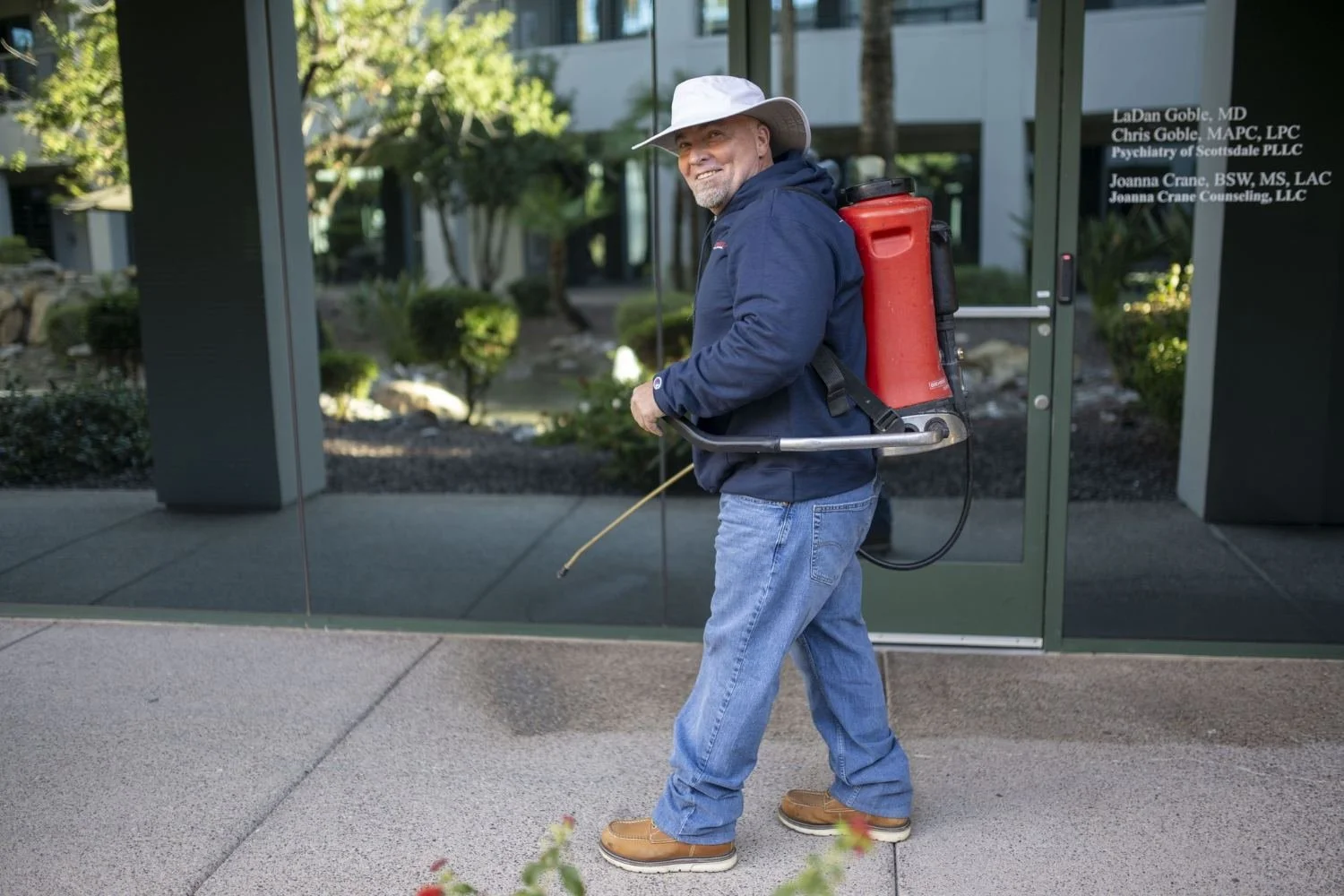
Ahwatukee (a name popularly translated as "house of dreams") is Phoenix's southernmost village and its most distinctive geography: more than eighty thousand residents tucked between South Mountain on the north, I-10 on the east, and the Gila River Indian Community on the west and south. Locals call it the world's largest cul-de-sac, and the joke carries a pest truth: this is a community wrapped on three sides by open desert, with one of the nation's largest municipally managed parks (more than sixteen thousand acres of it) as the back fence. Russell Pest Control has been working on preserve-edge streets like these since 1996.
The village stacks fifty years of housing on one service map: the original 1970s sections near 50th Street and Elliot, the master-planned waves of Mountain Park Ranch, The Foothills, and Foothills Club West, Lakewood's man-made shorelines, and the foothills streets along Desert Foothills Parkway where the washes run straight from preserve to patio. Scorpion country, all of it, and scorpion work is the work we're known for. Same technician every visit, kid-and-pet-conscious defaults, honest answers everywhere.
Preserve-Edge Streets - 1970s Originals to Foothills New - Lakewood's Lakes
Preserve-Edge Specialists
Sixteen thousand acres of South Mountain resupply scorpions continuously, edge homes run programs, and programs are what we build.
Black Light Proof
Our $125/hour after-dark UV search shows you Ahwatukee's scorpion population glowing, then we treat what we mapped.
Era-Reading Inspectors
A 1973 original and a 1990s Foothills build fail in different places; the inspection names the vintage first.
Lake-Community Fluent
Lakewood's shorelines run real water math; shoreline-conscious treatment is how they get serviced properly.
Wash-Line Smart
The foothills washes are pest highways from preserve to patio, we treat the corridor, not just the yard.
A Real Person Answers
Owner or office, every call. After hours, the line reaches Steve's cell.
Three Things About Ahwatukee Every Homeowner Should Know
The Preserve Isn't Scenery: It's a Supply Line
South Mountain Park/Preserve runs more than sixteen thousand acres across three mountain ranges, one of the largest municipally managed parks in the nation, and it forms Ahwatukee's entire northern border. Preserve edges work the same way everywhere in the Valley, just bigger here: permanent protected desert continuously resupplying bark scorpions, packrats, and the insect base that feeds them, with every wash a delivery route into the neighborhoods below. The preserve is why people choose Ahwatukee, and it's why edge streets run programs instead of one-time sprays.
The World's Largest Cul-de-Sac Concentrates Everything
Boxed by the mountain, the freeway, and the Gila River Indian Community's open land, Ahwatukee is a community surrounded by desert on three sides, which means desert pressure arrives from nearly every compass point, not just the preserve line. It also means the village is genuinely its own place: one service area, tight internal routes, and a community where reputation travels street by street. We've kept ours clean since 1996, one yard at a time.
Fifty Years of Housing Share One Scorpion
Ahwatukee started in the early 1970s: the first model homes opened near 50th Street and Elliot in 1973, and built outward through the '80s and '90s as Mountain Park Ranch, The Foothills, Lakewood, and Foothills Club West filled the map toward the preserve. A 1973 original carries a half-century of settling: vintage weep details, additions meeting old slab, door hardware replaced twice, and painted over three times. Every one of those seams is a 1/16-inch invitation. The era-read sealing inspection finds the vintage failure points a new-build checklist never looks at, and the owners who do the work describe the same thing afterward: the house just goes quiet. It's the highest-leverage move in the oldest streets of the village.
What Ahwatukee Calls Us About, and Where
Ahwatukee's calls track its edges and its eras: scorpions off the preserve and the washes, packrats at the rim, water pests at Lakewood, and sealing work across fifty years of construction. Wherever yours falls, the list below is the territory we work in daily.
The Ahwatukee Pest Lineup
- Scorpions: the preserve edge, the wash lines, and block walls village-wide; our signature work here
- Packrats: preserve rims, pool equipment, engine bays
- Roof rats: mature canopy in the older sections, and every fruit tree they can reach
- Crickets: the scorpion food supply, thickest where irrigation meets desert edge
- Ants: irrigated lawns, lake-community soil, and every moisture line
- Black widows: block walls, play structures, pool gear
- Roaches: sewer and desert species surging post-monsoon; older plumbing in the 1970s sections
- Bees and wasps: spring swarms; nests in block walls and irrigation boxes
- Mosquitoes: Lakewood's shorelines and over-watered turf
- Weeds: HOA gravel yards on two desert weed seasons, plus dormant-land borders
- Termites: identified honestly and referred to a licensed termite specialist (we don't treat termites)
Ahwatukee Communities We Serve
- The original 1970s sections near 50th Street and Elliot
- Mountain Park Ranch: the master-planned core
- The Foothills and Foothills Reserve: the preserve-adjacent west
- Foothills Club West: including homes backing the long-dormant course land
- Lakewood: the lake community at Chandler Boulevard and 40th Street
- The Ahwatukee Country Club neighborhoods
- The Desert Foothills Parkway corridor (85044 - 85045 - 85048)
Property Types We Know Cold
- Preserve-edge and wash-adjacent homes
- 1970s originals with fifty years of settling
- 1980s-90s master-planned tracts entering or passing the hardware window
- Lakefront and lake-community homes (Lakewood)
- Golf-adjacent lots (Ahwatukee Country Club)
- Commercial: the village's retail corridors, offices, and HOA common areas
Our Services in Ahwatukee
Every Russell service runs in Ahwatukee: here's the map, tuned to what the village actually needs.
Scorpion Control, Black Light Search & Sealing
The village headliner. Targeted treatment built for preserve-edge pressure, cricket (food-supply) control, $125/hour after-dark UV mapping that shows you the population glowing on your own block walls, and sealing to the 1/16-inch standard that actually keeps them out.
View ServiceHome Seal
Fifty years of construction means fifty years of gaps: era-read sealing from the 1973 originals' vintage failure points to the '90s tracts' stripped sweeps and open expansion joints. $600-$2,500 typical, 1-2 year warranty.
View ServiceGeneral Pest Control Plans
Monthly, bi-monthly, or quarterly: preserve-edge and wash-adjacent lots usually run heavier cadences, and the price is set on the sizing call before anyone rolls a truck. No contracts, no initial fees, 15-day re-treat warranty doing the promising.
View ServiceRodent Control & Exclusion
Packrats at the rim and roof rats in the older canopy: trap-first removal so nothing dies in your walls, cleanup included in scope, plus roofline screening that makes it permanent.
View ServiceView Fence & Snake Screening
Built for exactly this village: the view-fence yards where Ahwatukee meets the preserve and the washes. Keep the South Mountain view, lose the ground-level visitors.
View ServiceMosquito Control (In2Care)
Lakewood's shorelines and the village's over-loved turf carry real season math: stations that recruit mosquitoes to poison their own breeding sites, compounding all season where fogging fades in days.
View ServiceBee & Wasp
Spring swarms off the preserve and colonies in block walls: relocation when a beekeeper can take them, safety-first removal when they can't. Swarm photo triage by text is free.
View ServiceWeed Control
Pre-emergent timed to both desert weed seasons: HOA gravel yards stay clean, dormant-land borders stay held, and the violation letters stop coming.
View ServiceCommercial Pest Control
The village's retail corridors, offices, and HOA common areas: documented programs with same-day tenant work orders, our commercial signature.
View ServiceWhat Ahwatukee Service Costs
The Standing Russell Promises, Priced for the Village
- Plans priced per property: edge exposure, wash adjacency, lot size, and era set the number
- No initial fees, no contracts, 15-day re-treat warranty, the standing Russell promises
- Published anchors: Black Light Scorpion Search $125/hour - Home Seal typically $600-$2,500
- Tight internal routes in the world's largest cul-de-sac: genuine same-day availability
- Commercial scoped per facility on simple 30-day terms
Get an Ahwatukee Quote in One Call
A real person scopes it on the phone: price and expectations set before the first visit, honored every time.
No initial fees. No contracts. We know Ahwatukee's cul-de-sac maze and preserve-edge streets, so you get real same-day scheduling and an honest quote in one call.
Call or Text (623) 780-9099Three Ahwatukee Stories That Repeat Every Year
The Black Light Reveal
A Foothills family swears they have "a scorpion or two", then the UV lights come out after dark, and the block wall tells the truth, glowing at intervals all the way to the wash. It's the most clarifying ninety minutes in Valley pest control: the population mapped, the entry routes identified, the treatment plan drawn from evidence instead of guesswork. Preserve-edge Ahwatukee is exactly where the black light earns its keep, and exactly why we offer it as its own service instead of a sales gimmick. See what the mountain is sending; then stop it.
The 1973 Original's Half-Century of Doors
An owner in the original sections near Elliot has lived with "a few sealed-up spots" for decades, but a 1970s home carries fifty years of settling: vintage weep details and addition seams on the old stock, trailing options custom packages missed. Every one of those seams is a 1/16-inch invitation. The era-read sealing inspection finds the vintage failure points a new-build checklist never looks at, and the owners who do the work describe the same thing afterward: the house just goes quiet. It's the highest-leverage move in the oldest streets of the village.
The Dormant-Border Hold
Homes backing the long-dormant Club West course land live with an unusual neighbor: a hundred-plus acres of unirrigated, unmanaged ground gone back toward desert. Dry, open acreage breeds exactly what you'd expect: weeds seeding the fence line, rodents working the brush, the insect base that follows both, and the border homes carry the pressure. Our answer is the hold: perimeter program, rodent monitoring and exclusion at the property line, pre-emergent on the fence-line weeds, and honest expectations about what a border like that means. The neighbors' land isn't yours to fix; your fence line is, and held fence lines stay quiet.
Russell in Ahwatukee vs. the National Chains
| What Ahwatukee Needs | Russell Pest Control | National Chains |
|---|---|---|
| Preserve-edge scorpions | Programs built for continuous resupply | One-time sprays that reload |
| Proof, not promises | $125/hr UV mapping: see the population glow | Take-our-word-for-it treatment |
| Fifty years of housing | Era-read sealing, vintage-specific | One checklist for every house |
| Wash-line pressure | Corridor-aware treatment to the preserve line | Yard-only spray |
| Lakewood's water math | Shoreline-conscious, In2Care stations | Fog cycles that fade in days |
| Dormant-land borders | Fence-line holds: monitoring + exclusion + weeds | No playbook at all |
| Who answers | Owner or office, after hours, Steve's cell | National call center |
| Contracts | None residential; 30-day commercial | 12-month lock-ins |
| First-visit fee | Never had one | $150-$400 "initial service" |
| Community memory | Same routes, same families, since 1996 | Whoever the route sends |
The Conditions That Drive Ahwatukee's Pest Pressure
Sixteen Thousand Acres of Preserve on the North Fence
South Mountain Park/Preserve: more than sixteen thousand acres across three mountain ranges, one of the largest municipally managed parks in the nation, forms the village's entire northern border, from the Dobbins Lookout switchbacks down to the foothills streets. Protected desert at that scale is a permanent pest reservoir: bark scorpions, packrats, snakes, and the insect food web that sustains them, resupplying the edge continuously. The preserve never gets developed, which means the pressure never retires, and edge homes that accept that run programs that genuinely work.
Desert on Three Sides
The famous cul-de-sac geography: mountain north, freeway east, Gila River Indian Community open land west and south, means Ahwatukee's desert boundary is nearly the whole perimeter. Communities like Foothills Reserve and the 85045 streets sit with open desert past the back wall, and the wash network drains the whole southern preserve face straight through the village's nicest sections. Three-sided exposure is the structural fact of Ahwatukee pest work; treatment that only thinks about the front yard misses where the pressure actually originates.
The Washes Run Downhill: Into the Village
Every monsoon-carved wash off South Mountain is a corridor: cover, moisture gradient, insect traffic, and the scorpions and rodents that follow both, running from preserve elevation down through the foothills sections along Desert Foothills Parkway. Wash-adjacent homes carry measurably busier profiles than mid-block neighbors a street away. The wash is also why "we never had a problem until this year" is a normal Ahwatukee sentence; corridors deliver in pulses, especially after a wet winter, which feeds the food chain.
A 1973 Start and a 1990s Finish
Development began in the early 1970s: Presley's first model homes opened near 50th Street and Elliot in 1973, and the village built toward the mountain through the '80s and '90s: Mountain Park Ranch, The Foothills, Lakewood, Foothills Club West. That's a fifty-year construction spread on one map, with the oldest stock now deep into vintage failure and the '90s tracts past the builder-hardware window themselves. Era-reading isn't a nicety here; it's the difference between sealing a house and sealing a checklist.
Lakewood's Man-Made Shorelines
Lakewood put lakes in the cul-de-sac: man-made waters at the village's southeast, with subdivisions wrapped around the shoreline. Permanent water in a desert village raises the mosquito carrying capacity within wingshot, keeps shoreline soil moist for ant colonies, and feeds the insect base above it. Shoreline-conscious placement and In2Care stations are the difference between owning the water view and donating the evening to it.
The Dormant Course at the Border
Foothills Club West's course land has sat unirrigated and unmanaged for roughly a decade: a hundred-plus acres going back toward desert in the middle of a master-planned community. Border homes inherit the consequences: fence-line weeds seeding from open ground, rodent cover in the brush, and insect pressure that follows. We service those borders with a hold strategy (perimeter, monitoring, exclusion, pre-emergent) built for living next to land in limbo.
Irrigated Green Against Open Desert
Where the village is green, it's intensely green: the open course at Ahwatukee Country Club, HOA common areas, parks, and fifty years of mature backyard landscaping, and every irrigated acre against the three-sided desert boundary creates the moisture-against-aridity contrast that drives Valley pest movement. The contrast line is where the calls come from; it's also where smart treatment concentrates.
The Russell Method, Applied to Ahwatukee
The Preserve-Edge Scorpion Program
Edge homes get the full stack: targeted treatment on the pressure lines, cricket control to starve the food supply, sealing to the 1/16-inch standard, view-fence screening where yards meet preserve or wash, and UV mapping when the household wants the population shown rather than described. Continuous resupply demands a program; the program is what we build.
Evidence First: the Black Light Standard
Ahwatukee is where our Black Light Scorpion Search does its best work: after-dark UV sweeps that map the actual population on your walls and wash lines before anyone decides anything. Treatment drawn from a map beats treatment drawn from a guess, every time.
Era-Read Sealing Across Fifty Years
A 1973 original, a 1988 Mountain Park Ranch tract, and a 1990s Foothills build fail in three different places. We read build dates like odometers and seal what each era actually leaves open: vintage weep details and addition seams on the old stock, stripped sweeps and expansion joints on the '90s waves.
Corridor-Aware on the Washes
Wash-adjacent properties get treatment built around the corridor: barrier work at the interface, granules on the moisture gradient, and post-storm timing that intercepts the surge after monsoon rains push pests toward the house.
Shoreline-Conscious at Lakewood
Lake homes get water-aware service: In2Care stations doing the season-long mosquito math, shoreline-tuned placement that respects the water, and moisture-pest work timed to how lake-community soil actually behaves.
Family-First Application, Always
Low-drift targeted placement, clear dry times (15 minutes outside, 30-35 inside), the kid-height black widow sweep around play equipment and pool gear, and natural-oil options with honest trade-offs. Ahwatukee is family country, wall to wall; the defaults assume kids, dogs, and bare feet on patios.
Straight Lanes, Straight Answers
Termite evidence gets identified honestly and referred to a licensed termite specialist; we don't hold that license and won't pretend to. And the scary spider is almost never a brown recluse (not established in Arizona); the local concern is the black widow, and that one we handle thoroughly. Honest answers travel well in a village where neighbors talk.
Ahwatukee Pest Questions, Answered Straight
Is Scorpion Pressure Really Worse Near South Mountain?
Structurally, yes. The preserve is more than sixteen thousand acres of permanently protected desert forming the village's entire northern border: continuous resupply of bark scorpions, packrats, and their food base, with every wash a delivery route. Edge homes run programs (treatment, cricket control, sealing, screening), and managed edges genuinely go quiet.
What Does the Black Light Scorpion Search Actually Show?
Bark scorpions fluoresce under UV, so an after-dark sweep maps your actual population: where they're staging on the block walls, which wash line feeds them, where they're entering. It's $125 per hour, it runs in the evening when they're active, and it turns treatment from guesswork into a map.
Our Home Was Built in the 1970s. Does That Change the Approach?
Significantly. The original sections carry fifty years of settling: vintage weep and eave details, additions meeting old slab, painted-over hardware, failure points a new-build checklist never inspects. We read the era first, then seal to the 1/16-inch standard that stops both scorpions and rodents.
We're Wash-Adjacent. Why Are Our Summers So Much Busier Than Our Neighbors'?
Because the wash is a corridor: cover, moisture, and insect traffic running downhill from the preserve straight past your fence. Corridor homes carry busier profiles than mid-block homes a street away, and they're also why pressure arrives in pulses after wet winters. Corridor-aware treatment plus screening closes the route.
We're in Lakewood: What's Realistic for Mosquitoes?
Real improvement, honestly framed: you live on permanent water, so the goal is changing the breeding math, not pretending the lake away. In2Care stations recruit mosquitoes to poison their own breeding sites and compound all season, the difference between owning the shoreline and donating your evenings to it.
Our Home Backs the Old Club West Course. What Should We Do?
Run a border hold: perimeter program, rodent monitoring and exclusion at the fence line, and pre-emergent on the weeds seeding from the open ground. A hundred-plus dormant acres will keep generating pressure; that's not yours to fix, but your fence line is, and held lines stay quiet.
When Should We Start Service, and What Cadence Do Ahwatukee Homes Run?
Spring, before the heat wakes the desert up, and most of the village settles into bi-monthly service, with preserve-edge, wash-adjacent, and shoreline homes often running heavier in season. We'll tell you honestly which profile your address carries; the geography usually decides.
Our HOA Flagged the Weeds in Our Gravel Yard. Can You End That?
Yes, pre-emergent timed to both desert weed seasons (fall and late spring) prevents the green-over instead of chasing it. Knockdown now, prevention on the calendar, and the letters stop. Border lots near open land usually add a fence-line pass.
Can You Do Same-Day Service in Ahwatukee?
Usually, yes, the village's tight internal routes are a dispatcher's dream, and same-day is realistic for most urgent calls, especially scorpions, bees, and anything indoors. Call before noon; after-hours calls reach Steve's cell for honest triage.
Do You Treat Termites in Ahwatukee?
No, and we're straight about it. We'll identify termite signs honestly and refer you to a licensed termite specialist, then handle everything else on the property. Straight lanes, straight answers.
What Our Customers Say
Real reviews from homeowners and businesses across the Phoenix Valley.
Ahwatukee's Family Pest Company Since 1996
From the 1973 originals to the newest preserve-edge street, from Lakewood's shorelines to the wash lines off South Mountain: thirty years of reading Valley properties and keeping them quiet, with a second generation now on the routes. No contracts, no initial fees, a 15-day re-treat warranty, and a real person on the phone.
Expect the best from Russell Pest, and have a bug-free day.
Hours
- Monday-Friday: 8:00 AM - 5:00 PM
- Same-day & emergency service available, after hours and weekends, owner-answered
Nearby Areas We Also Serve
Chandler, Tempe, Camelback East, North Mountain Village, and the rest of the Valley from our Phoenix headquarters.