
Restaurant & Food Service Pest Control in Phoenix: A Health-Code Zero Standard
Running a restaurant or food business and need pest control that holds the line? Call, a real person answers, and we'll talk through your kitchen's specific needs.
German Roach - Fly - Rodent Programs: Documented for Inspectors.
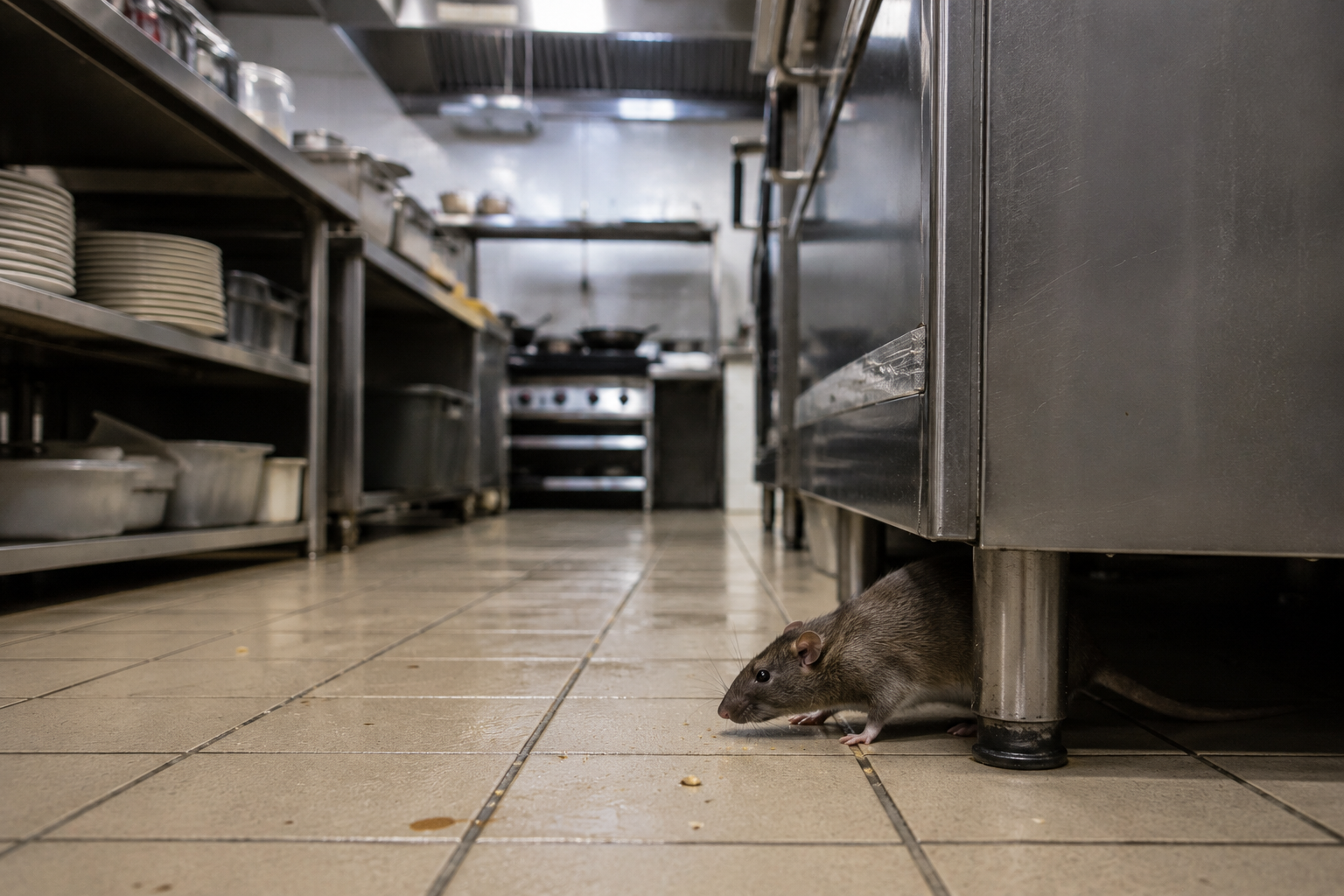
In a restaurant, a single pest sighting is a five-alarm event: a failed health inspection, a possible closure, a customer photo that goes viral, a reputation built over years undone in an afternoon. Russell Pest Control has protected Phoenix Valley food-service businesses since 1996, and we treat restaurant pest control the way the stakes demand: a zero standard, held with documented, food-safe programs run as often as the kitchen needs, including the semi-weekly German roach programs that demanding food-service accounts depend on. We run to a zero-tolerance standard - documented, food-safe programs built to keep a single sighting from ever reaching your inspection.
Food-service pest control is its own discipline, governed by health codes, food-safety standards, and the constant pressure of inspections, and it requires products labeled for food-handling areas, applied to strict protocols, with documentation that an inspector can review. We run gel-bait German roach programs, source-based fly control, and rodent prevention in kitchens, prep areas, drains, and dumpster corridors, scheduled around your hours so service never disrupts a shift. The goal is simple and absolute: protect your health score, your reputation, and your doors staying open.
The Rigor a Health Score Demands
A Zero Standard
In food service, one pest is a crisis. We hold the line with the rigor a health score demands.
Food-Safe Products
Only products labeled for food-handling areas are applied to food-safety protocols. No shortcuts in a kitchen.
Semi-Weekly When Needed
Demanding accounts get the frequency they need, including semi-weekly German roach programs.
Documented for Inspectors
Service records and monitoring logs that an inspector can review, your paperwork supports your score.
Source-Based Control
Drains, dumpster corridors, and harborage, we kill the source, not just the pest at the pass.
Scheduled Around Shifts
Early-morning, before-open, or after-close service so pest control never disrupts your operation.
Three Things Food Service Demands From Pest Control
A Zero Standard, Because One Pest Is a Crisis
A home can tolerate the occasional bug; a restaurant cannot tolerate one. A single roach spotted by an inspector can mean a failed inspection or a closure; a single fly or rodent sign photographed by a customer can become a viral review that costs more than any infestation. Food-service pest control has to aim for zero where it counts (the kitchen, the prep areas, the dining room) because the consequences of "mostly controlled" are existential for the business. We bring the relentless source discipline that a zero standard requires, which is exactly the rigor that protects a health score.
Food-Safe Products and Protocols, Non-Negotiable
A kitchen is a food-handling environment that legally and practically restricts what can be used and how: only products labeled for food-contact areas, compliant with food-safety protocols, with no risk of contamination. Using the wrong product in a kitchen isn't just ineffective; it's a liability worse than the pests. German roach gel baits placed in harborage, not sprayed across prep surfaces; source-based fly control; rodent prevention that respects food storage. The discipline to always use the right tool in a food environment is the foundation of restaurant pest control, and it's non-negotiable.
Documentation, Because Inspectors Require It
Health inspections, food-safety audits, and certifications all require evidence of pest management: the service record itself is part of passing, and an inspector who finds pests AND no documented pest-control program has two problems to write up. We provide the documentation: service records, monitoring logs, and the paperwork your inspections and audits require, kept current and available. For a restaurant, the documentation isn't bureaucracy; it's part of the protection, and a well-documented program is part of what keeps the health score where it needs to be.
Every Food-Service Pest Situation
The Pests That Threaten Food Service
- German cockroaches: the #1 restaurant pest; explosive breeders in kitchens and equipment
- Flies: drain flies, fruit flies, house flies, and the phorid flies that signal drain failures
- Rodents: mice and rats drawn to food, a critical health-code violation
- Stored-product pests in dry storage and pantries
- Ants foraging into food-prep and storage areas
- Pests from shared dumpster corridors and neighboring businesses
Where Food-Service Pests Breed
- Drains: floor, sink, and condensate (the #1 hidden source)
- Under and behind equipment: ovens, fridges, dishwashers, fryers
- Grease traps, mop sinks, and organic buildup
- Dry storage, pantries, and stored-product areas
- Dumpster pads, dock areas, and shared waste corridors
- Wall voids, cracks, and plumbing penetrations
What Our Food-Service Programs Deliver
- Gel-bait German roach control to a zero standard
- Source-based fly control + monitored insect light traps
- Rodent prevention, monitoring, and exclusion
- Drain treatment to eliminate fly and roach breeding film
- Documentation for health inspections and audits
- Semi-weekly, weekly, or scheduled service to match your risk
- Discreet, around-the-shift scheduling
Assessment to Zero Standard: the Process
Kitchen and Facility Assessment
We walk the whole operation: kitchen, prep, dry storage, drains, dish areas, dumpster corridor, dock, identifying current pests, breeding sources, and vulnerabilities, and noting the food-safety constraints that govern what we can use where. A restaurant assessment is a source hunt and a compliance review at once.
A Program Scoped to Your Risk
You get a program matched to your operation: frequency (semi-weekly for high-risk or German roach situations, weekly, or scheduled), food-safe products and protocols, monitoring placement, drain treatment, and documentation. The frequency follows the risk, because a busy kitchen with shared dumpster exposure needs more than a quiet cafe.
Source-Based Treatment, Food-Safe
Treatment targets sources with the right tools: gel-bait German roach control in harborage, drain treatment to kill the film flies and roaches that breed in, rodent prevention and monitoring, and insect light traps placed by fly behavior, all with products labeled for food-handling areas, applied to protocol. We kill the source, not just the pest at the pass.
Monitoring and Early Warning
Monitoring devices and light-trap catches act as an early-warning system; a spike tells us a new source opened up before it becomes a sighting on the line. Continuous monitoring is how a zero standard is maintained between visits, catching problems while they're still invisible rather than after a customer or inspector notices them.
Documentation Kept Inspection-Ready
Service records, monitoring logs, and the documentation your health inspections and audits require, kept current and available, so when the inspector arrives, your pest-control program is part of what passes you, not another thing to explain. The paperwork is maintained as a core part of the service.
The Sanitation Partnership
Pest control and sanitation are partners in a kitchen: German roaches and flies live on grease, drains, and organic buildup, so we coach the specific sanitation practices that support the program: keeping the drain clean, degreasing the equipment gap, and fixing the dumpster-area practice. A documented protocol that your staff can run alongside our service is what holds the zero standard between visits.
Chronic Kitchen Flies?
The source is usually the drain; the full source-hunting method lives on the fly page.
German Roach Deep-Dive
The gel-bait method, the egg-case problem, and why follow-up is mandatory.
How Food-Service Programs Are Priced
Scoped to the Stakes
- Programs scoped per facility: kitchen size, risk level, frequency, and documentation needs set the plan
- Frequency from semi-weekly (high-risk / German roach) through weekly or scheduled service
- Drain treatment, monitoring, and insect light traps are included as the program requires
- Documentation for inspections and audits kept current as part of the service
- Simple 30-day-notice agreements, fair terms, no long lock-in
- Fully insured; COIs provided on request
The Real Math
A health-score-protecting program with the frequency, food-safe rigor, and documentation a kitchen requires costs more than a generic monthly spray, and it's worth vastly more than a failed inspection or a viral review. The cheapest pest control is never cheap if it costs you your doors.
Simple 30-day-notice cancellation options. Handled through zero-cost on-site kitchen evaluations.
Request a Food-Service QuoteWhy Valley Kitchens Trust Us With Their Score
The Semi-Weekly German Roach Standard
Our most demanding food-service accounts run on semi-weekly German roach programs, using products specifically labeled for food handling and processing, the kind of relentless, twice-a-week source discipline that keeps a high-volume kitchen at a zero standard. German roaches are the restaurant's worst pest because they breed explosively, and a single survivor pair restarts the problem, so the programs that beat them are intensive, documented, and never relaxed. That's the standard we hold for the kitchens that depend on us, and it's the experience that informs every food-service account.
The Reputation That Protects a Reputation
A restaurant's pest control is part of its reputation management, because the pest problem a customer sees becomes the review everyone reads. Our food-service accounts stay with us because the programs work: the kitchens stay clean, the inspections pass, and the viral-review nightmare never happens. Quiet, documented, food-safe protection that keeps a restaurant's name out of a bad pest story is exactly the product, and it's why food-service operators value an established, rigorous provider over a cheaper, generic one.
Years of Clean Inspections
The truest measure of restaurant pest control is the inspection that goes smoothly and the review that never mentions a pest, quiet successes that don't make headlines precisely because the program worked. Our long-term food-service accounts are built on exactly that: years of clean inspections, no closures, no viral moments, because the source discipline and documentation held the line every single visit. In food service, boring and clean is the highest praise, and it's what our programs deliver.
Food-Safe Program vs. Generic Commercial Spray
| What Matters in a Kitchen | Russell Pest Control | Generic Commercial Spray |
|---|---|---|
| The standard | Zero where it counts | "Mostly controlled" |
| German roaches | Semi-weekly gel-bait programs | Monthly surface spray |
| Products | Food-handling-labeled only | Whatever's on the truck |
| Source work | Drains, harborage, dumpster corridors | Spray the visible pest |
| Monitoring | Continuous early-warning | None between visits |
| Documentation | Inspection- and audit-ready | Minimal or none |
| Frequency | Matched to your risk | One-size route |
| Scheduling | Around your shifts, discreet | On the route's timing |
| Sanitation support | Coached, specific protocols | Not provided |
| Who answers | Owner or office, same day | Call center |
What Valley Kitchens Are Up Against
Desert Heat Accelerates Everything
Phoenix's heat speeds pest development to a degree mild climates never see: German roaches breed faster, flies develop in days, and a small lapse becomes an infestation faster than anywhere. For a kitchen, the warm desert environment means the margin for error is thinner, and the need for frequent, vigilant service is greater. The same heat that bakes the parking lot is breeding pests around every drain, dumpster, and warm equipment motor in the building, year-round.
Shared Dumpster Corridors Feed Every Kitchen
The Valley's restaurant rows, strip centers, and food courts concentrate organic waste in shared dumpster areas that breed flies, roaches, and rodents for every food business nearby, meaning your pest pressure is partly your neighbors'. Effective restaurant control treats the dumpster corridor and exterior, not just your kitchen, because the source feeding your problem may be the dumpster you share. In a shared center, the perimeter is as important as the prep line.
Monsoon Drives Kitchen Invasions
Monsoon storms flush roaches, crickets, and rodents toward and into buildings through every dock and door, and a ground-floor or strip-center kitchen is directly exposed. The post-storm weeks are a predictable spike, and a kitchen on a vigilant program absorbs it while a reactive one gets a sighting on the line. Staying ahead of the monsoon is part of holding the zero standard through the Valley's hardest pest season.
Drains Are the Year-Round Battleground
Floor drains, sink drains, and condensate lines are the single most common (and most overlooked) source of both flies and roaches in a kitchen, breeding in the organic film that coats the pipes regardless of season. A kitchen can look spotless and still have a drain problem feeding a chronic fly issue. Drain treatment is a core part of every food-service program we run, because the drains are where the persistent problems actually live.
Inspections Are Constant and Consequential
Valley restaurants operate under continuous health-inspection pressure, where the consequences of a pest finding range from a deduction to a closure, and the inspection can come at any time. This constant scrutiny is why food-service pest control has to be always-ready, not periodically good: the program and its documentation have to hold up on the inspector's schedule, not yours. We run programs built for exactly that constant readiness.
Reviews Travel Faster Than Inspectors
In the social-media era, a customer's photo of a pest can reach more people faster than any health inspector's report, and a single viral pest moment can damage a restaurant more than a citation. This raises the stakes of food-service pest control beyond compliance to reputation protection in real time: the dining room and customer-visible areas have to be as protected as the kitchen. We treat the whole customer-facing reality, because in food service, perception and compliance are equally consequential.
What Restaurant-Grade Pest Control Knows
German Roach Control to a Zero Standard
German cockroaches are the defining restaurant pest because they breed explosively, hide in equipment and harborage, develop resistance to sprays, and require only a single surviving pair to restart an infestation, which is why food-service German roach control is intensive, gel-bait-based, and often semi-weekly. The method exploits roach biology: gel bait the roaches feed on willingly and carry back to harborage, where the active ingredient passes secondarily through the population as roaches eat their dead. Holding a zero standard against German roaches in a busy kitchen is among the most demanding pest-control work there is, and the semi-weekly programs that achieve it are built on relentless source discipline and monitoring. It's the work that defines food-service expertise.
Drain and Source Elimination
The persistent kitchen pest problems (chronic flies, recurring roaches) almost always trace to sources a surface treatment never touches: the organic biofilm inside drains, the grease buildup under equipment, the cracked drain line breeding phorid flies. Food-service expertise means hunting these sources and eliminating them with the right methods: mechanical drain cleaning, enzyme treatments, equipment-area attention, rather than spraying the symptoms. A kitchen that keeps getting flies despite looking clean has a source problem, and finding it is exactly the detective work that separates a restaurant pest specialist from a generic sprayer. The source is the fix.
Food-Safe Product Discipline
Every product used in a food-service environment must be labeled for food-handling areas and aligned with food-safety protocols, with zero risk of contamination, a discipline that's both a legal requirement and a matter of basic responsibility in a place that serves the public's food. This means gel baits are placed precisely in harborage rather than sprayed near food surfaces, treatments are timed and applied so food and prep areas are never compromised, and a constant awareness of what each space allows. The discipline to always choose the right tool for a food environment, never the convenient one, is foundational, and it's what lets us work in kitchens without ever creating a problem worse than the pests.
Monitoring as an Early-Warning System
Maintaining a zero standard between visits requires monitoring: strategically placed devices and insect light traps whose catches reveal pest activity and new sources before they become visible sightings. A jump in a light trap's catch or a monitor's activity is intelligence that something changed, letting us respond while the problem is still invisible, rather than after a roach appears on the line. This continuous early warning is how food-service pest control stays ahead of problems in a constantly operating kitchen, and reading the monitoring data is a real skill that turns reactive pest control into proactive protection. Catching it early is the whole game.
Working Around a Live Operation
A restaurant can't stop for pest control, so food-service expertise includes the logistics of service that never disrupts a shift or a guest: early-morning treatment before opening, after-hours work, service timed around prep and rush. Performing thorough, food-safe pest control invisibly, around a live operation, is a logistical skill as real as the technical one, and it's part of why established food-service accounts value a provider who's learned their rhythm. Effective and invisible is the food-service standard, because the only good time for pest control in a restaurant is a time the customers never see.
Sanitation as the Program's Foundation
No pest program outperforms the sanitation supporting it, especially in food service, where German roaches and flies live on the grease, organic buildup, and moisture a kitchen inherently generates, which makes sanitation coaching a core part of the service, not an add-on. We identify and coach the specific practices that support the program: the drains to keep clean, the equipment gaps to degrease, the dumpster-area habits to fix, and the storage practices to maintain. A documented protocol that the kitchen staff runs alongside our service is what holds the zero standard between visits, and treating sanitation as the program's foundation, rather than the customer's separate problem, is what makes food-service pest control actually work.
Food-Service Questions, Answered Straight
How Often Do You Service a Restaurant?
It depends on your risk: demanding kitchens and German roach situations run on semi-weekly programs, others on weekly or scheduled service. The frequency follows the risk: a high-volume kitchen with shared-dumpster exposure requires more than a quiet cafe. We scope it to hold a zero standard for your specific operation, which is the only frequency that matters.
Do You Use Food-Safe Products?
Always, only products labeled for food-handling areas, applied to food-safety protocols, with zero contamination risk. In a kitchen, gel baits go in harborage, not on prep surfaces, and every treatment respects the food environment. Using the wrong product in a food-service space is a liability worse than the pests, and that discipline is non-negotiable.
Do You Provide Documentation for Health Inspections?
Yes, service records, monitoring logs, and the documentation your health inspections and food-safety audits require, kept current and available. For a restaurant, the documented pest program is part of what passes the inspection, and we maintain it as a core part of the service so you're always inspection-ready.
Can You Get Rid of German Roaches in My Kitchen?
Yes, German roaches are our food-service specialty, controlled with intensive, often semi-weekly gel-bait programs that reach the harborage and the whole population, plus the drain and source work and sanitation coaching that hold the result. They're the restaurant's worst pest because they breed explosively, so the programs that beat them are relentless and documented. We hold the zero standard.
Why Do I Keep Getting Flies Even Though My Kitchen Is Clean?
Almost always a drain: the organic film inside floor, sink, and condensate drains breeds flies regardless of how clean the surfaces look, and it can't be bleached away. Drain treatment is core to our food-service programs precisely because drains are the hidden source behind most chronic kitchen fly problems. If flies persist in a clean kitchen, the source is below the surface.
Will Service Disrupt My Operation?
No, we schedule around your shifts: early-morning before opening, after close, or timed around prep and rush, performed discreetly so customers never see it. A restaurant can't stop for pest control, so working invisibly around a live operation is part of the service. The only good time for pest control in a restaurant is one the guests never notice.
What if a Customer or Inspector Spots a Pest?
That's exactly what the program is built to prevent, through source control, monitoring, and the right frequency, but if a sighting happens, our same-day response handles it immediately, because in food service, a pest problem can't wait. The combination of a vigilant program and fast response is what keeps the sighting from becoming an inspection failure or a viral review.
We Just Had a Rough Health Inspection. Can You Help Us Fix It?
Yes, inspection findings become the corrective program: we target the cited issues at their sources, document the remediation, and build the ongoing program that keeps the next inspection clean. Inspectors respect a documented, professional response, and turning a bad report into a managed program is work we know well.
Do You Service Bars, Cafés, and Coffee Shops Too?
All of the food service, bars, and coffee shops have their own signature pressures: fruit flies in fermenting residue behind the bar, drain flies under espresso stations, the sticky-syrup ecosystems that breed them. Source-based control fits these operations exactly, scoped to the size and risk of the operation.
Do You Handle Shared Dumpsters and Exterior Areas?
Yes, the dumpster corridor and exterior are core to restaurant pest control, because in shared centers they breed the flies, roaches, and rodents that pressure every food business nearby. Treating the perimeter and waste areas, not just the kitchen, is essential because the source feeding your problem is often the dumpster you share with the center.
What Our Customers Say
Real reviews from homeowners and businesses across the Phoenix Valley.
Hold the Line on Your Health Score: Since 1996
A zero standard, food-safe products, semi-weekly programs when you need them, source-based control, and documentation that's always inspection-ready, restaurant pest control by the family that's protected Valley kitchens for decades. Your reputation, your score, and your doors staying open are the whole point.
Expect the best from Russell Pest, and have a bug-free day.
Hours
- Monday-Friday: 8:00 AM - 5:00 PM
- Same-day response for food-service sightings
- Early-morning, before-open, and after-close scheduling
Food-Service Service Area
Phoenix (HQ) and across the Valley: North Mountain Village, Camelback East, Ahwatukee, Scottsdale and North Scottsdale, Paradise Valley, Cave Creek, Fountain Hills, Mesa, Gilbert, Chandler, Tempe, Glendale, Peoria, Surprise, Goodyear, and Avondale.