
Pest Control in Paradise Valley, AZ: Estate-Scale Service Under Mummy Mountain
The Lincoln Drive resort corridor to the highest buildable lot on Mummy, one call gets Steve, Steven Jr., or the office. Never a call center.
One-Acre-Plus Estates - Mountain on Three Sides - Discreet by Default.
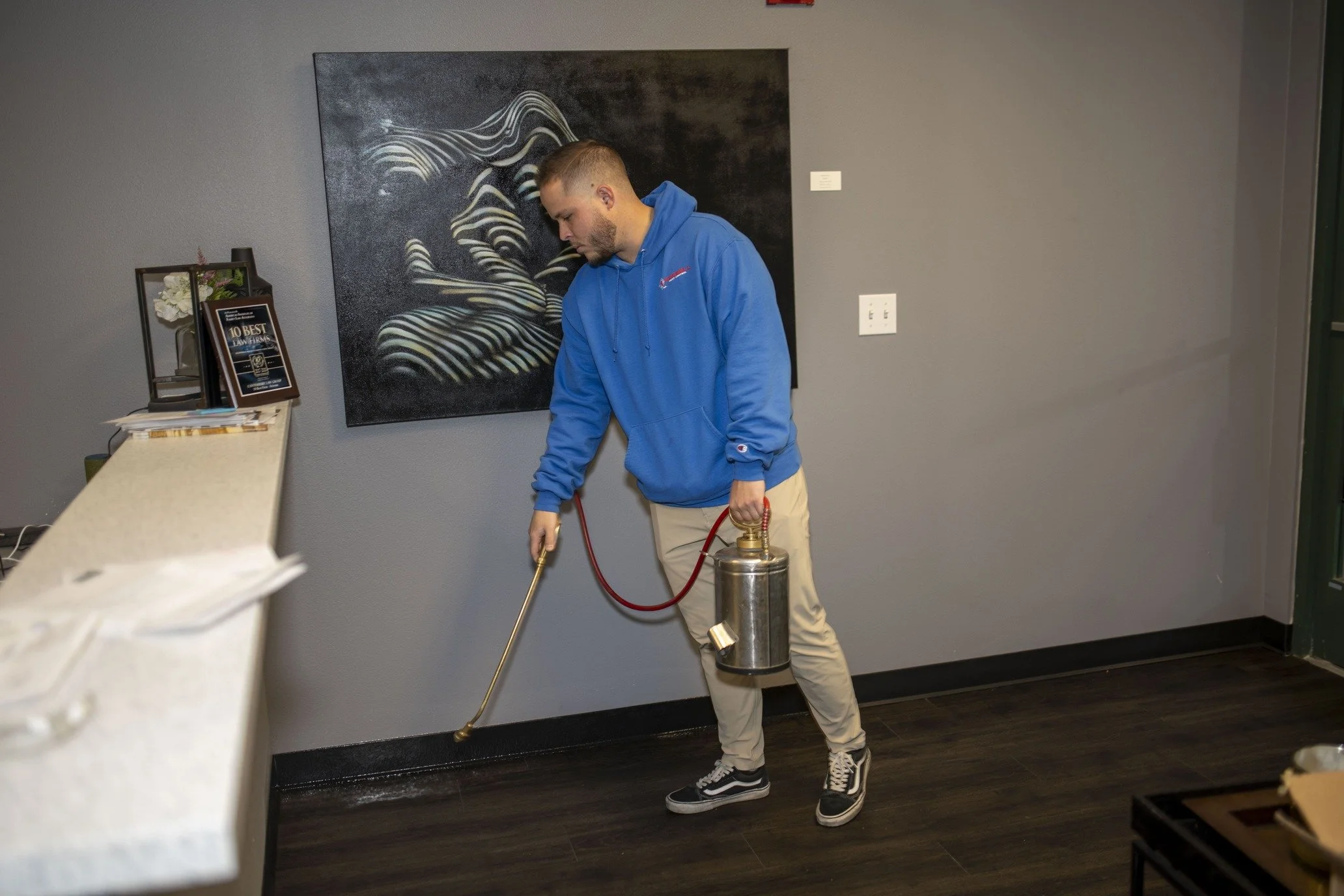
The Town of Paradise Valley incorporated in 1961 for exactly one reason: to stay what it was: quiet, country-like, one home per acre, entirely residential. Sixty years on, it's Arizona's most expensive ZIP code, roughly twelve thousand seven hundred residents on estate lots between Camelback Mountain on the southern border, Mummy Mountain at the town's center, and the Phoenix Mountains just west. Russell Pest Control has serviced estate properties across this corridor since 1996, and Paradise Valley work is its own discipline: bigger perimeters, more buildings per address, mountain pressure from three directions, and a standard of discretion that matches the town.
The pest physics are written into the town's virtues. The preserved upper slopes of Mummy Mountain (more than two hundred sixty protected acres) sit directly above hillside homes. Resort-grade landscaping, pools, fountains, and guest houses put estate-scale moisture into the desert air. Named washes like Cudia City and Berneil thread the lots. And the famously dark, country-like streets that make the town feel rural are also when the bark scorpion clocks in, which is exactly what our after-dark Black Light Search was built for. Same technician every visit, kid-and-pet-conscious defaults, honest answers everywhere.
Service That Matches the Address
Estate-Scale Programs
One- to five-acre perimeters, guest houses, casitas, pool complexes: the whole campus on one coordinated plan.
Mountain on Three Sides
Camelback, Mummy, and the Phoenix Mountains resupply scorpions and packrats continuously: edge programs are the answer.
Dark-Street Black Light
The town's famously dark nights are perfect UV conditions: see the scorpion population glow, then stop it.
Discreet by Default
Quiet trucks, staff coordination, household-manager fluency, schedules kept: service that matches the address.
Wash-Line Smart
Cudia City and Berneil wash the lots: we treat the corridor, not just the yard.
A Real Person Answers
Owner or office, every call. After hours, the line reaches Steve's cell.
Three Things About Paradise Valley Every Homeowner Should Know
The Mountain Isn't Behind the Town: It's in the Middle of It
Mummy Mountain rises from the town's center with more than two hundred sixty acres of its upper slopes permanently preserved by the preserve trust, which means hundreds of hillside homes live directly below intact desert habitat that will never be developed. Add Camelback Mountain along the southern border and the Phoenix Mountains just west, and Paradise Valley runs preserve-edge pressure from three directions: bark scorpions, packrats, snakes, and the insect base that feeds them, resupplied continuously to some of the most valuable residential land in America. The protected slopes are the town's crown; the program below them is the peace treaty.
An Acre of Paradise Is an Acre of Perimeter
The town's founding rule (one home per acre, minimum) built a community of estates, and estates changed the pest math entirely. More fence line against open desert, more landscaping zones, more irrigation, more structures: main house, guest house, casita, pool house, garage wings. A pest program designed for a quarter-acre tract simply doesn't scale to it, and the gap between what a route spray covers and what an acre-plus property actually needs is where most Paradise Valley pest complaints are born. Estate service means the whole campus, on one plan.
Resort-Grade Green Is Estate-Grade Moisture
Paradise Valley landscaping is resort landscaping: mature trees, lawn panels, pools, spas, fountains, drip systems running year-round, and every irrigated acre against the surrounding desert creates the moisture-against-aridity contrast that drives Valley pest movement. The town's own resort corridor along Lincoln Drive runs the same equation at a commercial scale. Where the green meets the dry is where the activity concentrates; honest treatment maps that line every property.
What Paradise Valley Calls Us About, and Where
Paradise Valley's calls track its slopes, its acreage, and its water: scorpions off three mountains, packrats in the boulder landscaping, water pests around the pools and fountains, and whole-campus sealing across estates with multiple structures.
The Paradise Valley Pest Lineup
- Scorpions: Mummy's hillside lots, the Camelback line, and block walls town-wide; our signature work
- Packrats: boulder landscaping, hillside lots, pool equipment, engine bays (and they love a stored classic car)
- Rodents: mature estate canopy and fruit trees
- Crickets: the scorpion food supply, thickest where irrigation meets desert slope
- Ants and black widows: lawn panels, drip lines, block walls, view-fence lines, pool gear
- Roaches: sewer and desert species surging post-monsoon
- Bees and wasps: spring swarms; nests in block walls, irrigation boxes, and mature trees
- Mosquitoes: pools, spas, fountains, and lush-zone margins
- Snakes: rattlesnake country on the slopes; view-fence screening is the structural answer
- Pigeons: estate rooflines and the resort corridor (commercial service)
- Termites: identified honestly and referred to a licensed termite specialist (we don't treat termites)
Paradise Valley Areas We Serve
- The Mummy Mountain hillside lots: below the preserve line on every face
- The Camelback corridor along the town's southern border
- The estate sections west toward the Phoenix Mountains
- The Lincoln Drive resort corridor
- The wash-threaded lots along Cudia City and Berneil washes
- Gated enclaves and private-drive estates town-wide
Our Services in Paradise Valley
Every Russell service runs in Paradise Valley: here's the map, tuned to what the town actually needs.
Scorpion Control, Black Light Search & Sealing
The town headliner: targeted treatment built for three-mountain pressure, cricket (food-supply) control, $125/hour after-dark UV mapping that reads beautifully on the town's dark streets, and sealing to the 1/16-inch standard: across every structure on the property.
View ServiceHome Seal
Estate sealing is campus sealing: main house, guest house, casita, pool house, garage wings: each era-read and closed to the bark scorpion's 1/16-inch standard. $600-$2,500 typical per structure scope, 1-2 year warranty.
View ServiceGeneral Pest Control Plans
Monthly, bi-monthly, or quarterly: estate acreage and hillside exposure usually run heavier cadences, and the price is set on the sizing call before anyone rolls a truck. No contracts, no initial fees, 15-day re-treat warranty doing the promising.
View ServiceRodent Control & Exclusion
Boulder-landscape packrats and estate-canopy roof rats: trap-first removal so nothing dies in your walls, cleanup included in scope, plus roofline screening across every structure.
View ServiceView Fence & Snake Screening
For the slope lots and desert-line yards on all three mountain sides: keep the view that makes the lot, lose the ground-level visitors, including the rattlesnakes that come with hillside living.
View ServiceMosquito Control (In2Care)
Pools, spas, fountains, and lush-zone margins carry real season math: stations that recruit mosquitoes to poison their own breeding sites, compounding all season where fogging fades in days.
View ServiceBee & Wasp
Spring swarms off the mountains and colonies in block walls and mature trees: relocation when a beekeeper can take them, safety-first removal when they can't. Swarm photo triage by text is free.
View ServiceWeed Control
Pre-emergent timed to both desert weed seasons across estate acreage: the gravel zones stay clean without disturbing the designed landscape.
View ServiceCommercial Pest Control
The Lincoln Drive resort corridor's hospitality grounds, restaurants, and event venues: documented, food-safe, discreet programs with same-day response, because at this tier a pest sighting is a same-day problem by definition.
View ServiceWhat Paradise Valley Service Costs
The Standing Russell Promises, Priced for the Estate
- Plans priced per property: acreage, structure count, slope exposure, and water features set the number
- No initial fees, no contracts, 15-day re-treat warranty, the standing Russell promises
- Published anchors: Black Light Scorpion Search $125/hour - Home Seal typically $600-$2,500 per structure scope
- Estate scoping is done on a walk-through, not a guess: multiple structures quoted as one coordinated program
- Commercial scoped per facility on simple 30-day terms
Get an Estate Quote on a Walk-Through
A real person scopes the campus (perimeter, structures, water features, slope) and the quote holds.
No initial fees. No contracts. Discreet, estate-scale service scheduled around you, with barrier and black-light work matched to one-acre-plus properties.
Call or Text (623) 780-9099Three Paradise Valley Stories That Repeat Every Year
The Dark-Street Reveal
A hillside household below the Mummy preserve line is sure the scorpion sightings are random: then the UV lights come out on a street with no streetlight glow, and the boulder retaining walls answer for themselves, fluorescing at intervals up the slope toward the preserve. The town's country-dark nights make Paradise Valley superb black-light territory: the population mapped exactly where it stages, the entry routes identified, the treatment plan drawn from evidence. Edge estates that run the full program (treatment, cricket control, campus sealing, screening) genuinely go quiet, preserve or no preserve.
The Casita Nobody Sealed
An estate's main house is tight (sealed years ago, regularly serviced), but the guest casita gets used a few weekends a season, and that's where the guest finds the scorpion. Multi-structure properties fail at the structure nobody thinks about: the pool house with the worn door sweep, the casita with the original 1980s hardware, the garage wing with the gap under the side door. Campus sealing closes every structure to the same standard, because on an acre-plus property, the weakest building sets the level for the whole address.
The Rebuild Next Door
Paradise Valley renews itself lot by lot (tear-down, rebuild, relandscape) and every project displaces the desert tenants of that acre into the neighboring estates for a season, and every new landscape install imports hitchhikers. The renewal cycle is permanent here, which makes the displacement protocol a standing part of how the town gets serviced.
Russell in Paradise Valley vs. the National Chains
| What Paradise Valley Needs | Russell Pest Control | National Chains |
|---|---|---|
| Estate-scale coverage | Whole campus: every structure, one program | Route spray sized for a tract lot |
| Three-mountain pressure | Edge programs built for continuous resupply | One-time sprays that reload |
| Proof on dark streets | $125/hr UV mapping: see the population glow | "Take our word for it" treatment |
| Discretion | Quiet service, staff coordination, schedules kept | Logo trucks on a route window |
| Multiple structures | Casitas, guest houses, and pool houses all sealed | Main house only, if that |
| Resort-grade grounds | Moisture-line treatment that respects the design | Blanket spray on designed landscape |
| Who answers | Owner or office, after hours, Steve's cell | National call center |
| Contracts | None residential; 30-day commercial | 12-month lock-ins |
| First-visit fee | Never had one | $150-$400 "initial service" |
| Snake-country honesty | Screening as the structural answer | No answer at all |
The Conditions That Drive Paradise Valley's Pest Pressure
Mummy Mountain's Protected Slopes
More than two hundred sixty acres of Mummy Mountain's upper slopes are permanently preserved: intact Sonoran habitat rising directly above the hillside estates on every face of the mountain. Preserve edges resupply continuously: scorpions and their insect base working downslope, packrats denning in the boulder fields, and snakes following the food. The preserve will never change; the estates below it run programs, and the programs work.
Camelback on the Southern Line, the Phoenix Mountains West
Camelback Mountain rises along the town's southern border, and the Phoenix Mountains stand just west, completing the three-sided mountain geometry that defines Paradise Valley pest pressure. Slope-adjacent estates on every edge of town carry desert delivery routes through their back walls, and the wash network drains all of it downhill through the lots between.
One Home Per Acre, by Founding Design
The town incorporated in 1961 to keep zoning at one home per acre minimum, and the community is entirely residential, and that founding rule built today's pest landscape: estate perimeters measured in acres, multiple structures per address, and landscaping zones that transition from designed luxury to raw desert inside a single property line. Estate-scale geography demands estate-scale programs; it's the town's defining service requirement.
Resort-Grade Water in Desert Air
Pools, spas, fountains, lawn panels, and year-round drip irrigation put more designed water per acre into Paradise Valley than almost anywhere in the Valley, and the resort corridor along Lincoln Drive (Camelback Inn, Sanctuary on Camelback, Mountain Shadows, the Hermosa Inn, among the town's legendary properties) runs the same equation at commercial scale. Moisture in desert air is pest infrastructure: mosquito margins, ant colonies on the drip lines, and the insect base that feeds everything hunting above it.
The Name Washes
Cudia City Wash and Berneil Wash thread the town: monsoon-carved corridors of cover, moisture gradient, and traffic running between the mountains and through the estate sections. Wash-adjacent lots carry busier profiles than their neighbors, with deliveries arriving in pulses after every storm. Corridor-aware treatment reads the wash as part of the property, because the pests already do.
Country-Dark Nights
Paradise Valley kept its country-like quiet by design, and its residential streets stay famously dark at night: a character decision with a pest dimension: bark scorpions are nocturnal hunters, and on unlit acreage their activity is completely invisible to the naked eye. It's also why our after-dark UV searches read so cleanly here. The darkness isn't a problem; not knowing what moves through it is.
The Renewal Cycle
As Arizona's most expensive ZIP code (median prices around three and a half million dollars), Paradise Valley rebuilds continuously: tear-downs, ground-up customs, full relandscapes. Every project displaces that acre's desert tenants into the surrounding estates for a season, and every new landscape install imports hitchhikers. The renewal cycle is permanent here, which makes the displacement protocol a standing part of how the town gets serviced.
The Russell Method, Applied to Paradise Valley
Estate-Campus Programs
Every structure on the property (main house, guest house, casita, pool house) is on one coordinated plan: shared perimeter, per-structure sealing, and a single technician who knows the whole campus. The weakest building sets the level; we don't leave weak buildings.
The Slope Protocol Below the Preserves
Hillside estates get the edge stack: targeted treatment on the pressure lines, cricket control to starve the food supply, boulder-field and retaining-wall attention, view-fence screening where lots meet preserve, and UV mapping when the household wants the population shown rather than described.
Night Work on Dark Streets
The Black Light Scorpion Search runs beautifully on Paradise Valley's unlit acreage: after-dark UV sweeps mapping the actual population with no light washout. Evidence first, treatment second, on the town's schedule, not ours.
Water-Line Treatment That Respects the Design
Resort-grade landscaping gets moisture-line work that honors the design: In2Care stations placed discreetly, drip-line, work fountain, and pool-margin honesty, and nothing that blankets a designed landscape with an undesigned result.
Discretion as the Default
Quiet arrivals, staff and household-manager coordination, gate and schedule fluency, and service that doesn't announce itself: the same standard the town's resorts expect from every vendor, applied at residential scale. What happens on the property stays on the property.
Family-First Application, Always
Low-drift targeted placement, clear dry times (15 minutes outside, 30-35 inside), the kid-height black widow sweep around play equipment and pool gear, and natural-oil options with honest trade-offs, across every structure guests or grandchildren might use.
Straight Lanes, Straight Answers
Termite evidence gets identified honestly and referred to a licensed termite specialist; we don't hold that license and won't pretend to. Snakes get structural honesty: screening keeps them out, and an active snake in the yard is a same-day response call: don't try to handle it yourself. And the scary spider is almost never a brown recluse (not established in Arizona): the local concern is the black widow, and that one we handle thoroughly.
Paradise Valley Pest Questions, Answered Straight
We're on Mummy Mountain's Slope. Is Scorpion Pressure Really Structural Here?
Yes, more than two hundred sixty acres of the mountain's upper slopes are permanently preserved habitat, resupplying scorpions, packrats, and their insect base downslope continuously. That's geography, not bad luck. Slope estates run the edge program (treatment, cricket control, campus sealing, screening) and managed slopes genuinely go quiet.
Why is the Black Light Search Especially Good Here?
Because Paradise Valley's residential streets stay country-dark by design: ideal UV conditions. Bark scorpions fluoresce under black light, so the after-dark sweep maps your actual population: where it stages on the boulder walls, what feeds it, and where it enters. $125 per hour, run when they're active.
Does An Acre-Plus Property Really Need a Different Program?
It needs a properly scaled one: more desert fence line, more landscape zones, more structures. A tract-lot route spray covers a fraction of an estate's actual exposure. We scope on a walk-through (perimeter, structures, water features, slope) and quote the campus as one coordinated program.
Can You Seal the Guest House and Casita, Too?
That's the point of campus sealing: every structure to the same 1/16-inch standard, because the building nobody thinks about is where the guest meets the scorpion. Main house, casita, pool house, garage wings: one standard, one program.
Do You Treat Termites in Paradise Valley?
No, and we're straight about it. We'll identify termite signs honestly and refer you to a licensed termite specialist, then handle everything else on the property. Straight lanes, straight answers.
What Our Customers Say
Real reviews from homeowners and businesses across the Phoenix Valley.
Paradise Valley's Family Pest Company Since 1996
From the Lincoln Drive resort corridor to the highest lot under the Mummy preserve line: thirty years of estate-scale service, a second generation on the routes, and a discretion standard that matches the town. No contracts, no initial fees, a 15-day re-treat warranty, and a real person on the phone.
Expect the best from Russell Pest, and have a bug-free day.
Hours
- Monday-Friday: 8:00 AM - 5:00 PM
- Same-day & emergency service available, after hours and weekends, owner-answered
Nearby Areas We Also Serve
Scottsdale, Camelback East, North Mountain Village, Fountain Hills, and the rest of the Valley from our Phoenix headquarters.