
Termite Inspection Before Buying a Home: What It Catches
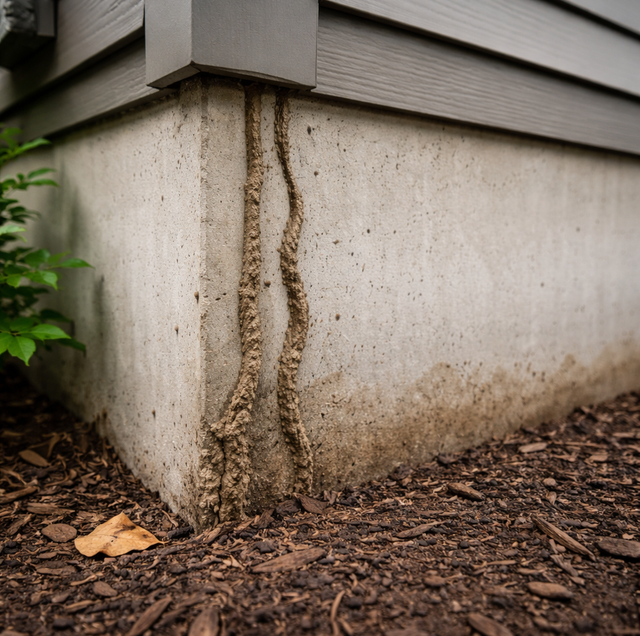
Quick Answer: A general home inspection and a termite inspection are two different services. A wood-destroying-organism (WDO) inspection is performed by a licensed pest professional who looks specifically for termites and other wood-eating pests, and buyers usually order one before closing because hidden damage is common, expensive, and rarely visible during a walkthrough.
What A Termite Inspection Actually Checks
A termite inspection, more formally a wood-destroying-organism or WDO inspection, is a focused search for pests that eat or nest in structural wood. The inspector is not glancing at the house in passing. They are down in the crawlspace, along the foundation, and in the corners of the garage looking for a specific set of signs.
The checklist a trained inspector works through includes several things a buyer would rarely notice on their own:
Mud Tubes and Foundation Trails: Subterranean termites build pencil-width tunnels of soil and saliva to travel from the ground to the wood above. These mud tubes run up foundation walls, across pier blocks, and through expansion joints in slabs. An inspector traces the foundation line and probes any tube found to see whether it is active.
Damaged or Hollow Wood: Termites eat wood from the inside, so a beam can look sound on the surface while it is honeycombed within. Inspectors tap and probe sills, joists, subfloor, door frames, and window trim. Wood that sounds hollow or gives way under a probe is a flag, even when the paint above it is unbroken.
Frass, Wings, and Swarmers: Drywood termites push their droppings, called frass, out of small kick-out holes, leaving tiny piles that resemble coarse sawdust or ground pepper. Discarded wings near windowsills or light fixtures point to a swarm, the stage when reproductive termites leave the colony to start new ones. A pile of shed wings is often the first evidence a homeowner ever sees.
Moisture-Prone And Conducive Areas: Termites need moisture, so inspectors pay close attention to leaky plumbing, poor drainage, damp crawlspaces, and any point where wood touches soil. Conditions that invite an infestation, such as wood siding buried in a flower bed or firewood stacked against the house, get noted as conducive conditions even when no live pest is present.
Why A General Home Inspection Is Not Enough
A standard home inspection covers a wide range: roof, electrical, plumbing, HVAC, structure, and general safety. That breadth is the point, and it is also the limit. A general inspector may note visible signs if they happen across them, but they are not required to open the specific access points, probe suspect wood, or crawl the low spaces where termites do their work. Many general inspectors carry a disclaimer stating that pests are outside their scope.
Buying a house on a general inspection alone and assuming it covers termites is like getting a full physical and assuming it included a dental x-ray. Both are health checks, but they look at different things with different tools, and the one you skipped is where the quiet problem was hiding.
The gap matters because termite damage is usually invisible during a normal showing. The most active feeding happens inside walls, under flooring, and in framing you cannot see. By the time a floor feels spongy or a door frame crumbles, the colony has often been working for a long time, and the repair reaches beyond a patch.
What The Report Means
After a WDO inspection, you receive a written report, sometimes called a WDO report or a clearance letter. Read it carefully rather than skimming to the last line.
A report generally states one of two things. Either the inspector found no visible evidence of wood-destroying organisms, or they found evidence and describe it. Even a report with findings breaks the situation into parts: active infestation, previous infestation that appears treated, actual damage, and conducive conditions. Those are separate categories, and a house can show one without the others. Old, treated damage with no live activity is a very different situation from a live, spreading colony, and the report is where that distinction lives.
A clean report is not a lifetime warranty. It reflects what was visible and accessible on the day of the inspection. Areas blocked by stored belongings, finished walls, or inaccessible crawlspace corners are typically listed as not inspected, and it is worth asking about anything marked that way.
Why The Buyer Should Order One
It is worth ordering the inspection yourself, as the buyer, rather than relying on a report the seller provides.
An inspection you arrange answers to you. You choose the company, you can be present, and you can ask questions in real time about what the inspector is seeing. A report handed over by the seller might be months old, might predate a rainy stretch that changed conditions, or might have been scoped narrowly. Fresh eyes working for the buyer tend to look harder.
Requirements around who orders and pays for the inspection vary by location, loan type, and the terms in your purchase contract. Some lenders and loan programs ask for a WDO report before they will fund; others leave it optional. Because these rules differ and change, check locally and ask your lender and agent what applies to your specific purchase rather than assuming.
Subterranean Versus Drywood Signs
Not all termites behave the same, and the signs differ enough that knowing the general categories helps you read a report.
Subterranean termites live in the soil and need contact with the ground or a moisture source. Their signature is the mud tube, and they tend to attack from the bottom up: sills, subfloor, and lower framing first. Drywood termites live entirely inside the wood with no soil contact, which lets them infest higher and drier areas such as attic framing, trim, and furniture. Their tell is the frass they push out and the pinhole kick-out openings.
That distinction is not academic. Because the two types live in different places and enter the structure differently, the inspector's search pattern and the eventual treatment approach both change depending on which is present.
Next Steps If Evidence Is Found
Finding evidence is not automatically a reason to walk away. It is a reason to slow down and get specifics.
First, get the extent defined. A few conducive conditions and a small, contained pocket of old damage is a manageable situation. Active infestation across primary structural members is a larger one. The report should tell you which, and if it does not, ask the inspector to clarify before you make any decision.
If treatment is needed, that work belongs to a licensed pest professional. Termite treatment uses regulated pesticides and specialized methods, and it is not a do-it-yourself project. Ask for a written treatment plan and, where offered, a warranty or re-treatment guarantee on the work.
Evidence of termites also becomes part of the negotiation. Depending on your contract and local practice, buyers commonly ask the seller to complete and pay for treatment before closing, to repair confirmed structural damage, or to adjust terms to account for the work. Your agent can advise on which of these fits your situation.
The steps a homeowner can safely take are preventive: reduce wood-to-soil contact, keep firewood and mulch away from the foundation, fix leaks, and improve drainage so the structure stays dry. These conducive conditions are what an inspector flags even on a clean home.
Frequently Asked Questions
For an average single-family home, a WDO inspection commonly runs from about 30 to 45 minutes, though a larger house, a full basement, or a tight crawlspace that has to be entered can push it past an hour. The time is spent on access, not paperwork, so a home with a finished basement and cluttered storage often takes longer than a bare, open one.
Yes, and walking along is one of the more useful things a buyer can do. Inspectors will generally point out a mud tube or a soft sill in person, which is far clearer than a line in a report. If you plan to attend, clear access to the water heater, the crawlspace hatch, and the garage perimeter beforehand, since blocked areas get marked as not inspected.
Subterranean colonies live below the frost line and keep feeding year-round underground, and once they reach the heated interior of a house, they can stay active through cold months as well as warm ones. Swarming, the visible flight of winged reproductives, is more seasonal and often follows warm, humid spells, but the absence of a swarm does not mean the colony has stopped eating.
No, and a WDO inspection distinguishes them. Carpenter ants do not eat wood; they excavate galleries in it to nest, leaving clean, sanded-looking tunnels and kicking out coarse shavings rather than the pellet-shaped frass termites produce. The two call for different treatments, which is one reason a professional identification matters more than a homeowner's guess.
It refers to situations that invite pests without proving one is present, and it is a category an inspector can flag even on an otherwise clean home. Common examples include earth-to-wood contact, wood debris under a porch, a downspout draining toward the foundation, or a crawlspace with a missing vapor barrier. Correcting these lowers future risk and is usually something a homeowner can address directly.
No inspection prevents a future infestation; it only reports what was visible on that day. This is why many buyers pair the purchase-time inspection with an ongoing prevention or monitoring plan, and why annual re-inspection is a common recommendation. A home that checked out clean at closing can still attract termites years later if moisture and wood-to-soil contact go unaddressed.
Book a WDO inspection before you sign — buy your next home knowing what is behind the walls. Russell Pest Control serves the Phoenix Valley. Call (623) 469-7583.
