
Bee Removal in Phoenix, AZ: Relocation When We Can, Removal When We Must
Bees on the house, in the wall, or swarming the yard? Keep your distance and call, bee situations get a same-day response, and a real person picks up.
Honey Bee Relocation - Africanized Removal - Hive & Comb Cleanout.
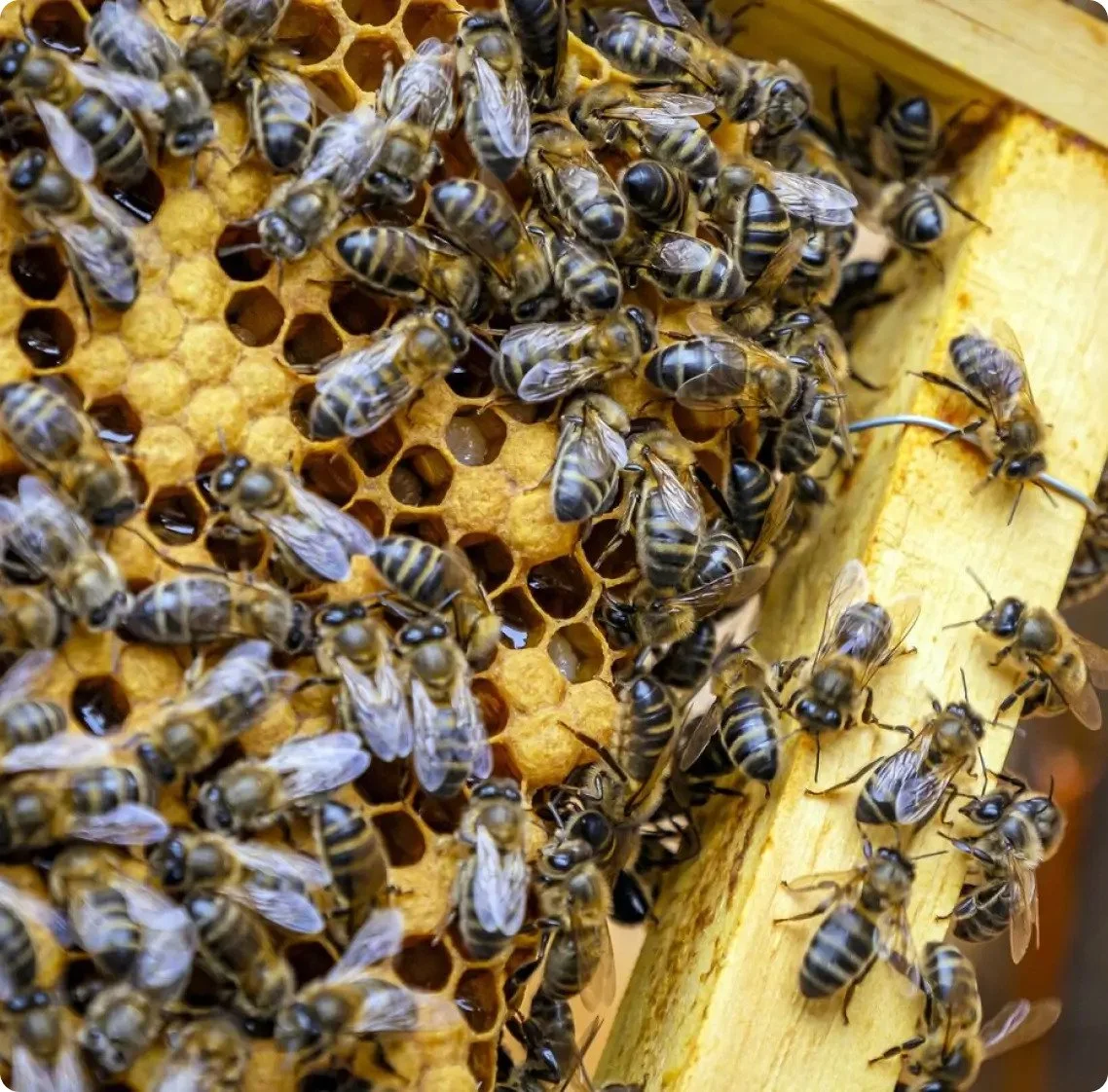
Bees deserve a straight answer, and so do you. Here's ours, the same one we've given since 1996: when a beekeeper can take the colony, live relocation is our first choice, bees matter, and we have great respect for what they do. When the colony is Africanized, buried in a wall void, or positioned where people are at risk, removal is the responsible call, because the Arizona Department of Agriculture's guidance matches our own: human safety comes first. Any company that promises it never kills bees is either turning down the dangerous jobs or not telling you the truth about them.
What you're dealing with decides everything: a docile spring swarm resting on a tree branch is a completely different situation than an established colony defending eleven layers of comb inside your wall. We've handled both across the Valley for three decades, including hives most companies won't open. The work is done in full protective gear, the comb and honey come out with the bees (leaving them behind invites the next colony and a melted-honey ceiling), and the entry gets sealed so the story doesn't repeat.
Three Decades of Opened Walls
The Honest Policy
Relocation when a beekeeper can take them; safety-first removal when they're Africanized or unreachable. We'll tell you which yours is, and why.
Swarm vs. Colony Triage
A resting swarm and an established hive are different emergencies. The phone call sorts them in two minutes.
Full Hive Cleanout
Bees, comb, and honey all come out. A comb left in a wall is an invitation, and a ceiling stain is waiting for July.
Suited and Serious
Full bee suits, sealed cuffs, respiratory protection, Africanized colonies attack by the hundreds, and we dress for it.
Entry Sealed After
The void gets sealed, so next spring's scouts find a wall, not a vacancy.
Three Decades of Hives
Including a 300-pound monster out of a commercial ceiling. There's not much we haven't opened a wall on.
Three Things to Know Before Anyone Touches a Bee
A Swarm Is a Moving Truck; a Colony Is a Homestead
That basketball-sized cluster that appeared on your tree branch this morning is a swarm: a queen and her workers between homes, usually docile because they have nothing to defend, and often gone within a day or two on their own. Bees streaming in and out of one gap in your wall, all day, every day? That's a colony: established, defensive, and growing by the week. The swarm needs distance and a phone call; the colony needs a plan. Mixing up the two is how homeowners get hurt and how bad companies sell panic.
You Can't Tell Africanized Bees by Looking: Nobody Can
Africanized and European honey bees are the same species; the differences are statistical, not visible, and even experts use lab analysis to call them. What IS different is behavior: European colonies defend with individual stings, Africanized colonies respond in the hundreds to thousands, commit to pursuit, and stay agitated for days. In the Valley, wild colonies are commonly assumed Africanized and worked accordingly, which is exactly how we approach every established colony: full protection, no casual pokes, no assumptions in your favor.
The DIY Attempt Is the One Mistake You Don't Get to Revise
Spraying a hive entrance with hardware-store foam is the single most dangerous pest decision a Valley homeowner can make: it kills the doorway guards, enrages the colony you didn't reach, and triggers exactly the mass defense Africanized bees are famous for, with you standing closest, in shorts. Every serious bee injury story we've heard in thirty years starts with someone deciding it looked manageable. It isn't. This is the one page where we'll say it flat: never DIY a bee colony.
Every Bee Situation the Valley Produces
Where Colonies Set Up
- Wall voids and stucco cavities (the #1 site, one warm gap is a doorway)
- Attics, soffits, and commercial drop ceilings
- Irrigation valve boxes and water meter boxes
- Sheds, grills, play structures, and patio furniture left undisturbed
- Saguaro and tree cavities, owl boxes, block wall voids
- Chimneys and fireplace flues
- Water heater closets and utility chases
What You Might Be Seeing
- A steady flight line in and out of one gap, sunrise to sunset (established colony)
- A hanging cluster on a branch, fence, or eave (swarm, often temporary)
- A hum you can hear (or feel) in a wall
- Honey staining or sagging drywall (mature comb, getting urgent)
- Bees inside the fireplace or around ceiling fixtures
- Heavy bee traffic at the pool, fountain, or dog bowl (foragers, a different problem than a colony)
What Makes a Property Attractive
- Pools, fountains, and irrigation: in a desert, your water is the draw
- Citrus, palo verde, and flowering landscape in bloom
- Unsealed weep holes, vents, and wall penetrations from previous years
- A previous hive that was sprayed but never cleaned out (the scent says vacancy)
From First Call to Sealed Wall: the Process
Two-Minute Phone Triage
Where are they, how many, how long, and is anything streaming in and out of a structure? Send a photo if it's safe to take one from a distance. Swarm-on-a-branch calls get honest advice (sometimes: give it a day); colony-in-the-wall calls get scheduled fast.
The Inspection and Hive Locate
Finding the actual colony (not just the entrance) is the skill: a comb can sit feet from the hole the bees use. Straightforward looks are free; a genuine hive-locate search may carry a charge, and it's waived when you hire us for the work. You'll know before anyone climbs anything.
The Decision, Made Out Loud
Relocation or removal, decided on criteria we'll explain on-site: can a beekeeper take them, can the colony be reached and boxed intact, how defensive is it behaving, and who's at risk nearby. When it's relocation, the bees go to someone who keeps them. When it isn't, we say so plainly and handle it, safety first, per the same guidance Arizona's agriculture department gives.
Suited Removal
Full bee suits, sealed at wrists and ankles, respiratory protection, and a methodical extraction: colony controlled, comb cut out, honey removed, the cavity cleaned. On wall jobs, that means opening the void properly instead of spraying into it and hoping; hope is not a treatment.
Why ALL the Comb Comes Out
A comb left in a wall is three future problems: residual scent that advertises the cavity to next season's swarms, pounds of honey that melt down your drywall in the first hot week, and robber bees raiding the leftovers for days. Cleanout isn't an upsell; it's the difference between a removal and a postponement.
Seal the Doorway
The entry gap and its siblings get sealed, so the cavity is off the market. On homes with a history of bee trouble, we'll flag the broader sealing picture too: weeps, vents, and penetrations are one inspection away from never doing this again.
Prevention Is a Sealing Job
Scout bees inspect cavities before swarms commit; a sealed home fails their inspection automatically. - $600-$2,500 typical
Not Bees? Wasps Live Here
Paper wasps and yellowjackets under eaves and tile rooflines are a different job with its own page.
What Bee Work Costs: Priced After a Look, On Purpose
The Bees Set the Scope
- Every bee job is priced after the inspection, a reachable swarm box-up and an eleven-layer wall colony are not the same afternoon, and quoting blind serves nobody
- Hive-locate searches may carry a charge, waived when you hire us for the removal
- Relocation vs. removal doesn't change our honesty, just the method; both get scoped on-site
- Wall-opening jobs include the cleanout in scope; repair of the opened section is coordinated with your handyman or contractor
- No initial fees, no contracts, and same-day response for active situations
Beware the Sight-Unseen Flat Quote
Be wary of flat "bee removal" prices quoted sight-unseen around the Valley; they're either for the easy version of your problem or they're the down payment on a surprise. The bees set the scope; we just read it honestly.
No initial fees. No contracts. Same-day response for active bee situations.
Call for a Same-Day LookThree Decades of Hives: the Stories That Teach
The 300-Pound Ceiling
Years back, a commercial building's drop ceiling had hosted a colony so long the comb ran four feet wide, six feet long, eleven layers deep: over three hundred pounds of comb and honey. The colony sat above an exterior overhang where a four-inch pipe entered the ceiling. After controlling the bees, we cut the access, laid a massive tarp on the patio below, and brought the comb down with flat shovels. It took machinery to lift the tarp when we finished. The lesson scaled to every house we've serviced since: colonies don't plateau, they compound. The hum in your wall is on that same trajectory, just earlier.
The Swarm We Told to Wait Out
Some of our best bee calls end without a truck roll: a swarm cluster on a backyard branch, photographed from a window, and our advice: keep everyone inside that corner of the yard and give it 24 to 48 hours. Resting swarms are usually between homes, and most move on. When they do, the homeowner saves the cost of urgency; when they don't, or when scouts start working a wall gap, we're already briefed and on the way. Free advice that costs us a job now and then, and earns a customer for decades.
The Hum Behind the Headboard
The classic Valley colony call: a homeowner notices the bedroom wall is warm and faintly buzzing, and the flight line outside traces to one weep hole. Inside that void: weeks-to-months of comb. These jobs are why the locate matters (open the wrong stud bay and you've doubled the drywall bill) and why cleanout matters more: the ones who'd sprayed the hole the summer before were calling us about the NEW colony that moved into the scented, honey-stocked cavity. The wall remembers; we make it forget.
Russell Bee Work vs. the Alternatives
| What Matters With Bees | Russell Pest Control | Chains / Spray-and-Go Outfits |
|---|---|---|
| The policy | Relocation when possible, removal when necessary, said plainly | Either "we always save bees" or "we always spray", both half-true |
| Swarm calls | Honest triage; sometimes the advice is free patience | Every cluster is an emergency invoice |
| Africanized reality | Worked as assumed-defensive, in full protection | Underestimated until it isn't |
| The locate | Colony found before the wall is opened | Spray the entrance, bill the visit |
| Comb & honey | Full cleanout: scent, comb, and honey out | Left in the wall for July to find |
| Re-infestation | Entry sealed; repeat colonies designed out | Same cavity, new tenants, new invoice |
| Equipment | Full suits, sealed cuffs, respiratory protection | Varies with whoever's on the route |
| Experience ceiling | 300-lb commercial hives and everything below | Whatever the training video covered |
| Pricing | Scoped after inspection; locate fee waived if hired | Flat quote for the easy version of your job |
| Who answers at 7 PM | Steve or Steven Jr., same day | Tomorrow's call center queue |
Why Phoenix Is Bee Country: and When It Peaks
Spring Bloom Is Swarm Season
March through June, the Valley's citrus and desert bloom triggers colony reproduction, established hives cast swarms, and every swarm needs a new cavity within days. It's our heaviest bee-call season, and the season when an unsealed weep hole is most likely to become a tenant. If you've had bee interest before, spring is when the scouts come back to check.
Your Pool Is the Neighborhood Water Fountain
Desert bees need water daily, and pools, fountains, and pet bowls are the most reliable sources for a mile. Steady forager traffic at the water's edge doesn't mean a colony on your property, but it does mean colonies within flying distance, and it's worth a call if the traffic jumps suddenly. (We'll also tell you the trick: a closer, quieter water source can re-route them off the pool deck.)
Palo Verde, Mesquite, and the Desert Calendar
The Valley blooms in waves (citrus, then palo verde's yellow explosion, then mesquite and ironwood), and bee activity rides each wave. Heavy bloom years mean heavy swarm years; if the desert looks spectacular this spring, expect the bee calls to follow about three weeks behind.
The Monsoon Second Act
Late-summer storms green the desert and trigger a second, smaller swarm season into the fall, catching homeowners who think bee risk ended in June. The post-monsoon weeks reward a quick walk of your wall lines: new flight lines establish fast while the weather's generous.
Wild Colonies Here Mean Business
Decades after Africanized genetics reached Arizona, the Valley's feral colonies are commonly assumed Africanized, which is why local fire departments don't poke hives either. The practical translation for homeowners: treat every established wild colony as defensive, give swarms respectful distance, and let the people with sealed cuffs make the close approach.
Old Walls, Deep Voids
The Valley's older housing stock (block construction, retrofitted additions, generous wall voids) offers cavity real estate that newer foam-tight builds don't. Bee colonies in central Phoenix's mature neighborhoods run bigger and older when found, because the architecture hides them better. If your house predates the 1990s, take a new flight line seriously the week it appears.
Block Walls and Valve Boxes, Again
The Valley's signature infrastructure serves bees too: hollow block walls offer cavities at every uncapped core, and irrigation valve boxes are pre-fab nest sites with built-in humidity. Both are on our inspection route for every bee call, and both are five-minute preventive seals on properties that want to stay off this page.
What Three Decades of Bee Work Teaches
Africanized Biology, Without the Horror-Movie Gloss
Africanized honey bees are a hybrid of the same species as every honey bee: the same venom, the same individual sting. The difference is collective: they defend with far larger responses, react to disturbances from farther away, pursue longer distances, and stay agitated for days. One bee is one bee; a defended Africanized colony is a weather event. That asymmetry is the entire logic of professional removal: the danger isn't the insect, it's the response curve.
The Relocation Decision Tree, Honestly Drawn
Four questions decide every job: Is a beekeeper available who'll take them? Can the colony be reached and boxed intact? How is it behaving? And who lives, works, or plays within its response radius? Four yeses and the bees get a future in someone's apiary. Any hard no (especially on safety) and removal proceeds. We've made both calls thousands of times, and the constant is that you'll hear the reasoning, not a slogan.
Comb Math: Why Walls Can't Keep Secrets
A healthy colony builds fast, wall hives routinely hold dozens of pounds of comb and honey within months, and we've personally removed one over three hundred. The wall's tell is heat and weight: honey softens in summer wall temperatures, comb sags, and the ceiling stain shows up right about when the colony peaks. Every month, a wall colony waits, the removal gets bigger, the repair gets bigger, and the cleanout gets stickier. Early calls are cheap calls.
Why Spraying the Entrance Always Backfires
The colony doesn't live in the hole, it lives in the void, often feet away, behind comb walls the spray never reaches. Entrance-spraying kills the doorway shift, seals nothing, removes nothing, and converts a working colony into an agitated one with a grudge and intact reserves. Then the honey ferments, the comb melts, and the scent invites successors. It's the most expensive $12 a homeowner can spend.
What the Suit Is Actually For
Full suits, veils, gloves, taped wrists and ankles, and respiratory protection aren't theater; Africanized defense targets the face, follows movement, and exploits any gap in coverage. The gear is what lets a removal proceed calmly and completely instead of in retreat. It's also the visible difference between a company that does bee work and one that does bee invoices.
Robber Bees and the After-Party
Even a clean removal draws visitors for a few days: foragers from neighboring colonies come to raid any residual honey scent. It's normal, it's temporary, and our cleanout standard exists to keep it short. If "removed" bees seem to return the same week, that's usually who they are, and if traffic persists past that window, the locate gets a second look at us.
Prevention Is a Sealing Job
Every bee colony in a structure walked in through an opening the width of a pencil or less. Scout bees physically inspect cavities before swarms commit, so a sealed home fails the inspection every spring automatically. Weep screens, vent screening, and penetration sealing are the same checkpoints our Home Seal service covers for everything else that wants in; bees just raise the stakes of leaving them open.
Bee Questions, Answered Straight
Are the Bees on My Property Africanized?
Nobody can tell by looking, not us, not anyone; the differences are genetic, not visual. Behavior is the tell: outsized defensive response, persistent pursuit, agitation that lasts. In practice, Valley wild colonies get treated as Africanized by default, which is the assumption that keeps families and technicians unstung.
Will You Save the Bees?
When a beekeeper can take the colony, and it can be reached and boxed safely, yes, gladly; that's our first choice, and we mean it. When the colony is Africanized-behaving, unreachable, or parked where people are at risk, the honest answer is no, and we won't dress that up. The promise we'll make is the one we can keep: you'll always know which call we're making and exactly why.
There's a Swarm Cluster on My Tree. Should I Panic?
No, distance and patience first. Resting swarms have nothing to defend and usually move on within a day or two. Keep people and pets clear, send us a photo from a window, and we'll tell you honestly whether it's a wait-it-out or a we-are-coming. If scouts start working a gap in your wall, that's the moment it stops being temporary.
How Much Does Bee Removal Cost?
After a look, every time. A boxable swarm and a wall colony behind a bedroom are different jobs by an order of magnitude, and a flat price quoted blind is wrong for one of them. The locate fee (when one applies) is waived if you hire us, no initial fees, and the quote you get is the quote that holds.
Is It Dangerous to Just Wait?
For a swarm cluster, waiting is often correct. For an established colony: every week is more comb, more honey, more bees, and a more defensive removal, wall colonies compound like interest. The hum doesn't negotiate; it grows. Call when you first notice the flight line, and the job stays small.
What Do I Do if Bees Attack?
Run, in a straight line, face protected, into a building or car, and stay there; they break off pursuit eventually. Don't swat (crushed bees release alarm scent that escalates everything), and don't jump in the pool; they'll wait above the water longer than you can hold your breath. Once safe, call 911 for sting emergencies and call us about the colony.
Can't I Just Spray the Hole They're Using?
Please don't, it's the most dangerous and least effective move available. You'll enrage a colony you can't reach, leave the comb and honey to melt and re-attract, and stand closest when the defense response arrives. This is the one job we'll flatly tell you to never DIY.
The Bees Were Removed, but They're Back. Why?
Three possibilities, in order: robber bees raiding residual honey scent (normal for a few days after any removal), a cleanout that didn't happen (comb left in the wall is a vacancy ad), or a new swarm finding the same unsealed entry. Our jobs end with cleanout and sealing precisely to retire all three.
Bees Keep Working My Pool. Is There a Hive Nearby?
There's a hive within flying distance, but probably not on your property. Pool foragers are water collectors on a route. If traffic is heavy or suddenly increased, we'll scan your structure to rule out a residence and talk poolside tactics; if it's a neighbor's wall, you'll want to know that too.
Bees in the Chimney: Same Thing?
Same logic, trickier cavity: flues are attractive, defensible, and connected to your living room. Close the damper, don't light anything, and call. Chimney colonies are a specialty locate, and the do-nothing and DIY options are both worse than usual.
What Our Customers Say
Real reviews from homeowners and businesses across the Phoenix Valley.
Bees Don't Schedule Appointments: Neither Do We Have To
Same-day response, an honest relocation-or-removal call made out loud, full cleanout, and a sealed wall behind it, bee work the way it should be done, by the family that's opened three decades of Valley walls. Keep your distance; we'll take it from here.
Expect the best from Russell Pest, and have a bug-free day.
Hours
- Monday-Friday: 8:00 AM - 5:00 PM
- Same-day & emergency response, after hours and weekends, owner-answered
- Swarm photo triage by text, free advice happens daily
Bee Service Area
Phoenix (HQ), North Mountain Village, Camelback East, Moon Valley, Ahwatukee, Scottsdale and North Scottsdale, Paradise Valley, Cave Creek, Carefree, Fountain Hills, Mesa, Gilbert, Chandler, Tempe, Glendale, Peoria, Surprise, Goodyear, and Avondale.