
Wasp Control in Phoenix, AZ: Nests Down, Eaves Treated, Patio Back
Nest somewhere, it shouldn't be? Keep the kids and the dog inside that corner of the yard and call. A real person answers, and today is usually doable.
Paper Wasps - Yellowjackets - Wall-Void Nests.
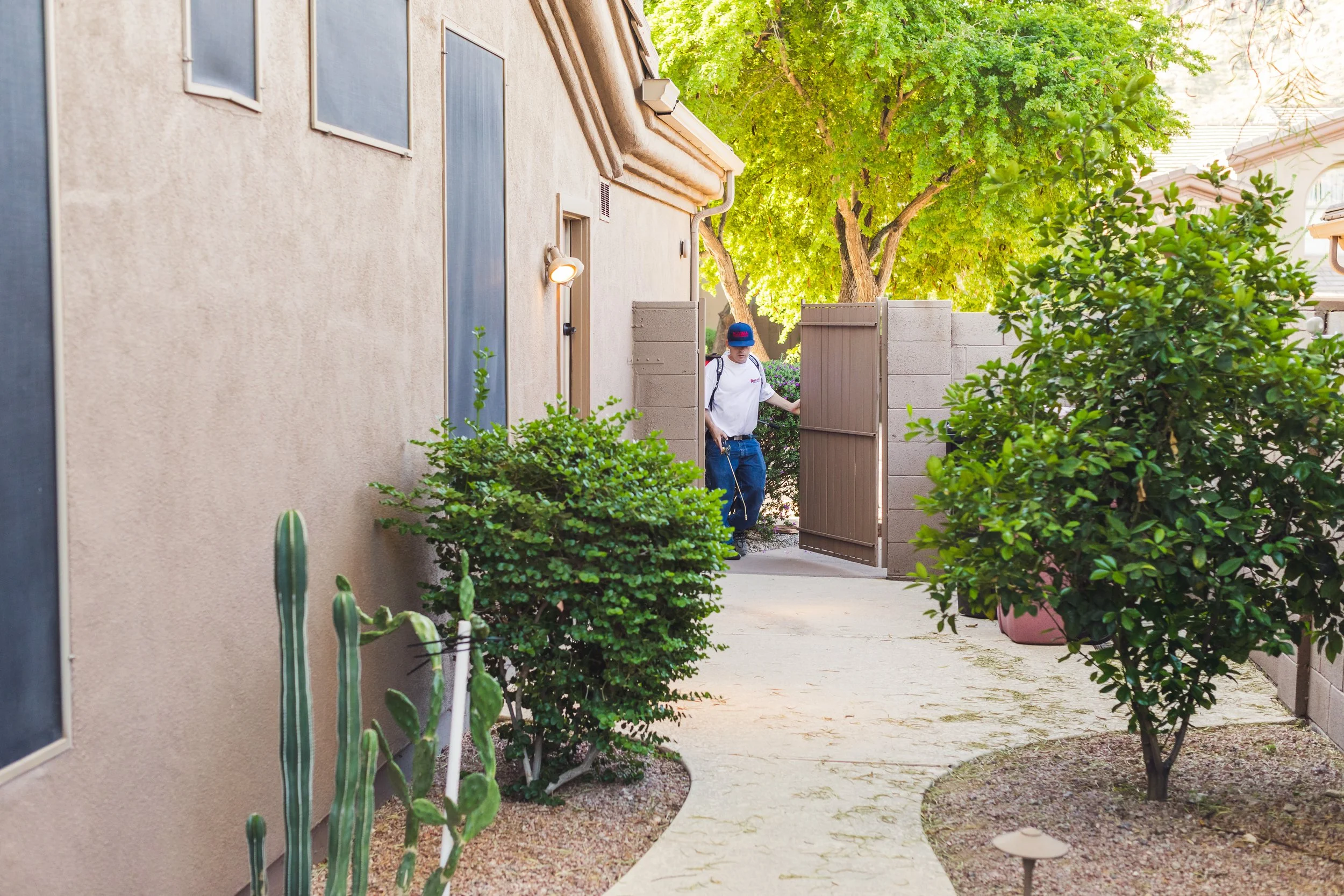
Wasps are the pest that takes your backyard hostage: the nest under the patio eave that turns every barbecue into a negotiation, the paper comb growing over the pool gate, the hum inside a wall void that nobody wants to investigate. Russell Pest Control has been taking Valley patios back since 1996: nest removal, eave treatment, and the prevention that keeps next spring's queens from rebuilding in the same spots. Wasp work is one of our highest-volume specialties, and same-day response is standard, because nobody schedules around a nest for a week.
The job is more than knocking down paper: Phoenix wasps are creatures of habit that return to proven nest sites year after year, which is why our treatment covers the site, the eave line, and the season, not just the visible comb. And when the "wasps" turn out to be bees (it happens weekly), you're already talking to the right company; we'll tell you which you have from a photo, free.
Nest Removal That Stays Removed
Same-Day, Seriously
Wasp nests don't improve with age. Call by midday and the nest usually comes down before dinner.
Site-Fidelity Treatment
Wasps rebuild where wasps succeeded. We treat the site and the eave line so spring queens shop elsewhere.
Wall-Void Capable
The hum inside the wall is the dangerous version. We locate, treat, and seal, not spray-and-hope.
Wasp or Bee? Free Answer
Text us a photo. The ID changes everything, and we do both jobs, no wrong door.
Right Time of Day
Nest treatments timed for when the colony's home, so the job ends the problem, not relocates it.
Prevention on the Plan
On service plans, early-season nest starts get knocked down at every visit, before they're ever your problem.
Three Things About Phoenix Wasps Worth Knowing Before You Grab the Spray Can
The Nest You See Is a Franchise, Not a One-Off
Paper wasps choose nest sites by proven success: protected eaves, patio ceilings, tile-roof edges with morning shade, and successful sites get re-colonized year after year by new queens. Knock down the comb without treating the site, and you've cleared the lot for spring construction. Our treatments leave a residual at the site and along the eave line, which is the difference between removing a nest and retiring a location.
The Dangerous Nest Is the One You Can't See
An umbrella comb under the eave is visible, predictable, and honestly a manageable removal. The wall-void or attic colony, discovered as a hum behind drywall or a stream of wasps at a weep hole, is the version that ends badly for DIYers: confined space, no escape line for the colony, and a defensive response delivered at face height through your living room. Void nests are professional work, full stop, and they're work we do every week.
The Spray Can Has a Physics Problem
The hardware-store wasp spray reaches twenty feet on the box and rather less from a wobbling ladder at dusk with adrenaline involved. Most wasp-sting stories we hear involve the same scene: a homeowner, a ladder, a partial hit, and a colony with a forwarding address for the person holding the can. A $20 can plus an ER copay is worse math than one professional visit, and the nest site still isn't treated when it's over.
Every Wasp Problem the Valley Builds
Where the Nests Show Up
- Patio ceilings, pergolas, and shade-structure corners
- Eave lines and fascia: especially morning-shade exposures
- Tile roof edges and the voids under barrel tiles
- Pool equipment enclosures, slides, and diving-board undersides
- Grill cabinets, mailbox interiors, and play structures
- Block wall weep holes and fence-rail ends
- Wall voids, attic vents, and soffit gaps (the serious ones)
- Citrus and dense shrubs (foraging and paper-pulp gathering)
Who You Are Dealing With
- Paper wasps: the Valley's main event: umbrella combs, visible larvae cells, defensive but predictable
- Yellowjackets: cavity nesters with attitude; ground holes, wall voids, and a taste for your picnic
- Mud daubers: those organ-pipe mud tubes; nearly harmless spider hunters (we'll tell you when doing nothing is fine)
- Tarantula hawks: huge, blue-black, terrifying, and almost never your problem (solitary; they're hunting tarantulas, not you)
- "Wasps" that are actually bees: weekly occurrence; the photo triage sorts it in minutes (Bee Removal)
When It's Urgent
- Nest over a doorway, gate, or pool entry (traffic + colony = stings)
- Wasps entering a wall, soffit, or weep hole (void colony establishing)
- Sting-allergic household members (every nest is urgent; say so when you call)
- Sudden aggression at a previously calm nest (colony at defensive peak, late season)
From Call to Clear Patio: the Process
Photo Triage
Text a photo from a safe distance, and we'll confirm wasp vs. bee, species, and urgency before the truck moves. It takes minutes, it's free, and it means the right equipment arrives the first time.
Timed Treatment
Wasp work has a clock: treat midday, and you kill the house-sitters while the foragers are out building tomorrow's grudge. We time nest treatments for when the colony's home, treat the comb and its occupants, and remove the nest: paper, cells, and all.
Treat the Site, Not Just the Nest
The nest point and surrounding eave line get a residual application, because wasp real estate gets re-listed every spring. This is the step the spray can skips and the reason our removals stay removed.
Void Nests Get the Full Protocol
Wall and soffit colonies get located properly (the entry hole and the nest are rarely roommates), treated through the right access, and the entry sealed after the colony's done. Sealing first is how you chase wasps into the house. It's careful work in the right order, which is the entire trick.
Prevention Rides the Plan
For service-plan customers, every visit includes the eave patrol: early-season nest starts (golf-ball-sized, two wasps, ten cells) get knocked down before they're ever a colony. It's thirty seconds per eave in March that saves a same-day call in June, and over a season, the patrol retires more nests than any spray can in the Valley.
Bees, Not Wasps?
Moving cluster or steady traffic into one wall gap = likely bees, a different job on a different page.
The Eave Patrol Rides the Plan
General pest plans include early-season nest knockdowns at every spring visit.
What Wasp Work Costs
A Job We've Done Thousands of Times
- Standard accessible nests: priced on the triage call, straightforward and same-day; wasp treatments are one of our most-requested standalone services, and the pricing reflects a job we've done thousands of times
- Wall-void and attic colonies: scoped after the locate (access and sealing vary the work)
- Plan customers: eave patrol and early-season knockdowns are included in regular visits
- 15-day re-treat warranty applies; if activity persists at a treated site, we're back free
- No initial fees, no contracts, quote holds
Nest Down Today
Same-day is the wasp-call standard, which usually means by midday or by dinner. Allergic household or nest over a doorway? Say so; those route first.
No initial fees. No contracts. Same-day nest response.
Call or Text (623) 780-9099How Wasp Jobs Actually Play Out
The Sound in the Wall
A customer called about roaches and mentioned, almost in passing, a sound in the wall "like an insect." Our technician traced it to a wasp entry point and an established colony, located, treated immediately, and done before it became the August version of itself. His review afterward called out the part that matters: the problem he didn't know he had was the one worth finding.
Michael B., Google reviewThe Patio That Hosted Two Parties
The June call: the family barbecue got crashed, the nest over the pergola got noticed the hard way, and the second party that weekend belonged to us. Same-day knockdown, eave-line residual, and the follow-up note that matters, the same pergola corner had hosted nests two years running. The residual treatment broke the streak; the third summer was the first quiet one. Wasps keep records; so do we.
The Emergency That Got Handled Like One
"Have used this company for years. Always done a great job and responded to emergencies promptly.", filed under wasp extermination. "Promptly" is the whole product on a wasp call, and it's why the phone gets answered by someone who can put a truck on your street today.
Rochelle M., Google reviewRussell Wasp Control vs. the Spray-Can Weekend
| What Matters | Russell Pest Control | DIY / Chain Drive-By |
|---|---|---|
| Timing | Treated when the colony's home | Whenever the ladder's out |
| The site | Residual on the nest point + eave line | Paper knocked down, lot re-listed |
| Wall voids | Located, treated, sealed, in that order | Sprayed at the hole (and into the house) |
| ID first | Wasp vs. bee confirmed by photo, free | Find out at the top of the ladder |
| Repeat sites | Tracked in your property notes | Groundhog Day every June |
| Mud daubers | Honest "leave it" when that's the answer | Charged for anyway |
| Safety gear | Suited for the defensive species | Shorts and optimism |
| Allergic households | Flagged and prioritized | Not asked |
| Guarantee | 15-day re-treat, free | Receipt |
| Speed | Same-day standard | Next available window |
The Phoenix Wasp Calendar: Why Your Eaves Are Never Off the Market
April: the Founding Queens
Spring warmth sends overwintered queens out scouting, and every queen is shopping for protected overhead real estate, which your patio supplies professionally. April's golf-ball nest starts are the cheapest wasp control of the year: one knockdown ends what would've been June's colony.
Summer: Peak Colony, Peak Attitude
By midsummer, successful nests run dozens of workers with a colony to defend, and the Valley's outdoor season collides with theirs: pools, barbecues, and evening patios all sit inside somebody's defensive radius. It's our heaviest wasp-call season, and the season same-day response earns its keep.
Monsoon: Rebuild and Re-House
Storm winds take down exposed combs, and displaced colonies re-establish fast, often somewhere more sheltered: deeper under the eave, into the soffit gap, behind the shutter. Post-storm weeks bring both new nests and relocated ones; a quick eave walk after each big blow catches them at golf-ball size.
Fall: the Desperate Weeks
Late season flips wasp behavior: colonies peak just as food tightens, and foragers get pushy, this is the season of wasps in your soda can and standoffs at the hummingbird feeder. Nests you coexisted with all summer get bolder in October; it's the right month to stop coexisting.
Tile Roofs: the Valley's Wasp Hotel
The same barrel-tile voids that admit rodents make perfect wasp shelters: shaded, protected, and directly over your front door. Tile-edge nests are a Phoenix signature; they're invisible until traffic gives them away, and they're a standard stop on our eave patrols. If wasps are appearing near your entry with no comb in sight, look up at the tile line, or better, let us.
Pool Decks and Misting Systems
Wasps need water like everything else in this desert, and pool decks, fountains, and patio misters are their municipal supply. Steady wasp traffic at the waterline usually means a nest within easy flight; the traffic is the clue, and following it back is the job.
Block Walls, Weep Holes, and Fence Rails
The Valley's iron fence rails are hollow, the block walls are vented, and yellowjackets and paper wasps treat both as pre-built housing. Rail-end and weep-hole nests deliver the classic surprise sting at gate height (kid height), which is why fence lines are on the inspection route for every wasp call.
What Three Decades of Wasp Work Teaches
Paper Wasp or Yellowjacket: the Nest Tells You
Open umbrella comb with visible cells, hanging from a stalk: paper wasp, defensive within a radius, but predictable. Enclosed nest or traffic disappearing into a hole (ground, wall, rail): yellowjacket, touchier, more persistent, and the species behind most multi-sting incidents. The ID drives equipment, timing, and the amount of respect the approach gets; it's the first thing our photo triage settles on.
Site Fidelity Is the Whole Game
Wasps don't reuse old comb, but they absolutely reuse proven locations; the chemistry and geometry of a successful site get rediscovered by new queens season after season. That's why treatment without a site residual is a subscription you didn't mean to buy, and why our property notes track your historical nest points the way they track rodent entries. Your eaves have a rap sheet; we keep it.
The Dusk Doctrine
A colony treated at noon is a colony treated minus its workforce. Foragers return at dusk to a destroyed home and redistribute along your eave line, angrier and homeless. Professional timing waits until the colony is home. Slower-looking, decisively better, and the reason "they came back the next day" stories almost always start with a midday spray can.
Wall Voids: Order of Operations or Chaos
The cardinal rules of void colonies: locate the nest (not just the entrance), treat before sealing, and never plug an active entry. Wasps trapped in a wall follow light, and the light is your outlet fixtures. We've cleaned up after enough reversed-order DIY attempts to put the rule on the website: treat, verify, then seal. In that order, every time.
Mud Daubers: the Free Pass
Those mud organ-pipes on your stucco belong to solitary wasps that hunt spiders (including black widows) and essentially never sting people. The honest call is often "scrape the tubes if you don't like the look, and thank them for the spider work." We'd rather tell you that than invoice you for an enemy you don't have; it's also why customers believe us about the nests that ARE problems.
Tarantula Hawks: Respect, Don't Panic
Two inches of blue-black wasp with orange wings will get anyone's attention, and its sting is legendarily painful, but it's a solitary tarantula hunter with zero interest in you, no colony to defend, and no nest on your eave. Give it the sidewalk, and it's gone. They're a great example of the rule that runs this page: identify first, because the scariest-looking wasp in Arizona is among the least dangerous to your family.
Stings, Allergies, and Honest Risk
For most people, a wasp sting is a bad hour; for the allergic, it's an emergency, and unlike bees, wasps sting repeatedly and recruit help. Households with known allergies should tell us on the first call: those jobs get priority routing and extra-conservative clearance before anyone declares the yard open. And any sting with breathing trouble, swelling beyond the site, or dizziness is a 911 call before it's a pest control story.
Wasp Questions, Answered Straight
Can't I Just Knock the Nest Down Myself?
A golf-ball starter nest with two wasps in April? Honestly, maybe, from a distance, at dusk, with an exit plan. An active summer colony? No, partial knockdowns scatter defensive wasps along your eave line, and the site rebuilds anyway. The professional version costs one visit and ends at the location, not just the paper.
When Are Wasps Least Active?
Dusk and dawn, when foragers are home, and temperatures are down, are exactly when professional treatments are timed. Midday is when the nest looks deceptively quiet and isn't.
Why Do Nests Keep Coming Back to the Same Spot?
Site fidelity: New queens rediscover proven locations every spring. Breaking the cycle takes a residual treatment at the site and eave line, the step that separates a removal from an annual tradition.
Is It a Wasp or a Bee?
Text us a photo, and you'll know in minutes, free. Rule of thumb: visible papery comb or an umbrella nest = wasp; a moving cluster or steady traffic into one wall gap = likely bees, which is a different job on a different page. Getting this right matters; the treatments are not interchangeable.
How Fast Can You Get Here?
Same-day is the wasp-call standard, which usually means by midday or by dinner. Allergic household or nest over a doorway? Say so; those route first.
What Are the Mud Tubes on My Wall?
Mud daubers: solitary, spider-hunting, and about as dangerous as the mud. Scrape the tubes if they bother you; there's rarely anything to treat, and we'll say so rather than charge you for theater.
Do Wasps Sting More Than Once?
Yes, no barbed stinger, no one-and-done. A defensive wasp stings repeatedly and releases alarm pheromone that recruits the colony, which is why "it's just one wasp" near a nest is a sentence that ages poorly.
How Do I Keep Them From Nesting Next Spring?
Three moves: early-season eave patrols (knock down starter nests at golf-ball size), residual treatment on historical sites, and closing the cavity options: rail ends, weeps, soffit gaps. Plan customers get the patrol built into spring visits; everyone gets the honest list at the first job.
There Are Wasps Going Into My Wall. How Bad Is That?
Bad enough to call today: void colonies grow out of sight, defend at face height, and become genuinely hazardous removals by late summer. And whatever you do, don't plug the hole; trapped colonies chew toward the interior light. Treat first, seal second; we'll handle both in order.
A Huge Black Wasp With Orange Wings Buzzed Me. Should I Worry?
That's a tarantula hawk, and it wasn't hunting you; it hunts tarantulas and has no nest on your property to defend. Painful sting, nearly zero interest in people. Give it space and save the call for the umbrella to cover your patio; that one's real.
What Our Customers Say
Real reviews from homeowners and businesses across the Phoenix Valley.
Take the Patio Back: Today, Ideally
Same-day nest removal, site treatment that breaks the rebuild cycle, and a free photo ID before anything else, wasp control by the family that's cleared three decades of Valley eaves. Your barbecue doesn't need a co-host.
Expect the best from Russell Pest, and have a bug-free day.
Hours
- Monday-Friday: 8:00 AM - 5:00 PM
- Same-day & emergency response, after hours and weekends, owner-answered
- Allergic household? Say so, those calls route first
Wasp Service Area
Phoenix (HQ), North Mountain Village, Camelback East, Moon Valley, Ahwatukee, Scottsdale and North Scottsdale, Paradise Valley, Cave Creek, Carefree, Fountain Hills, Mesa, Gilbert, Chandler, Tempe, Glendale, Peoria, Surprise, Goodyear, and Avondale.