
How to Keep Scorpions Out of Your House: The 3 Things They Want
Quick Answer: Scorpions come inside seeking three things: shelter (cool, dark, tight cracks), moisture (water), and food (other insects). Take away all three and seal the gaps they enter through, and the house stops being worth their trouble. Sealing entry points does more than any other single step.
Finding a scorpion on the wall of a room you thought was sealed tight is unsettling, and the reflex is to reach for spray. Spraying has its place, but it treats the symptom. A scorpion did not wander in by accident. It came in looking for something, and until you understand what that something is, you will keep finding more.
Why Scorpions Come Inside in the First Place
Everything a scorpion does is about survival in a hot, dry climate, and that shapes exactly why they end up in your home. Three drivers pull them toward the structure.
The first is shelter. Scorpions are built to hide. They want somewhere cool, dark, and tight enough that their body touches the surface on both sides, a preference called thigmotaxis. A crack in the foundation, the gap under a garage door, the space behind a baseboard, all of these read to a scorpion as a safe daytime refuge. Your house, especially during the heat of the day, is a large, climate-controlled hiding spot.
The second is moisture. A scorpion can survive a long time without eating, but it still needs water, and a dry yard does not offer much. Anything that produces reliable moisture near your home becomes a beacon: a dripping hose bib, leaky drip irrigation, condensation off an AC unit, an over-watered flower bed against the foundation.
The third is food. Scorpions are hunters, and their menu is other insects, especially crickets and cockroaches. This is the connection most homeowners miss. If your yard or garage has a healthy cricket population, you have set a dinner table, and scorpions follow their prey. A bug problem is a scorpion problem waiting to happen.
Remove shelter, moisture, and food, then close the doors they walk through, and you have addressed the reason they come rather than just the individual that already arrived.
Seal the Entry Points First
If you only do one thing, do this one. Scorpions are remarkably flat, and a gap that looks far too small to matter is a wide-open door to them. A scorpion can flatten its body and squeeze through an opening about as thin as a credit card slid edge-on, roughly a sixteenth of an inch. That number reframes the whole problem, because gaps that size are everywhere on a typical house.
Start with the doors. The gap under an exterior door, and the garage door in particular, is one of the most common entry routes. Install quality door sweeps and weatherstripping, and check that the sweep actually contacts the threshold across its full width. A sweep with a worn corner is an open door.
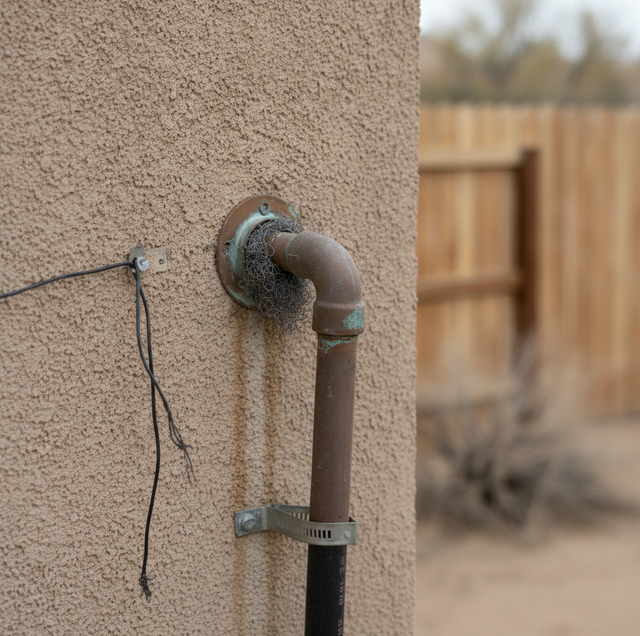
Then work the penetrations. Anywhere a pipe, cable, or conduit passes through the wall, there is usually an oversized hole stuffed loosely or not at all. Seal around plumbing penetrations, hose bib escutcheons, and utility entries with a proper sealant or steel wool packed behind caulk. Weep holes in brick veneer are a known route as well, and screened weep-hole covers or stainless mesh let the wall breathe while keeping scorpions out.
Finish with the shell itself. Caulk cracks in stucco and around window frames, seal gaps where the frame meets the foundation, and repair torn window screens. None of this is glamorous, but it is the difference-maker. Sealing does what spraying cannot: it removes the pathway instead of waiting to poison whatever finds it.
Clear the Harborage Outside
Scorpions that never reach your walls never get the chance to slip through them, so the second front is the yard. The goal is to strip away the cool, dark, moist hiding spots that let a scorpion population build up right against the house.
Woodpiles are the classic offender. Stacked firewood against the wall is a five-star scorpion hotel: dark, tight, stable, and undisturbed. Move it well away from the structure and up off the ground. Do the same with rock piles, stacked pavers, yard debris, and piled leaves. Anything that sits still and holds shade is potential harborage.
Dense plantings against the foundation do the same job as a woodpile. Thick ground cover, overgrown shrubs, and bushy plants touching the wall create a shaded, humid corridor that leads insects and scorpions straight to your entry points. Thin them out, prune plants back off the wall, and keep a clear, dry buffer strip around the perimeter. Block walls deserve attention too, since the hollow cells and cracked mortar joints are prime hiding spots; keep them clear and repair the gaps.
A bare buffer around the foundation acts as a moat. The wider and barer the band around your foundation, the farther a scorpion has to travel across open, exposed ground to reach the house, and exposed ground is exactly what a creature built to hide avoids.
Cut Off the Water
Because moisture is one of the three things drawing scorpions in, drying out the area near your home removes a real reason for them to approach. This step overlaps with good dry-yard practice, so it tends to pay off in more ways than one.
Fix the obvious leaks first: a dripping hose bib, a weeping irrigation fitting, a slow leak under the kitchen sink. Then look at drainage and grading. Water that pools against the foundation after irrigation or a rare storm keeps the soil damp exactly where you least want it. Direct downspouts away from the wall and correct low spots that hold water.
Irrigation is the big one in a dry yard. Drip lines and sprinkler heads that run heavy near the foundation keep a moist zone alive year-round. Pull emitters back from the wall where you can, repair the ones that mist or puddle, and avoid over-watering the beds closest to the house. Reducing that reliable water source makes the immediate perimeter far less hospitable, in the scorching months and the mild ones alike.
Starve Out the Food Supply
Here is the step people skip, and it may be the one that matters most. You can seal well and still see scorpions if the buffet is stocked, because a strong population of crickets and cockroaches keeps drawing hunters in. Controlling the prey insects is at least as important as spraying for the scorpions themselves.
Reduce what feeds the crickets and roaches. Outdoor lighting draws insects at night, so switch exterior fixtures to yellow bug bulbs or LEDs that attract fewer flying insects, and aim lighting away from doors. Clear the yard debris and dense vegetation that shelter crickets, keep the garage from becoming an insect refuge, and manage general pest pressure around the property. Every cricket you remove is a meal a scorpion will not find at your house.
Handle the Indoors and Stay Safe
Inside, clutter is a harborage. Cluttered garages, storage closets, and stacked boxes give scorpions the tight, dark spaces they seek, so reducing clutter and storing items in sealed bins removes indoor hiding spots. Keep boxes off the floor where practical.
Two habits are worth building. Shake out shoes, gloves, and clothing before putting them on, especially anything left on the floor or in the garage, since a scorpion tucked into a shoe overnight is a common way stings happen. And use a black light after dark: scorpions glow a vivid blue-green under UV, which makes an evening sweep of the baseboards, walls, and yard an effective way to find and remove them.
One important detail changes depending on where you look. The bark scorpion is a strong climber and clings to vertical surfaces, so it turns up on walls, in ceiling corners, and above door frames, not just along the floor. Check high as well as low.
On safety, take stings seriously. A bark scorpion sting can be medically significant, and reactions tend to be more severe in young children and older adults. For a severe reaction, seek medical care promptly rather than waiting it out. And if you are seeing scorpions repeatedly, a professional can identify the species, find the entry points and harborage you have missed, and treat the prey-insect problem underneath it, which is the part a can of spray never reaches.
Frequently Asked Questions
A scorpion can flatten its body and slip through a crack about as thin as a credit card held edge-on, roughly a sixteenth of an inch. Their young, called nymphs, are smaller still and squeeze through gaps an adult could never fit, so sealing has to be thorough rather than limited to the obvious openings. That is why door sweeps and sealing around pipes and weep holes matter more than almost anything else you can do; the gaps are already there, and they are more than wide enough.
A spotless house can still sit next to the insects that scorpions hunt. If a cricket or cockroach population is living in the yard or garage, it draws scorpions in regardless of how clean the kitchen is, which is why controlling their prey is as important as sealing and spraying. The trigger is the food supply outside, not tidiness indoors.
Yes. A scorpion can go a long stretch without food, but it is far more sensitive to moisture, so a chronically damp spot, a leaking drip emitter, or an AC condensate line that never dries is a stronger draw than a few crumbs on the floor. Leaky irrigation, a dripping hose bib, and damp soil near the foundation all pull them toward the house, so drying those spots out removes one of the three core reasons a scorpion approaches in the first place.
The bark scorpion can. It climbs well and clings to vertical surfaces, so it shows up on walls, in ceiling corners, and above door frames rather than only on the floor. Because they climb, the habit of shaking out shoes should extend to towels, folded laundry, and anything left leaning against a wall, not just items sitting on the floor. A floor-level scan alone misses the ones overhead, so check high surfaces and the tops of door frames too.
They glow a bright blue-green under a black-light (UV) flashlight, because compounds in their exoskeleton fluoresce under ultraviolet light. Scanning the yard, baseboards, and walls with a UV light after dark reveals scorpions you would never spot in normal light, which makes it the single most useful tool for locating and removing them.
Pulling woodpiles, rock piles, and debris away from the walls and thinning the dense plants touching the house removes the cool, dark harborage scorpions shelter in. Keeping a clear, plant-free strip of gravel or bare ground a foot or two wide right against the foundation removes the cool, damp staging spot they hide in just before slipping inside. That open band forces them to cross exposed ground to reach the house, and exposed ground is exactly what a creature built to hide avoids, which makes the home far less inviting.
Book a scorpion inspection — get the entry points and prey insects handled, not just sprayed. Russell Pest Control serves the Phoenix Valley. Call (623) 469-7583.
