
What Do Scorpions Hate? The Truth About Home Remedies
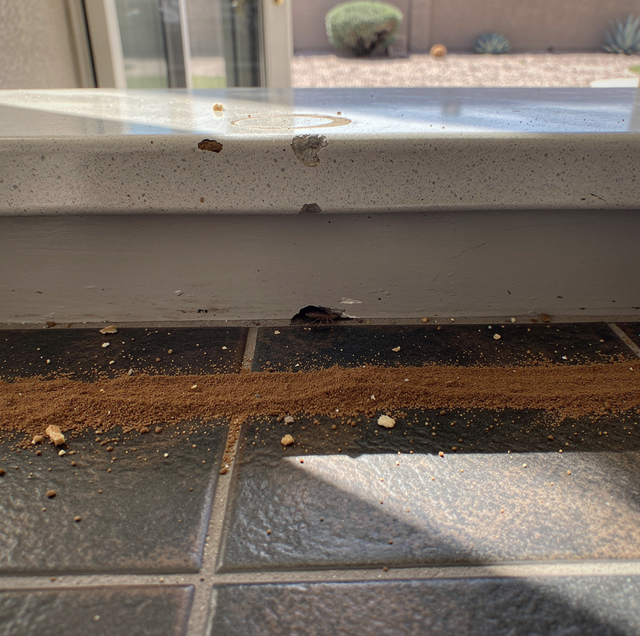
Sprinkle cinnamon around your baseboards and scorpions will turn around and leave. That's the claim, and it shows up every summer on gardening forums, home-remedy roundups, and the comment section of pretty much every scorpion video that goes viral. Cinnamon, peppermint oil, diatomaceous earth, cedar oil spray: the list of things a scorpion supposedly "hates" keeps growing, and each one gets repeated with enough confidence that it starts to sound tested.
None of that confidence comes from how a scorpion actually experiences its surroundings. Before any of these remedies can be judged fairly, it helps to know what "hate" would even mean to an animal that doesn't process the world through smell the way a person, a dog, or a mosquito does.
How a Scorpion Actually Reads a Room
A bloodhound tracks a scent trail through its nose. A scorpion reads its surroundings mostly through its skin. Fine hairs called trichobothria, arranged on the pedipalps (the pincer-bearing arms up front), pick up the faintest shifts in air movement, enough to sense a cricket's wingbeat from several inches away in total darkness. Comb-shaped organs on the underside called pectines drag lightly across the ground as the scorpion walks, tasting the surface chemistry beneath it almost the way a tongue reads a plate of food. Slit-shaped sensors in the exoskeleton pick up vibration carried through the ground, a wall, or a slab.
None of that is a nose built to be driven off by an unpleasant smell drifting across a room. A scorpion does have chemoreceptors, so a strong volatile compound isn't undetectable to it. But detecting a compound and abandoning a hunting route because of it are two different things, and everyday claims about home remedies mostly assume the second without evidence.
Cinnamon and Cinnamaldehyde: What the Claim Gets Half Right
Cinnamon's active compound, cinnamaldehyde, is a genuine contact irritant to a range of small invertebrates, and there's published work showing it affects certain ants and stored-product insects upon direct exposure. That's the grain of truth the myth grew out of.
What that research doesn't cover is bark scorpions specifically, and what it doesn't change is how the compound behaves once it's sitting on a hot patio slab. Cinnamaldehyde is volatile: it evaporates. Summer air routinely clears 110 degrees in a hot, dry climate, and a concrete or paver surface in direct sun runs well past the air temperature reading, so whatever vapor a sprinkle of cinnamon puts off is mostly gone within hours, sometimes closer to one. Even granting the most generous reading of the ant research, a line of cinnamon at a doorway is a same-day nuisance to a scorpion that happens to cross it while the compound is still present, not a barrier a scorpion learns to avoid.
Peppermint and Other Essential Oils: A Contact Irritant, Not a Perimeter
Peppermint, tea tree, clove, and similar oils get the same treatment online, and the underlying logic is the same as cinnamon's: certain terpene compounds can irritate a small invertebrate's sensory hairs or breathing structures on direct contact. That's plausible in a lab dish. It's a much bigger leap to a diluted spray holding a line across a threshold outdoors.
Two problems compound here. The first is the same heat and evaporation issue: essential oils are, by definition, volatile, and they thin out fast in dry heat. The second is that a scent, even a strong one, does nothing to explain why the scorpion showed up in the first place. Bark scorpions follow food, mainly crickets and roaches, and follow shelter from heat. Spraying a perimeter with something that smells strong to a person doesn't remove either of those two draws.
Diatomaceous Earth: A Real Mechanism With a Narrow Job
Diatomaceous earth (DE) is the one remedy on this list with a real, established mode of action, and it's worth taking seriously on its own terms. DE is a fine powder made from fossilized diatoms, and under magnification the particles are sharp-edged. Spread dry across a surface, that powder abrades the thin waxy layer that coats an arthropod's exoskeleton and holds moisture in. Once that layer is compromised, the animal loses water faster than it can replace it, and death follows over the following days from dehydration rather than from any poison.
That mechanism is real, but it comes with real limits. It only works dry: a single humid night, a sprinkler running past its edge, or a heavy storm clumps the powder into a crust that stops functioning almost entirely. It's also contact-only. It doesn't drift, and it doesn't repel anything from a distance; a scorpion has to walk directly through a reasonably thick layer of it, for real time, before the desiccation effect adds up. Bark scorpions climb, squeeze through gaps, and travel along wall lines and expansion joints rather than crossing open ground the way an ant on a trail does, so a scattering of DE along a foundation misses most of the routes they actually use. It's a legitimate tool against individual insects with thin cuticles in a controlled, dry space; it isn't a barrier a scorpion population respects.
Diatomaceous earth is a respirable dust that irritates eyes and airways. Pool-filter grade is a different, calcined product containing crystalline silica, and it is not the pest-control form despite sitting on a nearby shelf.
Cedar Oil Sprays and the Fine Print on the Label
Bottled products marketed specifically as scorpion repellent often list cedar oil or a related plant extract as the active ingredient, and many are sold as minimum-risk pesticides. That category is worth understanding honestly rather than taking either side's marketing at face value: the EPA exempts products made entirely from a published list of low-toxicity ingredients from federal pesticide registration, which means no one at the agency has reviewed whether the bottle repels scorpions under real conditions. Exempt products file no efficacy data at all. That doesn't prove the spray does nothing; it only shows that "sold as a repellent" and "independently proven to repel" are two different claims, and the label alone doesn't tell you which one you're getting.
Quick Reference: What Each Remedy Actually Does
| Remedy | Real mechanism | Why it falls short outdoors |
|---|---|---|
| Cinnamon | Cinnamaldehyde irritates some invertebrates on contact | Evaporates within hours in high heat; no scorpion-specific data |
| Peppermint / other oils | Terpenes may irritate sensory hairs on contact | Volatile, thins fast; doesn't remove the food or shelter drawing scorpions in |
| Diatomaceous earth | Abrades cuticle, causes dehydration over days | Contact-only, fails wet, misses climbing and gap routes |
| Cedar oil sprays | Plant-oil active ingredient | EPA-exempt category doesn't require efficacy testing |
Why the Heat Breaks Almost All of Them
Notice the pattern: cinnamon, peppermint, and cedar oil all rely on a volatile compound staying present long enough to matter, and diatomaceous earth relies on staying bone dry. A hot, dry climate doesn't cooperate with either requirement for long. A slab that reaches well past 110 degrees in July burns off scent compounds in a fraction of the time a milder region would, and the same summers bring storm humidity and sprinkler overspray that undo DE just as fast. Nearly every home remedy on this topic fails for one of those two reasons, not because the underlying chemistry is fake, but because the climate doesn't give either mechanism the conditions it needs to hold up for more than a day.
Where Scorpions Actually Live
Nothing sprinkled at a doorway changes what's happening at the wall. Bark scorpions, the most venomous scorpion species in the United States, don't wander into a house at random. They shelter through the heat of the day in masonry block cores, weep holes, expansion joints, stucco cracks, and the voids behind siding, then come out after dark to hunt the same crickets and roaches sheltering in those spaces. A gap barely a sixteenth of an inch wide is enough of a doorway for one to use, night after night, regardless of what's been sprayed or dusted a few inches away.
That's the real reason none of these remedies solve an ongoing problem: they treat the doorstep, not the wall. A population that's established itself in the block cores along a backyard wall, or in the gap where a patio slab meets the foundation, keeps producing sightings until those specific routes are mapped, closed, and the scorpions already inside are drawn out and removed, not masked. That's a different job than any spray or powder is built to do, and it's the difference between a UV sweep paired with structural sealing and a bag of cinnamon from the spice aisle.
A pest-control program built around scorpions typically starts by mapping where they're actually entering and sheltering, then closes those specific routes rather than treating the whole yard as a guess.
Frequently Asked Questions
No reliable evidence supports either one, and both are a real inhalation hazard indoors, particularly in a closed room with pets or small kids nearby. Neither compound does anything about the gap a scorpion actually uses to get in, so any drop in sightings tends to be coincidental.
Limonene, the compound in citrus peel and orange oil, is a mild contact irritant to some soft-bodied pests, but there's no solid evidence it reliably repels bark scorpions. Fresh peels also dry out or mold within a day or two in that kind of heat, so they need to be replaced constantly, even under the most generous reading of the claim.
Not directly. Scorpions hunt mainly through ground vibration and touch rather than by chasing light or movement, so a zapper on the patio doesn't lure them the way it might lure moths. Their main prey, crickets and roaches, aren't strongly drawn to zappers either, so the food source that brings scorpions around usually stays untouched.
No. Mothballs are labeled for enclosed clothing storage only, and scattering naphthalene or paradichlorobenzene in open yard or crawlspace air goes directly against the product's own label directions. The fumes are a genuine inhalation risk for pets and kids, which is part of why a pet- and kid-safe pest program avoids them entirely in favor of physical sealing.
Not automatically. Several essential oils marketed for scorpion or general pest repellent, including some concentrated peppermint and tea tree products, can irritate or sicken a cat in particular, since cats break down certain plant compounds far more slowly than dogs do. "Natural" on a label isn't the same as "safe near a pet's paws or nose."
On its own, no, and the animal's own biology is a large part of why. A bark scorpion's cuticle carries a heavy waxy layer built for holding water in a dry climate, so it tolerates considerably more abrasion before dehydration becomes a problem than a thin-shelled ant, silverfish, or newly hatched roach does. The species DE works fastest against are the small, soft, thin-cuticled ones, which, in a yard, means it can thin out part of the scorpions' prey supply while leaving the scorpions themselves largely unbothered.
Cinnamon in the spice rack and diatomaceous earth in the garden aisle both come from something real: a genuine compound, a genuine mechanism, tested in conditions that don't look much like a 110-degree backyard slab in July. None of it addresses the block core, the expansion joint, or the crack under the patio slab where the population is actually living. Closing those specific routes, not the doorstep, is what changes how many scorpions you see.
Schedule a scorpion inspection — a technician maps where scorpions are entering and sheltering on your property and seals those routes, backed by a free re-treat warranty if sightings continue. Russell Pest Control serves the Phoenix Valley. Call (623) 469-7583.
