
What Pictures to Send for Bee Removal, and in What Order
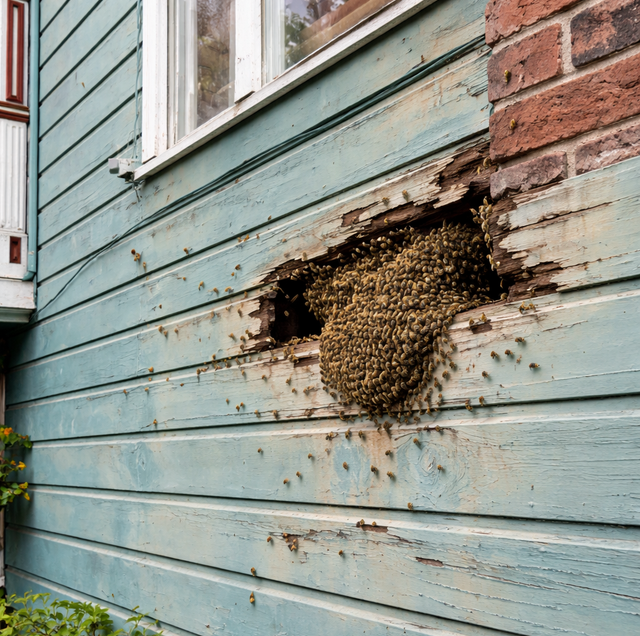
The phone is already in your hand, and the bees are moving in and out of a gap somewhere on the house. The obvious next move is to walk closer, tilt the camera up, and get a shot sharp enough actually to show something instead of a blur against the siding. That instinct is the wrong one. The photo that helps most is rarely the close-up. A shot taken with a mediocre digital zoom from twenty feet away tells a technician more than a crisp frame taken while standing directly under an active flight path. What a phone camera captures before anyone arrives does real work: it shapes what kind of job this is expected to be, how urgent the dispatch is, and what gear rides out on the truck before a single person has walked the property.
Never set a ladder against a wall to photograph an entry gap. A ladder puts you inside the colony's response radius with no quick way down, and the vibration it sends through the wall travels straight to the bees.
Five shots are worth capturing, roughly in this order, because the ones that change the answer most come first, plus a short list of details no camera can record.
Shot One: The Entry Point, Zoomed In From Where You Stand
The gap itself is the single most useful frame, but it only helps if it's shot from a safe standing distance and zoomed digitally rather than approached on foot. Colonies get into a cavity through openings barely wider than a single bee, and a wide gap versus a hairline crack tells a technician something different about how the colony got in and how hard it will be to seal afterward once the bees are gone. Frame the gap itself, hold the phone steady with both hands, and let the zoom do the walking instead of your feet. If the gap is thirty feet up under a roofline, a shot from the ground with maximum zoom is still more useful than no photo at all, and it keeps you out from under the traffic the whole time you're taking it.
Shot Two: The Surrounding Structure, Not Just the Hole
A tight crop on the entry gap alone omits the one thing a technician needs before deciding which tools to bring: what the gap is actually cut into. Step back and shoot the section of wall or roofline around it, wide enough to show whether it's stucco, wood siding, brick, or a vent cover, and whether there's a chimney, meter box, or utility line running nearby. A colony behind a foam-and-stucco veneer gets approached differently than one inside a hollow masonry block or a wood fascia board. That distinction, visible in a photo, can change what equipment rides out on the truck before the crew even rings the doorbell. If there's a second gap or an old, patched hole nearby, include that in the frame too; a previous entry point that was never properly sealed is often how a new colony gets in a second time.
Shot Three: A Video Beats Another Still
A ten-second video of the entry point usually tells a technician more than three still photos combined, because traffic pattern is information a still frame simply can't hold. Watch whether bees are moving in only, out only, or both directions at once, and whether returning bees are carrying visible loads of pollen on their legs. Both are things a still frame cannot hold, and a ten-second clip records without you having to interpret them, and both change how established the colony looks before anyone arrives. Sparse or one-way movement can indicate something else is going on, such as a colony that's already moved on and left scent behind for scouts to investigate. Shoot the video from the same safe distance as the photos, in the middle of a warm, calm day when flight traffic is at its heaviest, since a wall that bakes in full sun tends to run warmer traffic than a shaded one. A clip shot at dawn, after dark, or into a stiff wind will show little traffic even from a busy colony, which can read as "not urgent" when it isn't.
Shot Four: The Wider Angle That Places It on the Building
Before a crew loads the truck, they need to know where on the property the colony actually sits, not just what it looks like up close. A photo taken from across the yard, showing the full wall or roofline and how high the entry point sits relative to a window, patio, or AC unit, tells them what ladder length and access route to plan for and whether the area needs to be roped off from foot traffic before work starts. This shot also catches details a close-up misses entirely, like a pool, play structure, or walkway that sits directly under the flight path and needs to stay off-limits in the meantime, or a side gate that will need to be propped open for equipment.
Shot Five: Whatever Shows Up Indoors
If a colony has been established for a while, evidence sometimes appears on the inside of the wall before it's obvious on the outside. A brownish stain spreading across drywall or a ceiling tile, especially one that grows visibly over a few days, usually means comb and honey are weeping through from a cavity that's been occupied longer than it looks from outside. Photograph the stain and note roughly where it sits relative to the exterior entry point, since lining the two up helps a technician judge how far the comb has spread inside the void. A phone camera can't capture sound or heat, so if there's an audible hum through the wall at night, especially one that's louder in a specific room, or a patch of drywall that feels noticeably warm to the touch, say so when the photos go out; that detail changes the estimate of colony size as much as any image does.
The Details No Camera Can Show
A few facts matter as much as the pictures and never show up in a frame. How long the activity has been going on, days versus weeks versus months, is one of the strongest clues to how large the colony has grown and how much comb is likely inside, since a colony builds outward from a single scout's find over time rather than arriving fully formed. Whether anyone in the household has ever had a strong reaction to a sting is worth mentioning up front, since that affects how the job is prioritized and staffed, regardless of how big or small the colony looks in a photo. And if what you're looking at is a dense clump of bees hanging in the open on a branch or fence rail, with no entry point underneath it at all, say that specifically. A resting swarm like that has no comb yet and little to defend, and it often moves on within a day or two on its own, which is a very different situation from bees working a sealed cavity in a wall and worth flagging before anyone gets dispatched.
Frequently Asked Questions
A regular phone camera is fine, and how you send the file matters more than which camera took it. Text messages compress images so hard that they blur the details that decide the job, like the exact width of the entry gap or whether returning bees are carrying pollen. Send by email or a photo-sharing link instead, and send the original file rather than a screenshot of it, since a screenshot compresses a second time and also strips the timestamp that shows when the shot was taken.
Photograph from an upstairs window or a neighboring vantage point if one exists, rather than moving a ladder closer to get a better angle. A technician can still work from a general description of the location, height, and surrounding structure, even without a clean shot of the gap itself; the wider-context photo matters more in that situation than the close-up would anyway.
No, and if someone in the household already sprayed the opening before you thought to photograph it, say so and photograph it anyway. A sprayed entrance changes what a technician expects to find on arrival, because it changes how the colony behaves once the void is opened, and the photo still records the gap's size and position, which is the part the spray did not change. Dead bees on the ground under the opening are worth including in the same frame, since they date the spraying for whoever reads the photos.
By what's next to it in the frame. A gap shot against blank stucco carries no scale at all, but the same gap photographed alongside a brick course, a mortar joint, an outlet cover, or a standard eave vent gives a reference that can be measured against. A modular brick runs about eight inches long, and a duplex outlet cover is roughly four and a half inches by two and three-quarters, so either one in the shot turns a guess into a measurement. If there's nothing useful nearby, say what the surface is in the message, because knowing whether it is block, stucco over foam, or lap siding gives a technician a size reference that the photo alone does not.
Yes, and it helps. A photo from when the activity was first noticed alongside a current one shows growth over time, which is a more reliable read on how established the colony is than a single recent shot on its own. If the timeline runs several weeks or longer, sending both is worth the extra minute.
They settle two practical things before anyone drives out. The first is whether a beekeeper needs to be lined up in advance, which is a separate arrangement rather than something that gets sorted out on arrival, and it can affect which day the work lands on. The second is whether the cavity is likely to be opened from the outside or from the inside. A colony behind stucco on a two-story wall is usually worked from the exterior with a ladder or lift; one behind an interior partition, or up under a tiled roof, is sometimes reached more quickly by opening the drywall on the room side and repairing it afterward. Photos of both faces of the same wall are what make that call possible before the truck is loaded.
The One Question a Photo Set Answers First
Once the images and a short description are in hand, they mostly answer one question before anyone drives out: does this look like a colony that's been established long enough to have comb and honey worth relocating, or a resting swarm passing through on its own timeline? That single distinction changes almost everything about the visit, from whether a beekeeper is called in to take the bees intact to how much protective gear and time the job requires on arrival. The photos aren't the whole picture, and a technician will still confirm what they show in person, but they're the fastest way to skip a step that would otherwise happen standing closer to the problem than anyone needs to.
Send a few photos before anyone commits to a ladder — a free estimate can tell you what the job actually needs before a technician arrives. Russell Pest Control serves the Phoenix Valley. Call (623) 469-7583.
