
What a Scorpion-Sealing Quote Should Include: Scope, Checkpoints and Terms
The quote lands in your inbox on a Tuesday, and it is one page long. Sealing, exterior, warranty included. You read it twice, and the second read is the one where you notice you cannot tell which gaps anybody plans to close, what goes into them, or how you would know six months from now whether the work held. Nothing on the page is wrong. There is simply not enough of it to check against later.
The gap between a page that describes work and a page you can hold up against a wall is the whole subject here, because a sealing scope stays visible and countable long after the crew leaves.
What a Sealing Quote Is a Record Of
A chemical treatment is a process spread across surfaces. You cannot walk up to it in March and confirm what happened in January. Sealing behaves differently: a finite set of physical openings, each closed with a specific material, each in a place you can reach with a flashlight. The work stays checkable, and that checkability lives or dies on whether the page names the places.
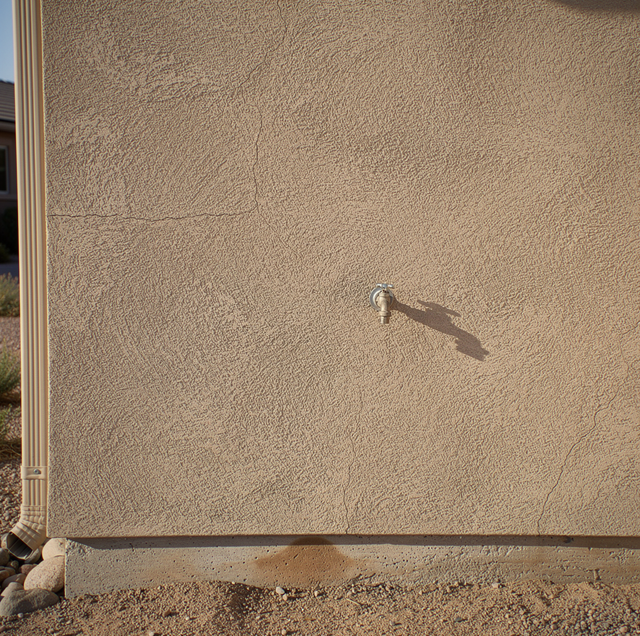
The openings explain why. A bark scorpion flattens its body through a gap of roughly a sixteenth of an inch, which puts the list somewhere most people walk past daily: a weep hole above the foundation line, a hairline crack where two stucco planes meet, the daylight wedge at the bottom corner of a garage door, the ring of open space where a hose bib passes through the wall. A line reading "seal exterior" covers every one of those and none of them at once. So the practical question about a sealing scope is not how confident it sounds. It is how many of its lines you could walk up to and verify yourself.
The Evidence the Checkpoint List Is Built From
A checkpoint list comes from somewhere, and a complete page says where.
Two passes produce it, and they find different things. The first is an after-dark search with ultraviolet light, which makes bark scorpions fluoresce blue-green and shows where activity clusters on the property. The second is a daylight structural pass, because an opening is a route whether or not something is standing in it at nine at night. A settling crack behind a downspout, an unscreened attic vent, a torn door sweep: none of those glow, and all belong on the list.
A daytime pass and an after-dark survey turn up different findings, since bark scorpions shelter out of sight by day. Ask which of the two each listed checkpoint came from, and whether both were run before the list was finalized.
The date attached to that evidence carries weight. Stucco keeps cracking as a house settles, new planting goes in against a wall, a trade repairs trim and leaves a seam behind. A checklist assembled last spring is an accurate picture of that time. Ask when the survey was conducted and how the findings were documented.
What Itemized Actually Means Here
A checkpoint line can carry three different amounts of information, and the difference separates a page you can use from a page you can only trust. The thinnest version is a bare count: fourteen checkpoints tells you the size of the job and nothing about the house. The middle version adds location, and you can find that version. The full version includes the material for each type of opening, and only then can you stand at a spot and see whether it matches the description.
A location written as "north elevation, third weep hole west of the hose bib" works like a street address. "The north side" works like a neighborhood name. Both point at the same part of town, and only one of them gets somebody to the door.
Material pairing belongs on the page for the same reason. Mesh handles weep holes and vents; mortar or hydraulic cement handles stucco cracks and expansion joints; a sweep or brush seal handles a threshold; a flexible sealant handles the space around a pipe penetration. A scope naming one blanket product for the entire exterior describes a single method applied to openings that not all accept.
Then there are the zones that fall off a list by default, because they sit past where a front-of-house walk naturally ends: the block wall line and its hollow cores, gate posts and gate bottoms, irrigation valve boxes, the pool equipment pad, a detached casita or shed, and the garage door track. Ask which of those are on the list and which sit outside it.
What the Page Should Say It Will Not Do
An exclusions paragraph is one of the more useful things on a sealing quote, because it names the second conversation you still have ahead of you.
Sealing closes routes. It does not remove the population already living in wall voids, block cores, rock beds, and valve boxes, which is why sealing and ongoing scorpion control are separate services with separate scopes. The page should make clear which of the two it covers.
Structural repair sits outside a sealing scope too. Crumbling stucco, a weep screed pulled loose across many feet of wall, a door that no longer meets its frame: closing gaps is one kind of work, and rebuilding the surface those gaps live in is another. Access limits belong here as well. Wall sections behind a mounted condenser, under a deck, or against a neighbor's abutting structure often cannot be reached on the same visit, and the page should say so rather than leave it implied. The same goes for roofline items needing equipment beyond a ladder, and for interior work of any kind.
Whether Anybody Comes Back to Look
The strongest signal of a checkable scope is a verification visit, and the page should say plainly whether one is included.
Four details make that line useful. When the visit happens, since sealing material needs time to set before it means anything. Whether it runs after dark with the same ultraviolet lamp, the only condition under which fresh activity shows itself. Whether it walks the same numbered list, one spot at a time, so the visit produces a comparison you can read. And whether you receive the result in writing.
A verification visit is only possible when the checkpoint list exists in a form somebody can re-walk. A scope promising a follow-up look but never itemizing the spots has promised a walk without a map.
What the Warranty Language Should Attach To
A sealing warranty differs from an application warranty because it attaches to physical locations. That single fact tells you what its wording has to reference.
Coverage should describe the material at the listed checkpoints and the ways it can fail: sealant separating from stucco, mortar cracking at a joint, a door sweep taking a permanent set, mesh working loose at a vent. It needs a term with a start date you can circle. It should name what voids it, and those conditions tend to be ordinary household events: pressure washing along a sealed band, painting over a fresh joint, another trade cutting the surface open.
The most useful question here concerns routes found later at a spot that was never on the original list. Those usually open a new scope rather than fall under the existing warranty, and the boundary is worth knowing in advance because it describes what was bought rather than a hole in the promise. Ask how a callback gets verified, too: against the numbered list and the survey diagram, which is what those records exist for.
Reading the Page as One Document
| What a line reads like | What it lets you check afterward |
|---|---|
| "Seal home exterior against scorpions" | That the job happened. Nothing about where or with what. |
| "14 checkpoints, numbered and marked on the attached survey diagram, dated" | Every spot, one at a time, page in hand |
| "Stainless mesh at six weep holes (north); mortar at three expansion joints (south, west)" | Whether the right material went into each type of opening |
| "Covers the sealing material at the listed checkpoints, term beginning at completion" | When to call, and about which spot |
| "Verification visit after dark against the numbered list, result written up" | Whether anyone confirmed the work under the conditions it was built for |
Read down the right-hand column first. A page whose right column comes up mostly blank is describing a job you will be reconstructing from memory the first time a question comes up.
When the List Changes Partway Through
Sealing scopes change during the work more often than people expect. Rock is pulled back from the wall base, and a run of open weep screed appears. A pool pump is moved, and a penetration behind it is exposed.
A complete page says in advance how an addition gets handled: recorded on the same numbered list, described in writing, agreed before material goes in, and carried under the same warranty language as everything else. Ask what happens when a checkpoint turns out to need structural repair rather than sealing. It should come off the list and become its own conversation, with a note recording why it moved.
Frequently Asked Questions
Ask for the company's license number on the document itself, not just their website. It's a one-line addition that costs the company nothing to include, and it gives you something concrete to check independently rather than taking the quote's professionalism on faith. If the plan pairs sealing with a chemical application, ask whether both are done on one visit or two, since the sealed material and the treated band follow different schedules.
Attached is best; referenced by date and available on request is workable. The diagram carries location details; a text line has to be compressed. Ask how it arrives, whether a marked printout, a sketch, or a photo set, and whether photos of each checkpoint before and after the work are included. Photos matter most at spots you cannot reach yourself, like a roofline vent or a wall face behind equipment.
Access method should be named: which elevations are reachable from a ladder, which require different equipment, and whether roofline items fall within the scope. Bark scorpions climb stucco and block readily and travel through wall voids, so attic vents, eave and fascia gaps, and the joint where a second-story wall meets a lower roof are real routes. If the scope covers ground level only, that limit belongs in the exclusions.
Ask directly, because the parts involved wear out on their own schedule. The bottom seal, the side weatherstrip, and the gaps at each jamb are consumable pieces, so find out whether replacing a worn bottom seal sits inside the sealing scope or on its own line. Ask how the scope handles a door hanging out of square, and whether a threshold ramp is included where a slab has settled.
Sealing material is visible on exterior surfaces, so appearance is within the scope. Look for whether mortar and sealant will be color-matched and textured to the surrounding stucco, whether touch-up paint is included, and how mesh at weep holes gets finished so it reads as part of the wall.
A prep list is worth asking for when the page does not include one. Typical items: pull rock and mulch back from the weep screed so the wall base is accessible, move stored items and firewood off the walls, leave gates and side-yard access open, shut off irrigation along the elevations being sealed, and plan where pets will be. A wall skipped because it was blocked usually returns as a second trip.
What You Are Really Reading For
A quote is the one piece of this work you get to examine while everything is still reversible. Read it the way you would read a page you expect to still be holding a year from now. Every line naming a place, a material, or a date is a line you can walk up to and check with a flashlight. Every line naming none of those is a line you will be interpreting from memory on some future evening when a question comes up. Ask for the missing detail while the document is still a draft. It takes one conversation, and it leaves you holding a page you can carry around the outside of your own house.
Ask for your scorpion-sealing scope in writing — a numbered checkpoint list, the material at each spot, and what the warranty covers. Russell Pest Control serves the Phoenix Valley. Call (623) 469-7583.
