
Stung by a Scorpion: What to Watch For and When to Call
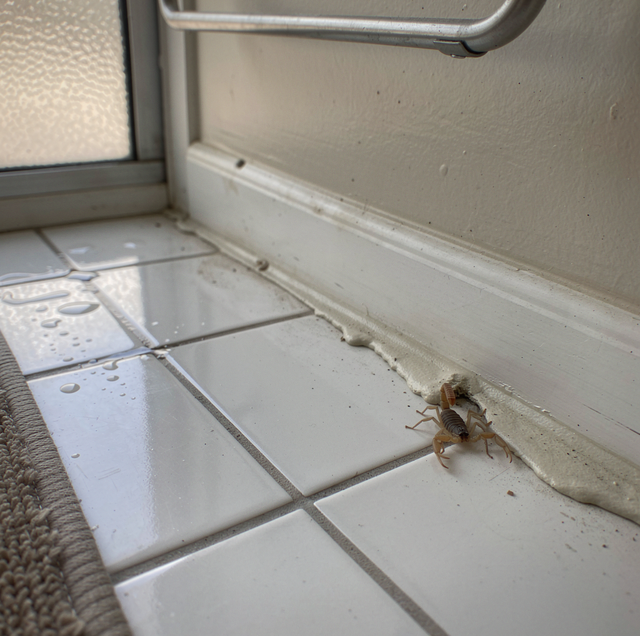
It is a little before ten, and you are barefoot on bathroom tile, reaching past the towel bar, when something catches the top of your foot. Not a splinter, not a stubbed toe. Bright, hot and instant, pain that arrives fully formed. You get the light on, and there is a scorpion on the grout line, a couple of inches of pale tan sliding along the baseboard, and on your foot there is almost nothing to look at.
What comes next has an order to it, and it is not the order most people follow. The instinct is to study the foot. The useful sequence starts with the person, moves to a phone call, and only then gets around to the sting, because a bark scorpion does most of its work somewhere other than where it landed.
Everything below is general information assembled from published guidance by the Arizona Poison and Drug Information Center, Banner Health's poison and drug information specialists, and the Arizona Department of Health Services. It is not medical advice. Only a clinician who can see the patient, or the poison specialist on the other end of the line, can say what any particular sting means.
Banner Health lists difficulty breathing, chest pain, swelling of the face or throat, or hives as reasons to call 911. Arizona health officials add uncontrolled jerking, drooling, and abnormal eye movements to that list.
Check the Person Before You Look at the Sting
Everyone's attention goes to the foot. The foot is the least informative thing in the room.
Clinical references describe bark scorpion venom as acting on nerve signaling rather than damaging tissue, which is why the signs that separate a rough night from an emergency turn up away from the puncture: in breathing, in swallowing, in eye movement, in muscle control. Banner's bark scorpion page describes numbness and tingling that can spread throughout the body, sometimes accompanied by visual disturbances or difficulty swallowing, and rarely by respiratory problems.
So look at the person, not the spot. Are they breathing easily and talking normally? Are they swallowing their own saliva without trouble? Are their eyes tracking you or drifting on their own? Can they hold still? Those questions resolve faster than any inspection of a puncture you can barely find, and they decide whether the next thing in your hand is a phone dialing 911 or a tap running warm water.
Then Call the Poison Center, Not a Search Box
Assuming nobody is in obvious trouble, the next step is not a decision you have to make alone.
The Arizona Poison and Drug Information Center's own guidance on scorpions is direct about this: call the poison experts to determine whether you need to go to the hospital. Banner's specialists describe the same service from the other side: staff walk you through first-aid steps and monitor your condition to ensure nothing dangerous is developing. That second half is the part people miss. A poison center call is not a single verdict; it opens a line with somebody who will check back.
The Arizona Poison and Drug Information Center notes that most stings in healthy young adults can be managed at home with basic first aid and follow-up care. That is not permission to skip the call. It is the reason the call is usually short.
What the Sting Itself Actually Needs
The list of things to do is short, and its shortness is the point.
The Arizona Poison and Drug Information Center recommends cleaning the site with soap and water, using a cool compress, keeping the affected limb in a comfortable position, and taking over-the-counter medication as needed for minor discomfort. Banner's clinical toxicologist adds to raise the limb and watch for symptoms, and is specific about the compress: a small towel soaked in ice water, not ice held against the skin.
Banner is equally plain about what not to do: do not go catch or trap the scorpion, and do not treat by identifying the species, because care depends on how the patient is doing, not what the field guide says.
There is nothing to pull out: a honey bee leaves a barbed stinger behind. A scorpion's stinger is smooth and reusable, and it leaves with the scorpion. No extraction, no scraping, no technique to get right. Anything beyond soap, cool, comfort, and watching is somebody's folk remedy rather than published guidance.
Why It Hurts That Much and Shows So Little
The mismatch is the disorienting part. Serious pain, a spot you cannot even locate without good light, and a nagging suspicion that you are overreacting.
A wasp sting is an injury. Tissue was damaged, the body answers with swelling and redness, and the mark tells you roughly what happened. A bark scorpion sting is closer to a doorbell button jammed down. Nothing at the door is broken. The wiring simply will not stop reporting. The Arizona Poison and Drug Information Center describes the area becoming very sensitive to touch, pressure, heat, and cold, and numbness and tingling that may travel across the body. That travel is the nerve system passing a message along, not venom spreading through flesh.
Which means the look of the sting site is close to useless as reassurance. A spot with nothing to show can still belong to a person who needs to be seen.
Children Are Not Small Adults Here
Every source above separates children out, and they do it for the same reason: the same amount of venom is arriving in a much smaller body.
Banner reports that children younger than five are more likely to require a hospital visit, and describes intense pain, numbness, and tingling in children under ten, with rapid, jittery eye movements and excessive salivation in severe cases. Banner's toxicologist is specific about what should send a child to an emergency department after the poison center call: excessive drooling, roving eye movements, or inconsolable crying. The Arizona Department of Health Services puts roughly 200 Arizona children a year in the category needing intensive medical treatment.
The practical difference is that a child cannot narrate any of this. An adult can tell you the tingling has reached an elbow. A toddler can only cry, drool, or move their eyes in a way that looks wrong, so with a small child you are watching behavior rather than collecting a report.
What a Hospital Has That a Kitchen Does Not
Two points from Anne-Michelle Ruha, MD, a medical toxicologist at the University of Arizona College of Medicine, tend to run backward in people's heads.
What not to reach for: her guidance is to avoid antihistamines and epinephrine after a scorpion sting, since they can make the picture worse. A scorpion sting is not an allergic reaction, and the medicine cabinet's answer to a bee sting is the wrong answer here.
What only a hospital can offer: an antivenom exists, Arizona hospitals can give it, and it is described as resolving serious symptoms quickly. It is held for the small share of cases with real neuromuscular involvement, most often young children, and the decision belongs to whoever is looking at the patient. Dr. Ruha also notes that more than 95 percent of stings produce only minor symptoms.
The Scorpion Still Lives Somewhere
Bark scorpions climb, unlike the bulkier ground-dwelling species they share ground with, which is what puts them on a bathroom wall at ten at night. They come up block walls, along irrigation lines and stucco seams, and into a house through gaps nobody thinks of as openings. They also hunt crickets, so a yard loud with crickets through the summer storm season is a yard advertising a food supply.
A bark scorpion can pass through a gap as thin as a credit card's edge, so the seal that matters is at door sweeps, weep screeds, slab joints, and pipe penetrations rather than the cracks you notice from across a room.
It is also why treatment alone rarely settles it. A perimeter product does not close a gap or remove the crickets feeding the population. The combination is what works: treat, take away the food supply, then seal the routes, after an ultraviolet search finds where they actually are.
Frequently Asked Questions
Clinical references describe the pain from a bark scorpion sting as immediate rather than delayed, and the Arizona Poison and Drug Information Center reports numbness and tingling that may follow. What no source publishes is a safe interval, some number of hours after which you can stop paying attention. That absence is why the poison center monitors a caller's condition over time rather than handing out a countdown. Treat any published clock you find online as somebody's invention.
Longer than most people expect. The Arizona Department of Health Services says pain and numbness may persist for several days. That matters because it sets expectations: a sting that still aches and tingles two days later is not automatically a sign something is going wrong, while a symptom clearly worsening rather than fading is a reason to make another call.
The Arizona Department of Health Services has published the breakdown, and it is not the garage or the yard. Roughly a third of stings occur in bedrooms, about a quarter in living rooms, and around 6% in bathrooms, out of roughly 10,000 scorpion stings a year statewide. Bedrooms lead because that is where bare skin meets bedding, floors, and shoes in the dark, which argues for where sealing and inspection effort belongs first.
Arizona health officials call the summer storm season scorpion season, with heat and humidity pushing activity up and rain flooding the ground harborage they were using. That is the peak, not the whole story. Scorpions that came inside during that stretch do not leave in November, and cooler months push them toward the warm interior of a building, which is why winter finds indoors are common even when nobody sees one in the yard.
Often, with two catches. A scorpion's cuticle fluoresces blue-green under ultraviolet light, which makes an after-dark sweep far more productive than a daytime search, but a scorpion that has recently molted does not glow until its new cuticle hardens, and plenty of harmless things answer the same beam: lint, a scrap of paper, some plastics, the optical brighteners left in laundered fabric. So, a clean sweep is good news rather than proof, and it is most useful for mapping scorpions' travel routes rather than as a one-time verdict.
The Question Worth Asking Tomorrow
Once the pain settles, people ask how bad that was. The more useful one is how a scorpion got inside a bathroom at ten at night, because that answer is still true tomorrow. Something climbed a wall, found a gap, and crossed a floor while everybody was home. A sting is a single bad minute. The route it used is a standing feature of the building, and it does not close on its own.
Have the property searched after dark and the entry routes sealed — an ultraviolet sweep maps where scorpions actually travel, and sealing closes what they use to get in. Russell Pest Control serves the Phoenix Valley. Call (623) 469-7583.
