
Scorpion Season All Year: What Changes Month by Month
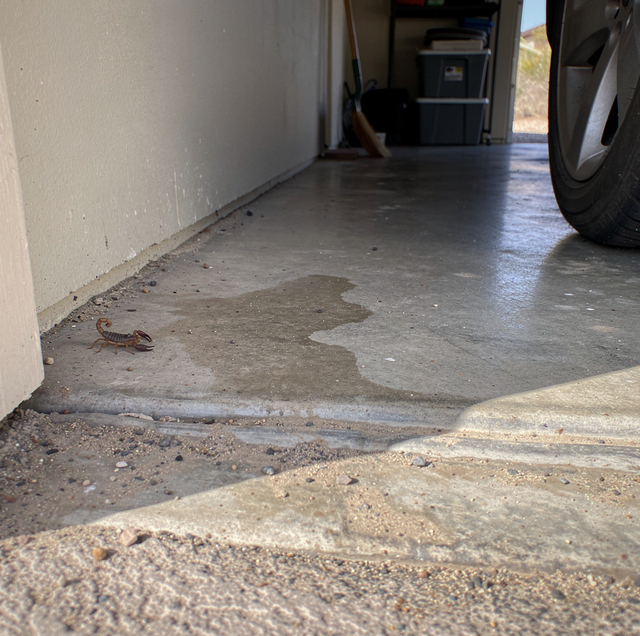
Step outside on a cold December night, and it's easy to believe the scorpion problem quietly ended sometime around Halloween. No stings reported in weeks, nothing glowing under a flashlight beam, no shape scuttling across the patio at dusk. Then a warm afternoon in January pushes the thermometer into the 70s, and one turns up on the garage floor as if it never left. That's not a fluke. It's the actual shape of a scorpion's year, and it looks nothing like the popular idea of a bug that disappears each winter and comes back each spring.
Temperature Is the Real Clock a Scorpion Runs On
A bark scorpion doesn't regulate its own body heat the way a person or a dog does. Its temperature tracks the temperature around it- air, ground, and whatever surface it's resting against- almost directly. That single fact explains most of what seems confusing about scorpion behavior over the course of a year: there's no internal clock keeping a fixed schedule, no switch that flips on in May and off around Halloween. What drives activity up or down is how warm the ground and air actually are over a given stretch of days, which is why the same month can look busier one year and quieter the next, depending on how that year's weather is shaping up. The broad pattern still holds: a long stretch of high activity through the hottest months, a long stretch of reduced activity through the coldest months, with real movement in between as temperatures climb or fall.
Winter: Slowed Down, Not Shut Off (December Through February)
Cold weather does not send a bark scorpion into the kind of deep winter sleep many people picture when they think about animals disappearing for the season: months of inactivity, a sharply lowered body temperature, survival on stored fat until spring. What actually happens is a metabolic slowdown. As temperatures fall, a scorpion's metabolic rate drops with them, cutting how often it needs to feed, how far it forages, and how long it stays active on any single night. It retreats deeper into harborage, cracks along a foundation, gaps beneath a block wall, undisturbed woodpiles and gravel beds, and conserves energy there instead of actively hunting through the cold.
Think of it less like a light switch than a dimmer: the current never actually cuts off; it just runs low. On a warm winter afternoon, when daytime highs climb well above the week's average, that dial turns back up for a few hours. A scorpion that's spent two weeks in reduced activity comes out to forage, or gets displaced from harborage disturbed by yard work or a hard rain. That's why winter sightings, far less frequent than summer ones, never actually drop to zero.
A warm winter afternoon can pull a bark scorpion out of its slowed-down state for a few hours. Shake out shoes, gloves, and stored blankets kept in a garage or shed year-round, not only through the hottest stretch of summer.
Late Winter Into Spring: The Wake-Up Window (Late February Through April)
As overnight lows start to climb on a sustained basis rather than in one-off warm spells, scorpion behavior shifts from occasional winter breaks to a more consistent nightly pattern. This stretch also carries much of the year's mating activity, since males range farther than usual while searching for females, which shows up as more crossings of exterior walls and more movement across yards even before the heat of summer arrives.
Summer: The Peak Months (May Through August)
As overnight lows keep climbing through this stretch, eventually staying in the mid-70s and warmer even after midnight in the hottest weeks, a scorpion no longer needs to retreat early into the night the way it does in cooler weather, and its nightly foraging window stretches out considerably. Prey follows the same curve. Crickets, roaches, and other soft-bodied insects that make up most of a scorpion's diet become more abundant as the season warms, and a longer nightly window gives scorpions more opportunity to intercept that supply. Late-summer rains add a second push on top of that: a heavy rain event can trigger a short-term hatch of flying insects and a burst of ground-dwelling prey within days, and the scorpions hunting them follow that spike for as long as it lasts, usually a week or two before numbers settle back toward baseline. Together, the longer nightly window and the periodic prey spikes layered on top of it are why the back half of summer tends to edge out the front half as the single most active stretch on the calendar, even though the underlying heat has been building since May.
Fall: The Gradual Retreat (September Through November)
As overnight lows begin dropping through fall, the nightly window that expanded all summer starts shrinking from the other end, with scorpions cutting activity short earlier and earlier in the evening. The shift isn't sudden the way a first hard freeze can be farther north; it's a gradual pullback spread across weeks, which is why early fall often still feels like a continuation of summer even as the underlying trend already points downward. By late fall, most nights bring noticeably less foraging activity than summer's peak, though a run of unusually warm fall days can push activity back up briefly before the seasonal decline resumes.
Why Indoor Sightings Don't Track Outdoor Activity One-to-One
Outdoor foraging peaks in summer, but indoor sightings follow a slightly different curve, because scorpions move indoors for different reasons at different points in the year. During the hottest stretch of summer, extreme heat on exposed surfaces can push a scorpion toward the comparatively stable temperature inside a wall void or a shaded garage instead of staying out foraging all night, nudging some indoor sightings upward even while outdoor activity is near its highest point. In the cold months, something similar happens on a smaller scale: a scorpion that's already found its way into an attic or a wall void near a water heater or furnace duct doesn't go through the same slowdown a scorpion in unheated harborage does, because the space around a home's mechanical systems can run many degrees warmer than the yard outside. An indoor sighting in the middle of winter doesn't necessarily mean anything has changed outdoors. It usually means one scorpion found a gap warm enough to keep functioning through a season the rest of the population is riding out at a much slower pace.
A Month-by-Month Quick Reference
| Month | Activity Level | What's Happening | Indoor-Sighting Risk |
|---|---|---|---|
| January | Low | Deep slowdown; only sustained warm spells bring movement | Low, rarely zero |
| February | Low, rising | First consistent warm days begin waking nearby harborage | Low |
| March | Rising | Warm-up becomes steadier; foraging resumes most nights | Moderate |
| April | Moderate to high | Mating activity increases movement across yards and walls | Moderate |
| May | High | Warm nights support longer, steadier foraging windows | High |
| June | Peak | Hottest, driest stretch; longest nightly activity window | High |
| July | Peak | Late-summer rain events begin triggering prey spikes | Peak |
| August | Peak | Prey spikes continue; typically the year's busiest month | Peak |
| September | High, declining | Nights start cooling; activity still strong overall | High |
| October | Moderate, declining | Noticeable slowdown begins as the window shrinks | Moderate |
| November | Low to moderate | Retreat into harborage accelerates | Low to moderate |
| December | Low | Slowdown sets in; only warm afternoons bring activity | Low, rarely zero |
What Changes for Prevention, Season by Season
Scorpion control works best when treated as a rhythm that follows this curve rather than a single flat visit repeated on the same interval regardless of season. Sealing itself works in any month; what the curve is actually useful for is timing everything else around it. A black light check, run as summer activity approaches its peak, establishes an actual baseline for the property rather than a guess, since bark scorpions glow blue-green under UV light and show up clearly against grass, gravel, or bare soil after dark. Checking again in early fall shows how much of that baseline held through the year's busiest stretch. And because a warm winter day can still bring a scorpion out of its slowed-down state, a quick check of known entry points after any unusually warm winter spell catches the one scenario exclusion work is specifically meant to cover.
Frequently Asked Questions
Not in the way many people picture it. Bark scorpions run on an unusually low resting metabolism to begin with, which is part of why some individuals can already go many months between meals even outside of winter — cold weather just slows that already-efficient system down further rather than shutting it off.
Roughly, but juveniles tend to show up a little more in the shoulder months. Because smaller bodies lose and gain heat faster than larger ones, a young scorpion responds to a short warm spell in late winter or a brief cool snap in early fall more quickly than a full-grown adult does, so a run of small individuals turning up outside the peak summer stretch isn't unusual and doesn't by itself signal a growing population.
When a stretch of unusually cold weather breaks, much of the local population becomes active again within roughly the same window, rather than trickling back one at a time, since everyone is responding to the same rising temperature at once. That synchronized return is why a few sightings can cluster right after a cold snap ends even though overall pressure hasn't actually increased.
Yes. Bark scorpions give birth to live young instead of laying eggs, typically during the warmer months, and the newborns ride on the mother's back until their first molt. That timing is part of why late-summer sightings sometimes include unusually small individuals mixed in among adults.
Rarely, and only under specific conditions. A scorpion caught on an exposed surface during a hard, prolonged freeze can die from the cold, but the harborage it normally retreats to, several inches below grade or deep inside a wall void, usually stays well above that risk threshold. That's a large part of why populations rebound so reliably every spring.
It runs longer. Because scorpions can go extended stretches without feeding, they stay behaviorally active across a wider temperature range than the soft-bodied insects that make up most of their diet. That gap is part of why scorpion activity can register on a cool spring evening before the rest of the insect food web has fully caught up.
A quiet week in any month isn't proof that pressure has changed, and a sighting in an unexpected month isn't a sign that something's gone wrong. Both simply mark a point on a curve that repeats every year, warming through spring, peaking across summer, easing back through fall, and holding low but never quite at zero through winter. Read a sighting against that curve, not against how many bugs turned up last month, and even the odd midwinter afternoon stops feeling like an exception.
Schedule scorpion control — a treatment plan timed to the property's real activity curve keeps pressure down through every season, including warm winter afternoons that catch most homeowners off guard. Russell Pest Control serves the Phoenix Valley. Call (623) 469-7583.
