
What to Expect From a Professional Home Seal Service
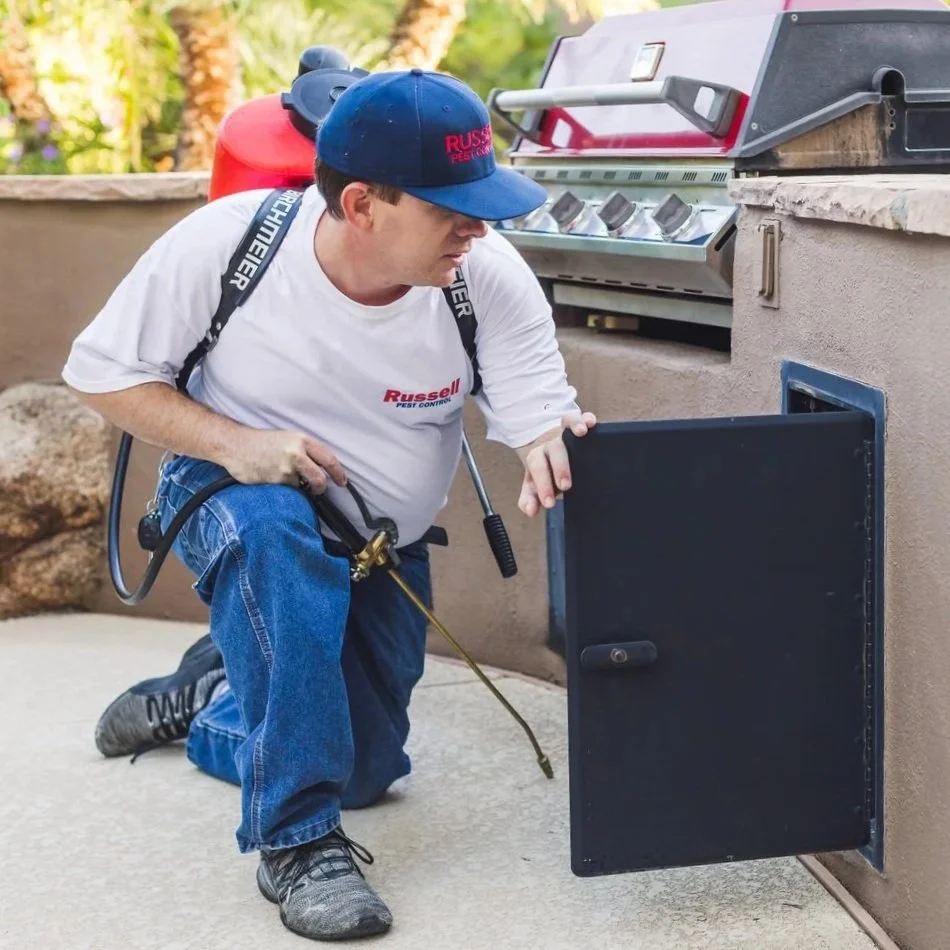
A professional home seal service steps in to close the invitation, and the results are felt from the crawlspace to the attic.
You treat for scorpions every quarter, watch where you step, and check your shoes every morning, but they still find their way inside. In Phoenix, AZ, chemical treatment alone is never the complete answer, and most homeowners figure that out the hard way.
Professional home sealing addresses the root cause that pest treatment can only manage. Your home is physically accessible to every pest living in the desert surrounding it, and closing those access points permanently changes the dynamic between your family and the Valley's year-round pest pressure.
The Inspection Goes Places You Would Never Think to Look
A professional home seal inspection covers considerably more ground than most Phoenix, AZ, homeowners expect. Technicians walk the complete exterior perimeter at grade level, examining every point where stucco meets the foundation, every weep screen opening, every utility penetration, and every seam where different building materials create a gap that pests exploit regularly.
The inspection continues vertically up the structure, checking soffits, vent openings, roof penetrations around plumbing stacks, AC conduit runs, and the fascia line where roof rats most commonly access the attic. Inside, technicians check behind appliances, under sinks, around toilet bases, and along the slab level where flooring material meets baseboard in gaps invisible from standing height.
What makes the inspection valuable is the specialist's knowledge of which gaps matter for which specific pests. A gap that looks insignificant to a homeowner is immediately identifiable to a trained technician as a scorpion entry point because of its location at the stem wall. That identification layer separates a professional inspection from a homeowner walking around with a flashlight.
Store-Bought Caulk Is Already Failing and You Don't Know It
The most consistent home sealing mistake in Phoenix, AZ, is applying consumer-grade caulk from a hardware store to visible exterior gaps. Consumer caulk is not formulated for the thermal expansion and contraction that Arizona structures undergo through 115-degree summers and cool desert winters. It dries, cracks, and pulls away from the substrate within one to two seasons.
Professional applications use commercial-grade silicone with UV resistance and flexibility ratings designed specifically for Arizona's temperature range. Exterior foundation applications use materials with manufacturer warranties of up to 40 years. Interior applications use fire-rated foam in appropriate locations and pest-deterring copper mesh pressed into weep screen openings where sealant alone would eventually fail.
A badly applied consumer product that fails within one summer creates a dangerous false sense of security while the gap reopens silently. Phoenix, AZ, homeowners who have sealed gaps themselves and still find scorpions inside typically discover during a professional inspection that their DIY applications have already failed at multiple locations they cannot see from normal viewing angles.
The Specific Locations That Make or Break Everything in Phoenix
Weep screens are the single most exploited entry point for scorpions in Phoenix, AZ, homes. These small openings at the base of the exterior stem wall are required for moisture drainage but create a gap that bark scorpions enter effortlessly. Professional home sealing addresses weep screens with copper mesh that allows moisture to drain while physically preventing scorpion access.
Plumbing penetrations where pipes pass through the slab or interior and exterior walls create gaps that rarely get addressed during original construction. Cold water pipes sweat condensation in summer, softening surrounding material and enlarging the original gap over time. Roof rat and cockroach entry through these penetrations is one of the most consistent patterns technicians encounter across the Valley.
The junction between block wall fence columns and the home's exterior foundation perimeter is a gap almost no homeowner addresses. Block wall hollow columns are known scorpion congregation zones throughout Phoenix, AZ, and the transition point where those walls approach the home's foundation creates a direct pathway from the block wall to the interior that standard interior treatments cannot resolve.
Why Sealing and Pest Control Belong Together, Not Separately
Home sealing is not a replacement for pest control, and pest control is not a substitute for home sealing. The combination produces results that neither achieves independently, and Phoenix, AZ, homeowners relying on only one component typically manage the same recurring pest problems season after season without ever reaching a lasting resolution.
Chemical barrier treatments create a zone that pests must contact before reaching the structure. When a home has multiple unsealed entry points allowing pests to enter without crossing the treated perimeter, the treatment is partially bypassed. A sealed home forces every pest to cross the treatment zone, dramatically increasing effectiveness and reducing the quantity of product needed.
The inverse is equally true. A sealed home without ongoing treatment still faces constant pressure from pest populations living immediately adjacent to it. Scorpions, ants, and rodents continuously probe for new access as caulk ages and structural settling opens micro-gaps. Regular treatment maintains the chemical component while periodic re-sealing maintains the physical component. Together, they produce what either alone cannot.
Your HVAC Bill Has Been Paying for Every Unsealed Gap
The improvements following professional home sealing in Phoenix, AZ, extend well beyond pest reduction. Sealed gaps along the foundation perimeter, door thresholds, and window frames eliminate the air infiltration pathways that allow conditioned air to escape during the months when Phoenix homeowners run air conditioning for sixteen or more hours each day.
Humidity control also improves measurably after professional sealing. The monsoon season humidity driving pest activity from July through September infiltrates through the same structural gaps pests use. A sealed home maintains more consistent interior humidity during the most extreme monsoon events, reducing the mold, musty odors, and condensation issues that develop in Phoenix, AZ, homes with aging weatherstripping.
Reduced dust accumulation is something homeowners notice but rarely connect to the sealing work. Desert dust enters through the same micro-gaps as insects and humidity. Valley homeowners who seal professionally consistently report reduced surface dust accumulation in the months following service. Pest reduction, energy savings, humidity control, and cleaner interior air all compound over time rather than diminishing.
Phoenix Architecture Creates Sealing Challenges Most Cities Never See
Arizona's desert construction methods create specific sealing vulnerabilities that homes in other climates rarely develop. Stucco exteriors contract and expand dramatically through the Valley's temperature range, opening micro-cracks at corners, window frames, and utility penetrations too small to notice but perfectly accessible to bark scorpions requiring only one-sixteenth of an inch to enter a structure.
Slab foundation construction, nearly universal in Phoenix, AZ, creates a perimeter junction between the concrete slab and the exterior stem wall that is nearly impossible to seal perfectly during original construction. That joint settles and shifts slightly over the life of the structure, creating consistent pest access along the entire base perimeter that professional sealing specifically targets with flexible materials accommodating ongoing slab movement.
The block wall fences surrounding most Valley properties are an active pest habitat directly adjacent to homes throughout Chandler, Gilbert, Scottsdale, and Tempe, AZ. Sealing the home without addressing the block wall gap leaves a critical link in the pest access chain completely intact. Professional sealing that treats both the structure and the block wall perimeter addresses the complete system rather than just its most visible portion.
What Changes After Your Home Is Properly Sealed
The first thing most Phoenix, AZ, homeowners notice after professional home sealing is a reduction in the overnight scorpion encounters that had become routine. The weep screen sealing and foundation perimeter work removes the primary entry routes that scorpions use during their nightly hunting activity, and the change in frequency is typically noticeable within the first few weeks following the service.
The second change is subtler but financially meaningful. The HVAC system maintains setpoint temperatures more consistently without compensating for conditioned air escaping through structural gaps. During Phoenix summers when air conditioning runs almost continuously, that efficiency improvement translates directly into lower monthly utility costs that accumulate through the long cooling season.
The third change is the one most homeowners describe as a general feeling that the home is more under control. The ant trail that reformed under the sink every spring does not come back. The back room that always smelled musty after monsoon rains stops doing that. The spider that always found the laundry room stops finding it. Small daily frustrations disappear because the physical invitation that created them has finally been closed.
Russell Pest Control Has Been Sealing Phoenix Homes Since 1996
If you are still finding scorpions in the bathroom, watching ant trails reform after treatment, or experiencing the same pest pressure season after season despite regular service, the unsealed gaps in your home's structure are the underlying issue that chemical treatment alone was never designed to resolve. Russell Pest Control has been providing professional home seal services to Phoenix Valley homeowners since 1996.
Our home seal service inspects and addresses the foundation perimeter, weep screens, plumbing penetrations, door and window frames, roofline gaps, soffits, and the structural junctions unique to Phoenix, AZ, architecture. We serve homeowners across Phoenix, Scottsdale, Mesa, Chandler, Gilbert, Glendale, Tempe, Peoria, Carefree, Cave Creek, Fountain Hills, and Surprise, AZ. No hidden fees and a free estimate on every inspection.
Contact Russell Pest Control today and find out what a properly sealed Phoenix home actually feels like to live in.
Get customized home seal and pigeon removal and controlsolutions in Phoenix Valley with Russell Pest Control. Our licensed team will seal your outdoors, indoors, and doorways to restrict pests and insects. We offer trapping, clean-up, and prevention to rid your home of pigeons. Trust our decades of expertise and strong community connection, which ensures that you get the best results. Call for a free estimate today.
