
Scorpions in the Bed: How They Get There and the Bedroom Setup That Stops It
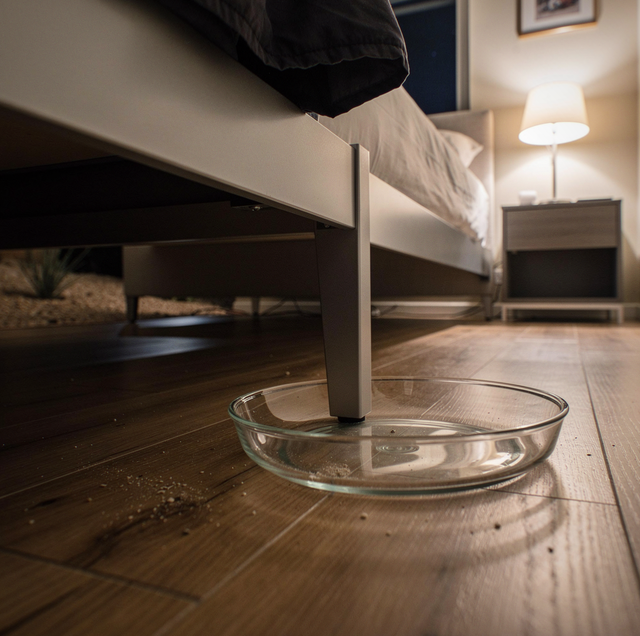
Quick Answer: A scorpion in bed almost always climbed there: up a bed leg, across a blanket, or down the wall behind the headboard. Keep fabric off the floor, pull the headboard off the wall, and stand each leg in a smooth glass dish.
You pull the comforter back before climbing in and something skitters across the sheet before your hand even lands. A scorpion in the bed feels like it dropped out of nowhere, but it walked there: up a leg, along a trailing hem, or down the wall behind the headboard. Once you know which of those three routes it used, closing off the bed itself is a short, specific list of fixes.
Why a Bed Draws a Hunting Scorpion
A bark scorpion doesn't wander into a bedroom looking for a bed. At night it's out hunting, and the organs that guide it are a row of slit sensilla on each leg: thin, pressure-sensitive membranes that pick up vibration carried through a surface, whether that's a scurrying cricket, a moth landing nearby, or your own hand shifting under the covers. A still, deep-breathing sleeper produces almost none of the ground-borne vibration that organ needs to register, so it doesn't read a bed as a threat or avoid one. A scorpion working the edge of a room after midnight, drawn in by prey stirred up near a porch light or a leaking hose bib outside, crosses the bed simply because the bed sits along that path, with no interest in the mattress itself.
How a Climbing Scorpion Reaches Mattress Height
Climbing comes down to two tools on each of a scorpion's eight legs: a pair of hooked claws and a dense mat of fine hairs called setae, both built to catch on microscopic ridges. Any surface with texture at that scale- unfinished wood, stucco, drywall, woven fabric- gives the claws and setae something to hook into. A surface machined smooth at that same scale, polished glass or glazed ceramic, offers nothing to catch, and the scorpion slides back down before it gets far. Between a bedroom floor and the top of a mattress, that difference decides the whole climb.
| Surface Near the Bed | Climbable |
|---|---|
| Painted drywall behind a headboard | Yes |
| Unfinished or stained wood bed legs | Yes |
| Fabric-wrapped or upholstered legs | Yes, easily |
| Wicker or rattan headboards | Yes, easily |
| Powder-coated metal frames | Somewhat |
| Polished chrome or glass table legs | Rarely |
A standard wood- or fabric-wrapped frame gives a scorpion a continuous ladder from the carpet to the mattress edge. A frame built entirely from polished metal or glass removes most of that grip on the legs themselves, though it does nothing for the other two routes into the bed: the linens and the wall.
The Bed Skirt and Loose Linens Become a Bridge
Even a climb-resistant frame gets bypassed the moment fabric reaches the floor. A bed skirt, a comforter corner, or a throw blanket left hanging off the edge behaves less like bedding and more like a rope bridge: continuous woven fiber running from the carpet to the top of the mattress, offering the same claw-and-setae grip the whole way. A scorpion that can't get purchase on a smooth chrome leg two feet away will cross six feet of trailing comforter without slowing down, because the texture never changes and the climb never gets any steeper than a gentle rise. Keep every hem, pillow sham, and dust ruffle a few inches clear of the floor, and tuck back anything that drapes over the side before lights out.
Hem or clip a bed skirt at least two inches above the floor. A single corner brushing carpet restores the exact grip every other precaution in the room was meant to remove.
A Headboard Against an Exterior Wall Opens a Route
A headboard pushed flush against an exterior wall closes off the one stretch of baseboard nobody ever checks. On the outside of that same wall, a scorpion can enter through a gap as narrow as roughly a sixteenth of an inch, about as thin as a credit card held edge-on, at a stucco control joint, a hose bib penetration, or a loose exterior outlet cover. Once inside the wall cavity, it doesn't need to travel far. It climbs the interior drywall texture on the room side, works down to baseboard height behind the furniture, and reaches the headboard directly, all without ever crossing open floor where you'd spot it. Because the headboard hides that stretch of wall from view and from routine sealing, it's often the single most overlooked gap in an otherwise well-sealed bedroom. Pulling the headboard a few inches off the wall once, checking the baseboard gap and any outlet or switch plate behind it, and sealing what you find closes that route before the furniture goes back.
A sting rarely leaves a mark, so don't wait for swelling as proof before treating it seriously. Call the Arizona Poison and Drug Information Center right away, and call 911 instead for a young child, trouble breathing, drooling, or roving eye movements.
Nightstands and Other Furniture Touching the Bed
A nightstand or dresser pushed against the mattress creates a second bridge that has nothing to do with the bed frame itself. A scorpion climbing the leg of an adjacent nightstand reaches lamp height, and from there the gap to a pillow or mattress edge is a short drop rather than a climb, so a bed frame isolated with glass dishes can still be reached if the furniture beside it isn't. The same rule that governs the frame applies to anything touching it: wood and fabric surfaces climb easily, so any piece within a few inches of the mattress needs the same treatment as the bed legs, or should be moved a foot or two away.
Isolating the Bed With a Glass-Dish Barrier
Once the fabric and the furniture are handled, the last route is straight up the bed leg, and that one has a physical answer. Standing each leg inside a smooth-sided glass or glazed ceramic dish creates a vertical surface a scorpion's claws and setae can't grip. The dish has to be smooth on the inside with no ridges or raised pattern, since a decorative saucer defeats the purpose, and tall enough that the scorpion can't reach over the rim from outside the ring. Dust and hard-water spots build a fine texture over weeks that can restore enough grip to matter, so wiping each dish out every few weeks keeps the barrier working. Combined with clearing the fabric bridge and checking the wall behind the headboard, this closes all three routes a scorpion actually uses to reach a mattress.
Frequently Asked Questions
Run a fingertip lightly across the leg. A true smooth finish feels slick with no drag at all, the way a drinking glass does; anything that catches even faintly, a powder-coat texture, a brushed-metal grain, a light coat of dust, has enough surface for setae to hook into. If the finish passes the fingertip test, it's doing its job without a glass dish underneath it; if it doesn't, the dish is still the more reliable fix.
Not the way the popular idea suggests. Scorpions don't have heat-seeking organs the way some snakes do; the sense that guides them at night is the vibration-detecting slit sensilla on their legs, along with chemical receptors called pectines on the underside of the body that read surface chemistry as they walk. A sleeper's body heat has little to do with whether a scorpion crosses the bed. What draws one into the room in the first place is usually insect activity or moisture nearby, not the sleeper.
A platform bed without raised legs removes the option of a glass-dish barrier, since there's no leg to isolate. The mattress also sits closer to the floor with less vertical climb required, so the fabric and wall routes matter more, not less. Push the frame a few inches off every wall it touches, keep the mattress skirt or fitted sheet from draping over the platform's edge, and treat the space underneath as an inspection point rather than storage, since anything stored there gives a scorpion somewhere to wait between hunts.
Color makes no difference; scorpions read their surroundings through vibration and touch rather than sight, and their eyes are built to register motion and light level, with color barely part of the picture. Texture is what matters. A slick sateen or silk-finish sheet gives almost no purchase once a scorpion is on top of the mattress, while a heavier textured fabric, chenille, waffle-weave, or a loose knit throw, gives it the same grip advantage a bed skirt does and makes it easier to stay put instead of falling or wandering off.
It does, and not in the direction most people expect. A smooth wood or laminate headboard offers little grip above the baseboard height discussed earlier, but a fabric-upholstered headboard extends that climbable surface all the way to pillow height. Since pulling that headboard away from the wall is the fix for the baseboard route anyway, checking it while it's already moved away costs nothing extra and closes both problems in the same pass.
Not the fixes themselves, but it changes how carefully you should check them. A cat or dog on the mattress is a warm-blooded body producing the same low vibration a sleeping person does, so it doesn't attract a scorpion any more than you do, but a pet's water bowl or a damp spot where it drinks near the bed can draw the insects a scorpion is actually hunting. Move a pet's water dish a few feet from the bed frame if you're troubleshooting a recurring sighting, and check the glass dishes under the legs more often, since pet hair and dander build surface texture in them faster than dust alone does.
None of these fixes require rebuilding a room. A scorpion crossing a bedroom floor at night is following the same logic it always follows, moving toward vibration and prey and away from smooth, ungrippable surfaces, and a bed built without fabric bridges, wall shortcuts, or open leg access simply doesn't offer it a way up. Handle the three routes once, and the bed stops being part of the scorpion's path through the house at all.
Schedule a scorpion sealing evaluation — get the exterior gaps feeding your bedroom's walls found and closed. Russell Pest Control serves the Phoenix Valley. Call (623) 469-7583.
