
How to Keep Scorpions Out Through the Garage: The Airlock Fix
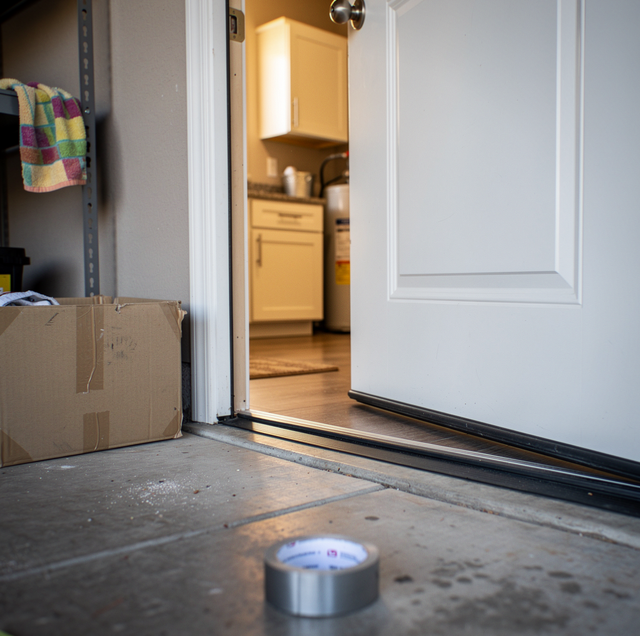
You pull into the garage, the roll-up door rumbles shut behind the bumper, and you walk through the door into the laundry room without giving it a thought. That inside door, the one between the garage and the house, usually gets treated like any other interior door. It looks like one. It isn't. It is the second half of an airlock, and if it doesn't seal as well as the big door out front, the big door barely matters.
Here is the real question worth answering: why does a garage let scorpions through when the rest of the house has already been sealed at the walls, windows, and slab? The short version is that the garage was never inside that seal to begin with. It is a separate compartment with its own boundary, built from two doors that both have to hold, not one.
The Garage Is a Compartment, Not Part of the House
Think of a ship's airlock. The outer hatch and the inner hatch each do a job, and neither has to be perfect on its own because the other backs it up. What breaks the system is treating either hatch as optional. A garage works the same way. The roll-up door is the outer hatch: it is built to move on tracks, flex in the wind, and open on command, which means it was never designed to be airtight the way a wall is. The door between the garage and the house is the inner hatch, and it is the one piece of that boundary that actually has to seal, because past it is the kitchen.
Most garages aren't conditioned space, and they aren't finished the way the rest of the house is: gaps around the door tracks, an unsealed joint where the slab meets the wall, bare stud bays behind an unfinished wall. The Arizona bark scorpion, flat enough to work through a gap of roughly a sixteenth of an inch, treats all of that as an open floor plan. It gets into the garage far more easily than it will ever get into a sealed living space, and that is by design, not a flaw to fix. The fix is making sure the second door holds.
The Garage Is a Holding Zone, Not a Contained Threat
A finished, lived-in house works against a scorpion in ways nobody intended. It is drier. It is lit and crossed at unpredictable hours. Its floors get walked and vacuumed, its walls were closed up as a continuous finished surface, and the furniture against them moves. A garage is none of that. It is dark most of the day; the floor is a bare slab; the walls often stop at unpainted drywall or open block; and the boxes stacked along them haven't moved since they were put there.
So a scorpion that slips under the big door doesn't bounce back out, and nothing about the space discourages it from staying. It settles into the dark behind stacked boxes or under a shelf, and it works the shared wall on its own schedule, patiently checking every seam and gap until it finds the one opening built into that wall on purpose: the man door. Nothing hurries it along. The only thing standing between "in the garage" and "in the house" is how tightly that one door seals. A companion guide on keeping scorpions out of the house covers the wider list of entry points around the rest of the structure; this one is about the two doors that decide what happens to whatever's already reached the garage.
The Man Door: The Sweep, the Threshold, and the Jamb
Sweep: The strip along the bottom of the door, usually an aluminum bar holding a vinyl or nylon-brush blade, is the first line and the one most people actually own. It only works if it makes contact across the full width of the door, not just the center. A sweep with a warped corner or a blade compressed flat from years of use leaves a gap exactly where the door meets the frame, and that gap runs the width of a scorpion with room to spare.
Threshold: Some garage-to-house doors sit on a raised aluminum threshold with a vinyl insert; others rest directly on bare concrete with no threshold strip. A slab-mounted door with no threshold is leaning entirely on the sweep to do all the work, and concrete floors settle, developing a slight gap under the door over the years. If your man door has no threshold, that's worth adding before anything else.
Jamb weatherstripping: The vertical strips running up both sides of the frame, and the strip across the top, seal the gap between the door slab and the frame when it's shut. The side opposite the hinges, where the latch sits, is the one installers skip most often, because a door has to be trimmed for clearance to swing and close, and that clearance becomes a permanent gap if nobody weatherstrips it afterward. A header strip across the top finishes the seal, though scorpions traveling at floor level rarely test it the way they test the bottom and the latch side.
Self-closing hardware: If your garage-to-house door is a fire-rated, self-closing unit, which is common in homes with an attached garage, the spring hinge or closer has to actually pull the door shut and let the latch catch every time. A weak spring that leaves the door resting an inch open after someone carries in groceries defeats every seal on the door at once. Stick to weatherstripping products rated for fire doors rather than generic foam tape, so the door still performs its intended function.
Close the man door on a strip of paper at the middle and both corners. If you can pull the paper free without tearing it, the sweep isn't compressing there, and that's exactly where a scorpion would try first.
The Garage Door's Own Bottom Seal and Side Seals
The roll-up door has its own weatherstripping, and it matters more than most homeowners assume, because a tighter outer hatch means fewer scorpions ever reach the holding zone in the first place.
Bottom seal: A rubber gasket, often called an astragal, sits in an aluminum retainer channel along the bottom edge of the door and compresses against the driveway or the concrete lip as the door closes. Direct sun is hard on this part specifically. A west- or south-facing garage door taking a full summer afternoon ages its astragal faster than an exterior man door tucked under an eave; the vinyl hardens, shrinks slightly, and stops filling the channel the way it did when it was new. A hardened astragal often still looks fine from a few feet away while leaving a visible line of daylight underneath.
Side seals: Vertical flap or brush seals run along the tracks on both sides of the door, sealing the gap between the panel edges and the track. The weak point is where the side seal meets the bottom seal at each bottom corner; the two are separate pieces, and if either one is trimmed short or has shifted, that corner opens a gap that neither seal is actually covering on its own. Brush-style side seals tend to outlast rubber flaps here, since blowing dust and grit wear a rubber flap's edge smooth over a season or two, while the bristles keep flexing around debris instead of collecting it.
Storm season adds its own wear pattern worth checking on its own schedule. A gust strong enough to rock a closed garage door can shift it slightly on the track or flex the astragal channel just enough to open a hairline gap that wasn't there before, and heavy blowing dust settles into any seal that's already loosening. A five-minute look at both bottom corners and the track seals after a windstorm catches that kind of damage before the next dry, hot stretch turns a small gap into a wide one.
Panel seams: Sectional doors have thin foam gaskets between panels, and a door that has racked slightly out of square, or rollers that have started to bind in the track, can pull those seams open a little at the edges. It's rarely enough to notice by eye, but it doesn't need to be wide, only consistent.
Treating the Inner Door Like the Front Door
Homeowners will spend real effort weatherstripping the front and back doors of the house and never touch the door between the garage and the kitchen, because it registers as "just the garage door" rather than an exterior door doing exterior work. From a scorpion's path, though, that inner door is the front door once something has already crossed the first boundary. It is also usually the closest door to where garages accumulate clutter: stored boxes, tools, holiday bins stacked against the shared wall, all of it giving cover right at the one choke point that decides whether a resident ends up in the garage or in the house. Clearing a few feet of open floor around that door, and keeping the sweep and jamb seal tight, does more for the house side of the equation than anything done to the roll-up door alone.
If the garage-to-house door is a fire-rated, self-closing unit, don't remove the closer, wedge it open, or strip it with materials not rated for a fire door. Sealing is not the only job that door does.
Frequently Asked Questions
Where it's compressing evenly, yes. What usually defeats it is the concrete, not the rubber. Driveway aprons settle, heave at their expansion joints, and are frequently poured with a deliberate slope for drainage, so the surface the seal has to close against is rarely as flat as the door's bottom edge is straight. A standard T-style astragal only has so much travel; a taller bulb-style seal, seated in a deeper retainer channel, bridges an uneven slab far better. That is a swap worth knowing about before replacing like-for-like on a door that has never sealed properly.
Yes, mechanically. A door that swings into the house presses shut against a stop built into the frame, which lets weatherstripping compress evenly against it from one direction, the same way most exterior doors work. A door that swings out into the garage seals differently: the weatherstrip has to sit on the outer face of the stop rather than inside it, and if it was installed using inswing-style strip, it will compress unevenly or not at all. Check which way yours swings before assuming a standard weatherstrip kit will fit correctly.
Often it is, and the practical trap is mechanical rather than thermal. A fire-rated slab is heavier than a hollow-core interior door; its jamb may already carry a thin intumescent or smoke seal, and the closer is sized for that weight. Add a bulky, compressible foam strip on top, and the door can stop latching: the closer pushes it to within a hair of the strike, and the latch never engages, leaving the door resting shut but unsealed and unlatched. Fire-door-rated kits are made thin for that reason.
Not necessarily, and this is the part people miss. The wall between the garage and the house is a framed cavity like any other, and it is very often left open at the top plate, where wiring, plumbing, or an HVAC chase passes up into the attic. Anything living on the garage side of that cavity can travel upward through it and come out in the attic instead, then drop into the house through a ceiling penetration: a recessed light housing, a bath fan, an attic hatch that doesn't seat. Sealing the top-plate penetrations closes a route the man door was never covering.
Often, yes. The photo-eye safety sensors mount low on each track, usually a few inches off the floor, and installers frequently notch or trim the side seal to clear the bracket rather than working around it. That notch is a fixed, permanent gap in an otherwise continuous seal, sitting right at the height a scorpion travels. It's worth a look at both brackets with a flashlight, since it's easy to check the door's corners and miss this spot entirely.
Turn off the garage light during daylight hours and look at the man door frame from inside the garage: pinpoint or draw lines of daylight around the sweep, jamb, or header to mark exactly where the seal has failed. If that check comes back tight but scorpions still keep turning up in the garage and never past that door, the airlock is doing its job on the inner hatch. The question moves outward: to the roll-up door's bottom and side seals, and to whatever is stacked against the shared wall giving them a reason to stay.
Sealing a garage properly means accepting that the roll-up door will never be airtight and building the real defense at the door that actually matters. Get the man door's sweep, threshold, and jamb tight, keep the garage door's astragal and side seals in good shape, and the space in between stops being a straight shot to the kitchen and starts doing the one job an airlock is supposed to do.
Book a scorpion sealing inspection — get the garage-to-house door and the roll-up door's seals checked and closed properly, not just the obvious gaps. Russell Pest Control serves the Phoenix Valley. Call (623) 469-7583.
