
Wasp Series Part 2: Reasons Wasp Control Is Best Left To Professionals
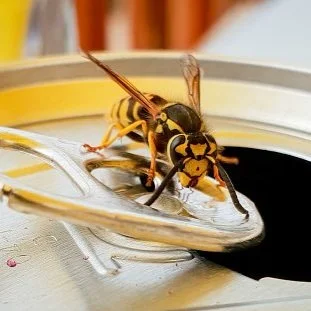
You walked out to grab the mail and something stung you before you even saw it coming. If you live in Phoenix, AZ, wasps are not a summertime nuisance you wait out, they are a genuine hazard that gets more dangerous the longer a nest is left alone.
Most Phoenix, AZ, homeowners underestimate what they are dealing with when they spot wasp activity around the eaves or patio cover. Grabbing a can of spray from the hardware store feels like a reasonable first move, but in a desert climate where paper wasps, yellowjackets, and tarantula hawks all share your yard, treating the wrong species the wrong way can escalate a manageable nest into a full defensive swarm before you make it back inside.
The Wasps Building Nests Around Your Phoenix Home Right Now
Phoenix, AZ, is home to several wasp species that behave very differently, and that difference matters when it comes to removal. Paper wasps are the most commonly encountered species across the Valley, building open hexagonal nests under roof eaves, patio covers, door frames, and outdoor light fixtures. They are generally less aggressive than other species unless their nest is directly disturbed, at which point they sting repeatedly and release alarm pheromones that signal nearby colony members to join the defense.
Yellowjackets present a more serious and less visible problem. In Phoenix, AZ, yellowjackets commonly build inside block wall fence columns, underground cavities, irrigation boxes, wall voids, and structural gaps around foundations. A homeowner may not realize a yellowjacket nest exists until someone walks too close or lawnmower vibration triggers a defensive swarm. Unlike paper wasps, yellowjackets pursue threats at a distance and sting repeatedly without provocation.
The tarantula hawk is a species that surprises Phoenix, AZ, homeowners who encounter one for the first time. These large, metallic blue-black wasps with bright orange wings are solitary but carry one of the most painful stings of any insect in North America. Handling or cornering one produces an immediate and extraordinarily painful response. Knowing which species you are dealing with before taking action determines how safely the situation is resolved.
Why the Desert Climate Makes Wasp Nests Grow Faster Than You Expect
Wasp colonies in Phoenix, AZ, follow a spring-through-fall cycle that accelerates in desert heat. Queen wasps emerge in early spring and begin building nests alone, often establishing in shaded structural locations before homeowners notice. By late spring, worker populations grow rapidly. A nest the size of a tennis ball in April can reach basketball size or larger by July, with hundreds of defending workers ready to respond to any threat near the entrance.
Monsoon season adds a dynamic most Phoenix, AZ, homeowners do not anticipate. The surge in humidity and temperature swings between July and September destabilizes some colonies while driving foraging wasps closer to structures in search of food and water. Yellowjackets become more aggressive in late summer when natural food sources decline and competition increases. Monsoon season is when wasp sting incidents peak across the Valley, not spring, which is when many homeowners let their guard down.
The heat itself creates structural hazards that cooler climates do not produce. Nests inside wall voids, block wall columns, and irrigation infrastructure can grow substantially before any exterior sign appears. By the time a homeowner notices wasps entering a gap in the stucco or a wall joint, the colony inside may already be defensive. Removal at that stage requires a different approach, and attempting it without professional knowledge is where DIY attempts often result in injury.
The Real Reason DIY Wasp Control Fails in Phoenix
The most common mistake Phoenix, AZ, homeowners make is treating what they can see rather than addressing the actual nest. Spraying visible wasps with an over-the-counter aerosol kills individuals it contacts but does nothing to the colony. Worker wasps are continuously produced, and disturbing an active nest without eliminating it results in increased defensive activity for days. The colony interprets the disturbance as a threat and responds accordingly, making future interaction with that area more dangerous.
Hidden nests compound the problem further. A yellowjacket colony inside a block wall or irrigation box cannot be reached by a surface spray applied at the entry point. The product agitates the wasps inside, the colony relocates deeper into the void, and defensive behavior escalates sharply. Professional wasp control uses products and application methods designed to reach the nesting area rather than just the visible entry point, which actually disrupts the colony instead of alarming it.
Timing matters in ways most DIY approaches miss. Wasps are least defensive in early morning when temperatures are lower and most of the colony is still inside. Attempting nest removal during peak afternoon heat in Phoenix, AZ, when wasps are most active, increases the risk of a serious sting event. Professional technicians plan their approach around species behavior, colony size, nest location, and time of day in ways aerosol instructions cannot account for.
You May Not Know You Are Allergic Until It Is Too Late
One of the most serious and overlooked reasons wasp control belongs in professional hands is a medical reality: many people who experience severe allergic reactions had no prior warning. A first sting that produces a normal localized response does not predict how the body responds to later stings or a larger venom load. Venom allergy can develop over time and may not appear until a more significant exposure.
In Phoenix, AZ, yellowjacket stings carry particular risk because an encounter near a hidden nest often results in multiple stings before a person can move away. A single yellowjacket can sting repeatedly, and a disturbed colony can deliver a significant venom load in seconds. For someone with an undiagnosed allergy, that becomes a medical emergency quickly. More than sixty people in the United States die annually from stings by wasps, bees, and hornets.
Children and pets carry additional risk that homeowners often do not consider. Dogs investigate buzzing sounds with their face and nose, placing them directly in the strike zone of any wasp. Children move unpredictably near nests and disturb activity without awareness of danger. A professional treatment that eliminates the colony and removes the nest resolves that ongoing risk for the entire household.
What Professional Wasp Control Actually Looks Like
Professional wasp control in Phoenix, AZ, begins with species identification, which shapes every decision. A paper wasp nest under a soffit is handled differently than a yellowjacket colony inside a wall void, which differs again from a mud dauber nest on an exterior beam. The treatment product, application method, protective equipment, and follow-up all depend on knowing what is present and where the colony is located.
After treatment, proper nest removal matters as much as the application itself. Leaving an abandoned nest in place leaves behind pheromone markers and nesting material that attract new colonies the following season. A professional removes the nest, treats the area to neutralize markers, and identifies structural entry points that gave the original colony access. Sealing those points prevents the same area from housing a new colony later.
What most Phoenix, AZ, homeowners learn too late is that wasp control and elimination are not the same. Scattering a colony with a spray is not elimination. Covering an entry point without treating the nest is not elimination. Professional wasp control addresses the colony at its source, removes the nest, neutralizes attractants, and seals access for lasting results.
When to Call Russell Pest Control for Wasp Treatment
How do you know when wasp activity has crossed into professional territory? The most reliable answer is any nest located inside a structural void, block wall, wall cavity, or irrigation system. Those locations make DIY treatment dangerous and often ineffective. A nest under an open eave discovered early is one thing. A colony building inside a block wall through monsoon season is entirely different.
Repeated wasp activity returning to the same location after treatment is another clear signal. If wasps keep coming back to the same spot on the eaves, stucco gap, or patio cover, the nest has not been addressed at the source. The visible activity is only the surface of a colony still growing behind it.
Russell Pest Control has served Phoenix Valley homeowners since 1996, bringing decades of experience with Arizona wasp species, desert nesting behavior, and structural risks. With licensed technicians, an eco-conscious approach, no hidden fees, and no contracts, professional wasp control is built around your property’s needs. Contact Russell Pest Control today for a free estimate and a plan that addresses the colony at the source.
