
Wasp Series Part 1: What Wasps Are Doing and When to Worry
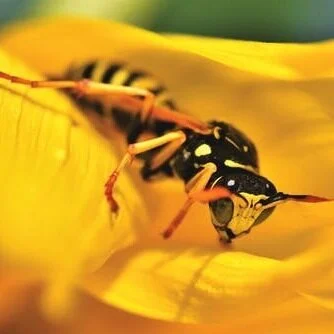
You spot a nest forming under your eave and your first instinct is to grab a can of something. Before you do, it's worth understanding what you're actually dealing with, because not every wasp situation in Phoenix, AZ, calls for the same response.
Some wasps are genuinely working in your favor. Others become a real problem the moment they settle near a door, a play area, or a roofline void. Knowing the difference is what separates a smart decision from a very painful one.
The Insect Everyone Hates but Nobody Actually Understands
Wasps have a serious reputation problem, and it mostly comes from the small fraction of species that sting aggressively. There are more than 100,000 known wasp species worldwide, and the vast majority are solitary or parasitic insects that rarely interact with people at all.
The bold, aggressive yellow-and-black wasps that Phoenix, AZ, homeowners picture when they hear the word represent only a narrow slice of that population. The rest spend their lives hunting other insects, pollinating plants, and doing work that quietly benefits every yard they inhabit.
Understanding what wasps actually do changes how you respond to them on your property. A single wasp near your garden is not a threat. A nest directly above your back door is a different situation entirely, and treating both the same way leads to bad outcomes in both directions.
Nature's Pest Controllers You've Been Swatting All Summer
Wasps are predators first. They hunt other insects and bring them back as food for their larvae, meaning every wasp working your yard is actively reducing populations of caterpillars, aphids, and flies that would otherwise be damaging your plants or breeding unchecked near your home.
Research drawing on more than 500 scientific studies found that wasps provide pest control services targeting crop-damaging insects with a precision that broad-spectrum sprays cannot replicate. In Phoenix, AZ, yards with active irrigation and garden beds, that natural predation pressure makes a measurable difference throughout the growing season.
What that means practically for homeowners in Scottsdale, Chandler, or Glendale, AZ, is that a few paper wasps patrolling a vegetable garden are working as free, round-the-clock pest control agents. The reflex to eliminate every wasp on sight comes at a cost most people never connect back to the insects they removed.
The Backyard Pollinator Getting Zero Credit From Anyone
Honey bees get nearly all the credit for pollination, and wasps get almost none of it, but the science tells a more complicated story. Research has documented wasps visiting more than 960 plant species, including 164 that depend entirely on wasps and cannot reproduce without them.
In the Phoenix, AZ, area, where extreme summer heat and low humidity can stress bee populations, wasp pollination becomes a valuable backup system for both wild plants and cultivated gardens. Wasps are generalist pollinators, visiting a wide variety of plants rather than specializing the way many bee species do.
When local bee populations face pressure from drought or heat, wasps step in and keep pollination moving across plant species that would otherwise go unvisited. Phoenix homeowners who grow fruit trees or kitchen gardens are often benefiting from wasp pollination activity without ever realizing the connection.
Know Your Enemy: The Wasps Common to Phoenix, AZ
Not all wasps behave the same way, and species identification matters considerably when deciding how to respond to activity on your property. Paper wasps are the most commonly encountered species for Phoenix, AZ, homeowners, building open umbrella-shaped nests from patio covers, soffits, and roof overhangs.
Yellowjackets are a different category of concern entirely. They prefer to nest in the ground, inside structural voids, and in wall cavities, making them far harder to locate and much more dangerous to disturb. Their ground-nesting behavior is what catches most homeowners completely off guard.
Mud daubers round out the common Phoenix, AZ, wasp population. They are solitary, build distinctive clay tube nests on exterior walls, and rarely sting. Their primary concern for homeowners is that a vacated mud dauber nest often becomes a welcome address for more aggressive wasp species if left in place.
More Dangerous Than You Think, and Here's Why
More than 60 sting-related deaths occur in the United States each year, and the majority involve people stung multiple times in a short period. Unlike honey bees, wasps do not lose their stinger after a single use, allowing them to sting repeatedly without any physical limitation.
For children, elderly adults, and anyone with a known venom allergy, an encounter with an established colony near the home is a serious medical risk that deserves more respect than a quick spray from a hardware store can. The danger compounds rapidly when a nest is disturbed without a plan.
Late summer is when Phoenix, AZ, colonies reach their largest populations and workers become noticeably more aggressive. A nest that seemed manageable in April is often a significant safety hazard by July and August, particularly in Mesa, Tempe, and other East Valley communities where outdoor living extends deep into the year.
What's Actually Drawing Wasps to Your Property
Wasps are drawn to Phoenix, AZ, properties for reasons that are often within a homeowner's control to reduce. Sweet food and beverages left out during outdoor dining are a primary attractant for yellowjackets, open trash cans signal a reliable food source, and fallen citrus fruit does the same.
Structural features of your home also play a role most homeowners never consider. Unpainted or weathered wood on fences, decks, and railings provides the cellulose material that paper wasps use to construct nests, which is why the same spots on older properties get used season after season.
Gaps around soffits, roof vents, and conduit penetrations are potential entry points for yellowjackets seeking enclosed nesting sites inside wall voids. In Phoenix, AZ, homes with stucco exteriors, small cracks at the roofline and around window frames are surprisingly common entry points that go unnoticed until a colony is already established inside.
When to Leave It Alone and When to Make the Call
A solitary mud dauber building a nest on an exterior wall away from foot traffic needs no intervention. A paper wasp foraging in your garden bed is actively working in your favor. The threshold for action is always proximity to people, not simply the presence of a wasp.
Any nest that sits within range of a door, walkway, outdoor seating area, or children's play space represents a risk that outweighs the benefit of leaving it undisturbed. That calculation changes quickly when you have young children or anyone in the household with a known allergy to insect stings.
The instinct to handle wasp nests without professional help accounts for a significant number of sting incidents every season across Phoenix, Scottsdale, and Gilbert, AZ. Spraying a yellowjacket nest without understanding the species, the colony size, or the nesting location turns a manageable situation into a medical emergency faster than most people expect.
Why DIY Wasp Treatments So Often Make Things Worse
The most common mistake Phoenix, AZ, homeowners make is spraying a visible nest at the wrong time of day without any protective equipment. Wasps are most active during midday heat and will respond to a direct spray attack by swarming immediately, leaving whoever is holding the can in a very exposed position.
Over-the-counter wasp sprays knock down the workers you can see but rarely penetrate deep enough to reach the queen or destroy the eggs and larvae developing inside the nest structure. A colony that survives a partial treatment often relocates within the same structure, sometimes moving deeper into a wall void or soffit where it becomes far harder to address safely.
Yellowjacket nests inside wall cavities present a specific hazard that aerosol cans cannot solve. Disturbing the entry point without fully eliminating the colony can cause workers to find alternate exit routes, which sometimes means emerging through interior drywall into living spaces. What started as an outdoor nuisance becomes an indoor emergency, and it happens more often across the Phoenix Valley than most homeowners realize.
Stop Guessing and Call the Team That Knows Arizona Wasps
If you've spotted a nest and aren't sure whether it's a paper wasp, a yellowjacket, or something else entirely, that's exactly the kind of question Russell Pest Control answers every day across the Phoenix Valley. Our licensed technicians know Arizona's wasp species, their nesting habits, and how to remove them safely.
Russell Pest Control has served homeowners across Phoenix, Scottsdale, Mesa, Chandler, Gilbert, Glendale, Tempe, Peoria, and Surprise, AZ, since 1996. We won't sell you a service you don't need, and if a nest on your property is low-risk, we'll tell you that directly, free of charge.
Same-day and emergency service are available throughout the Valley because wasp problems don't wait for a convenient appointment window. One call gets a trained technician to your door with the tools to identify what you're dealing with and handle it correctly. Call Russell Pest Control today and take your yard back.
