
Why Ants Keep Coming Back to the Kitchen (7 Fixes)
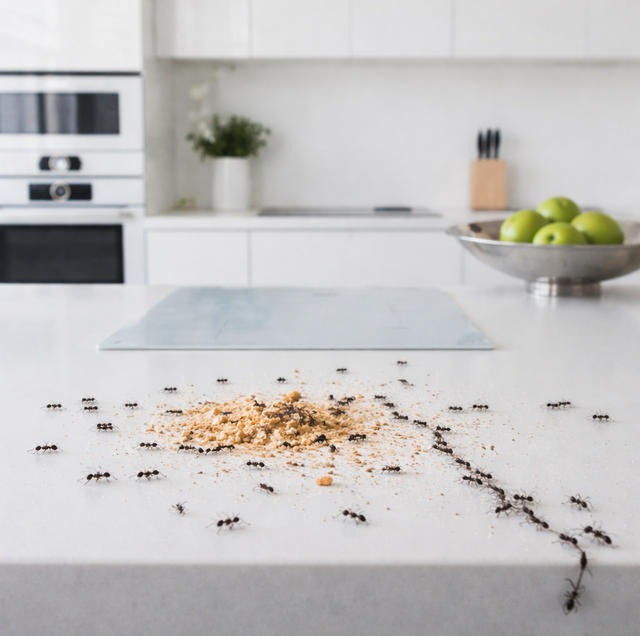
Quick Answer: Ants keep returning to the kitchen because a few scouts found food or water there and laid an invisible chemical trail the rest of the colony now follows. Wiping the counter kills the ants you can see, but it rarely erases the trail or touches the nest, so the line reforms within hours. Breaking the pattern means removing what drew them in, scrubbing away the scent path, sealing the way in, and using bait the workers carry back to the colony rather than a spray that only clears the surface.
Why That Same Line Keeps Reappearing
You clean the counter, watch the last few ants scatter, and go to bed thinking the problem is handled. By morning the line is back, running the same route from the same crack to the same crumb. It feels personal, like the ants are ignoring you on purpose. They are not. They are simply following instructions you cannot see.
When a lone ant, a scout, wanders into your kitchen and finds something worth eating, it does not keep the discovery to itself. On the walk back to the nest, it drags its abdomen along the surface and lays down a thin chemical signal called a pheromone trail. Other workers pick up that scent with their antennae and follow it straight to the food. Each ant that makes the round trip reinforces the path, so a trickle becomes a steady column. The line you keep seeing is not random traffic. It is a working supply route, and every ant on it is reading a map written in scent.
This is why the problem feels so stubborn. The ants marching across your counter are a small fraction of the colony, most of which stays hidden in a wall void, under the slab, in the yard, or behind the dishwasher. Killing the visible workers does nothing to the queen or the brood, and the colony simply sends more foragers down a trail that still smells like a reliable meal.
Killing The Ants You See Does Not Reach The Nest
A paper towel and a spritz of cleaner will wipe out the ants on the counter in seconds. It is satisfying, and it is also why so many kitchen ant problems drag on for weeks.
The workers you squash are expendable to the colony. A single nest can hold thousands of individuals, and the reproductive engine, the queen, never leaves it. As long as she is fed and safe, she keeps producing replacements faster than you can wipe them away. You are pruning the tips of a plant while the roots keep growing.
There is a second problem with reaching for a spray. Some common house-invading ants respond to a chemical attack on the trail by splitting the colony, a behavior called budding. When workers sense their nest or foragers being wiped out at one point, satellite groups break off with their own reproductives and set up new nests elsewhere in the structure. Odorous house ants and certain other species are known for this. Spraying the visible line can turn one manageable nest into several scattered ones, which is the opposite of what you want. This is one reason perimeter and broadcast pesticide work is best left to a licensed technician who can identify the species and choose a product that will not trigger a scatter.
Take Away The Reason They Came In
Ants forage indoors year-round, and the pull changes with conditions. In warm, dry stretches, they will push inside hunting for water as much as food, drawn to a leaky trap under the sink or condensation around a fridge line. In cooler or wetter stretches, the draw shifts back toward calories and shelter. Because the motive shifts through the year, the fix is not seasonal; it is about closing off every reward at once.
Walk the kitchen the way a scout would and remove what it would report back:
Food It Can Smell: Sugar, grease, and protein are all on the menu depending on the species and the time of year. Wipe up spills as they happen, store sweets and pantry staples in sealed containers, take the trash out before it sits overnight, and rinse recyclables before they go in the bin. A single sticky ring under the honey jar is enough to hold a trail.
Sticky And Overlooked Spots: The places you clean least are the ones ants love most: the film behind the toaster, the drip down the side of the cabinet, the crumbs in the cutlery drawer, the gap where the stove meets the counter. Pull small appliances out and clean under and behind them.
Pet Food And Water: A bowl left down all day is an open buffet. Feed pets on a schedule, pick the bowl up between meals, and wipe the floor around it. If ants are already working a pet bowl, setting it in a shallow tray of water creates a moat they will not cross.
Moisture And Leaks: A slow drip under the sink, a sweating pipe, or a damp spot behind the dishwasher can matter more than crumbs, especially in dry weather. Fix leaks, dry standing water, and improve airflow under the sink so the space is not the wettest real estate in the house.
Erase The Trail, Then Close The Door
Once the rewards are gone, deal with the scent map itself. That invisible pheromone line will keep pulling foragers in even after the food is cleaned up, because the trail is a separate signal from the meal that started it.
Wash the ants' whole route, not just the spot where the food was, using warm soapy water or a roughly half-and-half mix of white vinegar and water. Trace the path across the counter, down the cabinet face, and along the baseboard back to the entry point, since a degreasing or acidic wipe breaks down the scent trail the next forager would follow.
Then find where the line enters and cut it off. Ants exploit the smallest openings, so follow the column back to its source:
Seal Entry Points: Caulk gaps around pipes and cables where they pass through walls, close the seam where the counter meets the backsplash, add weatherstripping to a door with daylight under it, and screen or seal vents and weep holes that open to the outside. Every gap you close is one less door for the next scout.
Why Baits Beat A Can Of Spray
A contact spray does one thing: it kills what it touches. That feels productive, but it works against you when the goal is the colony, not the counter.
Bait flips the logic. A well-placed bait is food the workers pick up and carry home, sharing it through the colony by mouth-to-mouth feeding until it reaches the brood and the queen. The nest poisons itself from the inside, which is the only way to actually shrink an ant population rather than thin its foragers. It is slower on purpose. You may even see more ants for a day or two as the trail leads them to the bait, and that traffic is the bait doing its job.
A few practical notes if you set store-bought bait yourself: place it beside the trail rather than on it, and do not spray or wipe around it, because a clean-smelling barrier or a fresh cleaner can steer ants away from the very station you want them to find. Use any product strictly per its label, and keep bait stations well out of reach of children and pets. Do not mix products or improvise a stronger dose; more chemical does not mean a faster fix, and it can make the situation worse.
When It Is Time To Call A Professional
Some ant problems are a housekeeping fix, and some are a structural one, and it is worth knowing the difference before you spend another month chasing trails.
Call a licensed pest professional when the line keeps returning after weeks of clean counters and correct baiting, when you find multiple trails entering from different points, or when ants are streaming from inside a wall, a light switch, or beneath the slab rather than from an obvious outdoor gap. Those patterns point to a nest inside the structure, or to budding that has already spread the colony.
Carpenter ants are their own category. These are large ants that do not eat wood but tunnel through it to nest, hollowing out damp or damaged framing. Fine, shredded wood shavings that look like pencil sharpenings, faint rustling in a wall, or big winged ants indoors are all reasons to have the structure inspected rather than treated with a store product. A professional can identify the species, trace the nest, choose a treatment that will not scatter the colony, and handle any broadcast or perimeter application safely, which is work that belongs in trained hands.
Frequently Asked Questions
The pheromone marker fades on its own, but not on your schedule. Depending on the species, foot traffic, and surface, an untended trail can keep drawing ants for hours after the food is gone, because trail chemicals evaporate slowly and are reinforced every time an ant walks the route. Scrubbing the path with a soapy or vinegar wipe removes the scent immediately instead of waiting days for it to weather off.
They return to the reward, not the location. If a trail led to a specific outlet on the counter, workers will keep arriving there until the scent is erased and the food source is gone. Interestingly, foragers often follow the shortest reinforced route rather than the first one discovered, so a well-used trail tends to straighten out over a day or two as more ants vote for the quickest path with their scent.
Strong-smelling deterrents can briefly confuse a trail by masking the scent, but they do not kill the colony or seal the entry, so ants usually reroute around them within a day. A chalk or powder line is a stopgap at best. The durable fix is removing the attractant, breaking the trail chemistry, and closing the gap the ants used, none of which a scent barrier accomplishes on its own.
Very likely. Small kitchen invaders in many regions are odorous house ants, which give off a coconut or rotten-smelling odor when crushed, or pavement ants that nest under slabs and walkways. The large ants you see outdoors are often a separate species entirely, sometimes carpenter ants. Identification matters because the bait a species prefers- sugar versus protein versus grease- changes with the ant and even with the season.
No, because water pulls them in as much as food. A common blind spot is the air-conditioning condensate line and the pan under the fridge coils, which stay damp even in a kitchen with nothing on the counter, and tiny sugar ants will thread along a dishwasher supply line to reach them. Some species, like the odorous house ant, are especially water-driven and will keep scouting a clean kitchen until the moisture source is found and dried. That is why fixing drips, clearing a slow condensate drain, and wiping up standing water belong in the plan alongside food storage.
Most kitchen ants are a contamination nuisance, walking over food-prep surfaces after crossing trash and drains. Carpenter ants are the exception, because they excavate galleries in moist structural wood and can weaken framing over time, and their presence often signals a hidden moisture problem in the wall or floor that needs fixing regardless of the ants. That structural angle is a key reason a persistent large-ant problem warrants an inspection.
Book a kitchen ant inspection — pinpoint the nest and the entry points so the trail stops for good. Russell Pest Control serves the Phoenix Valley. Call (623) 469-7583.
