
Preserve-Edge and Wash-Adjacent Homes: Why the Lot Line Sets Your Scorpion Baseline
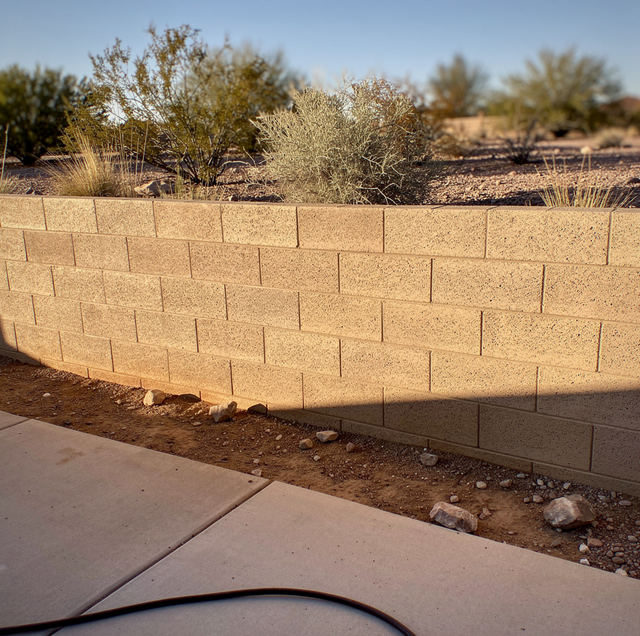
Your house isn't touching the raw ground behind it. There is a block wall between your patio and the wash, or a side yard, or a neighbor's pool deck standing between you and the undeveloped land past the subdivision's edge. So when someone says lot-line properties carry a heavier scorpion load, it's easy to file that under someone else's problem. The actual unbuilt ground is a hundred feet away, behind a fence, not underfoot. That assumption feels reasonable. It's also wrong, and the reason has less to do with distance in feet than with how a scorpion population actually spreads.
Pressure Doesn't Stop at a Property Line — It Fades Along One
Bark scorpions are ambush-and-forage hunters. At night, they move across open ground, chasing crickets, roaches, and other insects, and they don't check a property survey before crossing it. A scorpion population rooted in undisturbed, undeveloped ground doesn't broadcast outward like a wave that stops flat at a fence line; it radiates the way heat comes off a block wall late on a summer afternoon: strongest right at the source, weaker with distance, but never with a clean edge. And it travels fastest wherever there's continuous cover to move along, which is usually a shared block wall, a drainage easement, or a run of native landscaping that connects unbroken ground straight to your patio.
That's the part the "my house isn't touching the wild ground" assumption misses. A house two lots back from a wash, tied to it by an unbroken block wall, can carry more nightly pressure than a house that backs directly onto a quiet stretch of dry ground with no wall connecting the two properties. The wall isn't stopping anything. Bark scorpions climb rough stucco and masonry texture easily, using claws built for exactly that kind of surface, so a shared wall often functions as a corridor rather than a barrier.
What a Buffer Lot Actually Buffers
A vacant platted lot between your yard and the wash, or a greenbelt common area, does help in real terms. But it changes the population's address, not its size. Rock rubble, packrat middens, and undisturbed leaf litter on that empty lot support the same food chain- crickets, roaches, and other insects- that feeds a scorpion colony. So a buffer lot in its current raw state often just relocates the nearest burrows fifty or a hundred feet farther from your door instead of removing them.
Once that lot is graded, built, and landscaped, the pressure on your side usually drops because grading strips out the rock structure and the loose soil scorpions use for cover. Until then, an empty lot is buffering distance. It isn't buffering the population from which distance is measured.
Expect a short spike before that improvement shows up, too. When a neighboring vacant lot finally gets graded, the scorpions living in its rock and loose soil don't disappear on day one; some of them move toward the nearest remaining cover, often the yard next door, for the weeks while the earthwork displaces them. That temporary jump in activity is part of the lot converting from raw ground to a groomed yard, not a sign that anything on your property stopped working.
Why Undeveloped Ground Produces More Scorpions Than a Groomed Yard
Undisturbed native soil provides far more usable harborage per square foot than a maintained yard. Fractured caliche, exposed granite, undercut wash banks, and decades of accumulated leaf litter and rock rubble give scorpions dense, continuous cover and a steady insect prey base. A groomed yard with regular irrigation cycles, foot traffic, and gravel or turf maintenance simply doesn't offer the same density of hiding spots, which is exactly why a mid-block lot with groomed neighbors on every side tends to run a lower baseline than a lot backed by raw ground.
The Arizona bark scorpion, the species behind nearly all of this pressure, is built for exactly this kind of terrain. It's the most venomous scorpion species in the United States; it glows blue-green under ultraviolet light, and its flattened body lets it squeeze through gaps barely wider than a credit card's edge. Summer storm season makes the mismatch worse before it gets better: rain triggers a short-term surge in crickets and other prey insects, and the scorpions hunting them follow that surge right up to whatever structure is closest to the source.
For any bark scorpion sting, the Arizona Poison and Drug Information Center is the first call. Call 911 instead for trouble breathing, drooling, or roving eye movements. A wash-adjacent lot doesn't change how a sting is handled.
The Baseline Is Something You Manage, Not a One-Time Fix
Because the source population lives on a piece of stable habitat- a wash, a preserve, a still-vacant lot- instead of a temporary infestation, treating your own house doesn't lower what that ground produces. It only manages how much of it reaches you. A preserve-edge or wash-adjacent property calls for a different expectation: the realistic goal is a managed baseline, kept low through ongoing treatment, not zero sightings forever.
Contrast that with a mid-block infill lot surrounded by similarly groomed yards on every side. There, the surrounding pressure is already low, so a well-treated property can get close to no sightings at all and mostly stay there. At a wash or preserve edge, the source doesn't go away, which means the maintenance doesn't either.
Sealing the specific gaps scorpions use to get from your yard into your house is a related piece of this picture, with its own separate set of realistic outcomes once outdoor pressure is running this high. That's a different question from why the baseline starts higher out here in the first place, which is what this article is actually about.
What a Realistic Baseline Looks Like at a High-Pressure Edge
In practice, a managed baseline at a wash or preserve edge usually means a recurring treatment cadence rather than a single visit, applied consistently through the warm months when prey insects and the scorpions that eat them are most active. A property backing to raw ground typically needs that rhythm held steady, since a gap of a few months is enough for foraging activity near the edge to climb back up.
It also means measuring the actual baseline instead of guessing at it. A black-light check after dark, walking the yard and wall line with an ultraviolet flashlight, shows what's actually foraging on your property that night rather than relying on how many you happen to spot indoors. That number becomes the working baseline you're managing against, and it's usually higher at a wash or preserve edge than most homeowners assume before they check.
| Edge Type | What Typically Borders It | What It Means for Your Baseline |
|---|---|---|
| Active or seasonal wash | A sandy channel with undercut banks, sometimes running water after summer storms | Undercut banks hold moisture and shade even when the surface looks dry; among the steadiest sources of pressure |
| Preserve or conservation land | Open ground set aside from development | Pressure tends to stay steady over time rather than fading the way it can near a lot that's still going to be built out |
| Vacant platted lot | An undeveloped parcel zoned for a future house | Pressure is real now, but usually drops once the lot is graded and landscaped |
| HOA common area or wash park | Landscaped native-style common ground | Lower pressure than raw, undeveloped ground, but mature rock beds and native plantings still host it |
Reading Your Own Property's Edge Type
Not every lot line reads the same way, and the type of edge you actually have changes what a fair baseline looks like. The simplest way to tell is to look at the ground itself: does it look like it will stay as it is, open space, a wash, a wall of a common area, or does it look like a lot waiting on construction, graded, staked, or already fenced for a build? The city or county parcel viewer can also show you how the land behind you is designated if you want to confirm it.
A UV flashlight turns bark scorpions bright blue-green after dark, even against grass or gravel. Walking your patio and wall line with one for five minutes after dusk shows your actual nightly baseline instead of a guess.
Exterior lighting matters here too. Bright white porch and yard lighting near an undeveloped edge pulls in moths, crickets, and other prey insects from the whole stretch of raw ground behind you, and foraging scorpions follow that prey right up to the light. Switching to warm, lower-lumen bulbs won't remove the underlying baseline, but it stops your own lighting from actively pulling from it.
Frequently Asked Questions
Yes. Undercut banks and shaded pockets along a wash hold moisture and cooler temperatures long after the visible sand looks bone dry, and that microclimate keeps burrows active between storms even when there's no water running through the channel.
Often, over the long run, open ground set aside as a preserve tends to stay as it is, while the pressure on a vacant platted lot is real today but typically fades once it's graded and built.
Not on its own. A standard block wall blocks people more than it blocks a bark scorpion, which climbs rough stucco and masonry with ease. A view fence or snake-screen product is built to keep out larger animals like snakes and rabbits, not scorpions specifically.
There's no fixed number; the corridor matters more than the count. A house connected to a wash by an unbroken block wall or drainage swale can feel pressure several doors down, while the same distance broken up by graded, irrigated yards in between often stops the path from carrying as far.
Yes, at the margins. Bright white lighting near the edge draws prey insects in from the undeveloped ground behind you, and rock beds or dense native plantings along a shared wall give scorpions the same cover as the raw ground. Neither removes the baseline, but both shape how much of it shows up at your door.
Sealing closes the specific gaps scorpions use to get indoors and cuts how many make it inside. It doesn't change how many are living on the wash or preserve behind you. What realistic sealing results look like at that pressure level is its own separate question.
A wash-adjacent or preserve-edge lot isn't a defect in the property. It's a fact of where the lot sits, just as a corner lot gets more street noise. The goal was never a scorpion-free yard forever; it's a baseline low enough that a walk across the patio after dark doesn't feel like a gamble. Knowing which kind of edge you actually have, and how far its pressure really travels, is the first step toward a plan you can act on.
Get a black-light scorpion search — an after-dark UV walk of your yard and wall line shows how much pressure your property is actually carrying. Russell Pest Control serves the Phoenix Valley. Call (623) 469-7583.
