
The Bees Came Back After Removal: Three Very Different Causes
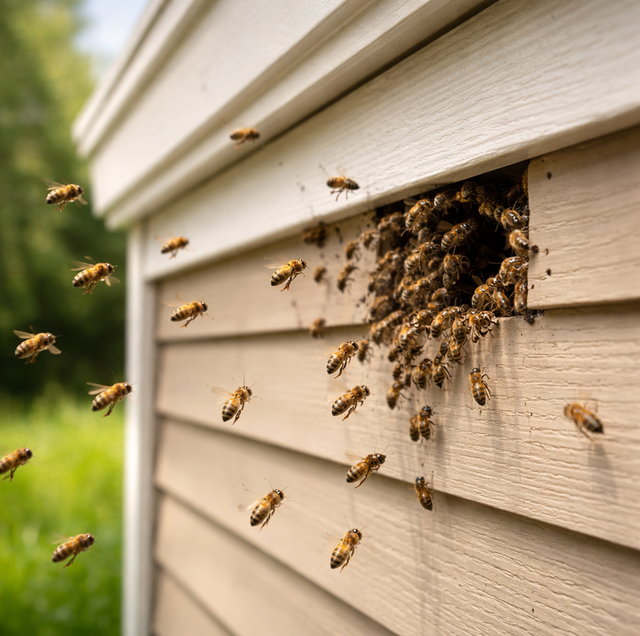
A few weeks ago, someone climbed a ladder at this same corner of the house, worked for an afternoon, and left the wall quiet. You watched the truck pull away. Today you are standing in almost the same spot, watching bees fly into the exact same gap under the fascia, and the sound coming from behind the siding is unmistakable. The relief that came with the end of that first job is gone, replaced by a plainer question: what is happening at this wall now, and is it even the same thing as before?
Three very different situations produce that identical scene, and only one of them involves comb still sitting inside the wall. The other two have no connection to what took place during the first visit. Telling them apart starts with what the bees do at the opening, and how long they keep doing it.
Robber Bees Working the Leftover Scent
Activity in the first week or two after a cleanout is usually robbing, and it has nothing to do with the colony that was taken out. Honey bees from other, unrelated colonies in the area pick up the smell of wax and honey residue drifting out of the cavity and come to carry off what is still in reach, the same way they would work a weak hive at an apiary. There is no queen in it and no comb being built. The bees at the entry are after residue, and they stop coming when the residue runs out.
Robbers give themselves away by how they fly. An established colony runs calm two-way traffic on one settled line in and out. Robbing looks unchoreographed: bees weaving frantically side to side in front of the wall, dropping onto seams and cracks near the opening and working them over instead of committing to a single entry, some of them landing heavy and leaving heavier. A few will look oddly shiny and black where the hair has been scraped off them. The activity usually ends abruptly rather than tapering, and it is over within a few days, about as quickly as the handful of foragers left over from any removal thins out on its own.
Robbing needs no treatment. It ends on its own schedule, when the cavity holds nothing worth the trip.
Comb Still Inside the Cavity
The second possibility sits behind the siding: comb and stored honey still in the void, beyond the thin film any removal leaves absorbed in porous material. Wax and capped honey keep releasing scent for weeks after the bees themselves are gone, and a passing scout reads that scent as a cavity another colony has already proven usable. Wax and honey left in a wall do not make the space less appealing to the next swarm. They make it more so.
What separates this from robbing is staying power and purpose. Robbing is frantic and short. A colony pulled in by leftover comb settles: the flight steadies into a line within a day or two, the same entrance gets worked morning and evening, and bees begin carrying material in as well as out. If the same wall or soffit produces a full second colony inside the same season it was worked, comb still in the cavity is a more likely explanation than coincidence. What that wall needs at that point is a pass that opens the void, takes the comb and the honey out of it, and closes the entry afterward.
A New Swarm at a Different Opening
The third possibility has no relationship to the earlier job at all: a swarm from a colony somewhere else entirely, choosing an opening on the same house that nobody had reason to look at before. A house is rarely down to a single vulnerable gap. A control joint reveal, a warped vent screen, or a shrunken seam where two siding panels meet is enough for a scout to take seriously. A scout only needs a gap it can walk through, and a wall gives up seams like that steadily as it ages, dries, and moves.
Scout bees inspect candidate cavities before a swarm commits to one, and a second gap on the same wall plane is a candidate whether or not the first one is now closed. Location only separates cause two from cause three once the original entry has actually been sealed; if it was left open, a new swarm can move straight into it, and the honest question becomes what drew the swarm there: scent from comb still inside or an empty cavity that simply looked good from the air.
Timing is the other tell. A brand-new swarm arrives on whatever schedule the bees in the area are keeping, so it can turn up months later, in whatever week colonies nearby happen to be casting swarms, well away from the date of the first job.
What to Watch for Before You Call
You do not need to open anything to narrow this down. A few minutes of watching from a safe distance gives a technician most of what they need before anyone arrives.
- Flight pattern: Erratic, zigzagging bees searching the seams around an opening point to robbing; a steady two-way stream holding one line points to bees that live there.
- How long it has lasted: A few days and already falling off fits robbing; two weeks and holding or growing fits a colony, whether leftover comb drew it in or a new swarm found the wall on its own.
- Which opening: The identical spot, if that spot was sealed after the first job, points inside the wall; a different gap a few feet away points at a fresh, unrelated entry.
- What is on the ground: Wax crumbs and a faint sweetness at the base of the wall mean comb material is being worked over, which fits robbers and a new colony equally. A clean surface below the opening is suitable for a swarm that has only just arrived.
Check the opening twenty minutes after sunset. Robbers return to their own nest for the night, leaving the wall silent and empty; a colony living in the cavity keeps bees inside and resumes at first light.
Frequently Asked Questions
Robbing usually appears in the first week or two, while the scent is at its strongest, then ends. Comb left in the cavity can pull a colony back within the same swarming stretch of the year, sometimes inside a month. A new swarm at an unrelated gap can arrive any time nearby colonies are swarming, which may be months away. The three can also overlap in one house: robbing through the old opening in week one, then a swarm through a different gap in week six. That sequence looks like one continuous problem, but it's actually two unrelated ones.
Usually less so, though not safely so. Robbers have no nest at that location and no brood there to protect, so a person standing nearby is not what they are keyed on. The volume is the part that does not change. A robbing event puts a large number of excited bees against the side of a house, often at head height and often near a door or a walkway, and people do get stung standing in the middle of one. Give the area the same berth you would give an active entrance until someone has identified what it is.
Only roughly, and only when wax is visible through the gap or has dropped below it. Pale wax is recent; darker wax predates this episode. The useful part is what that implies about the cause: fresh pale wax under an opening means something is building in there now, which robbing does not do, and points at a colony that has already started work.
Not always. Activity at a new gap while the old one stays closed and quiet reads from outside. The one distinction outside observation cannot close is comb versus an empty cavity, because a smear of wax pressed into a seam and a full set of drawn comb push scent out through the same hole at similar strength. Settling that usually means getting eyes or an instrument into the void, through the existing opening or a small hole that closes again afterward.
Spraying resolves none of the three, and it destroys the evidence that separates them: the flight pattern at the entrance, the wax debris on the ground, and whether any bees are still inside after dark. Losing all three turns the eventual visit into guesswork, and a pile of dead bees at an opening tells nobody whether there is comb behind it.
Less than most people expect. A robbing crowd can look heavier than the original colony's daily traffic ever did and be finished in three days, while a small swarm can move in behind a trickle so thin it barely registers. Duration and behavior are what separate the three. A headcount taken on one afternoon is a poor guide in either direction, which is why two short watches on different days beat one long one.
A Repeat Visit Narrows Down What Happens Next
If this is the second time bees have worked this same corner of the house, you have something the first visit did not: a baseline. Somebody has already been inside that cavity, so its depth, its shape, and what came out of it are known quantities rather than guesses, and the second look starts from a much shorter list of possibilities than the first did. That history is worth saying out loud when you call, including roughly when the first job happened, where on the wall it was, and whether the opening was closed afterward. Those three details change what a technician brings up the ladder and where they start looking.
Have a wall that's had bees twice looked at properly — a technician can identify which of the three situations you're seeing and what, if anything, needs to happen next. Russell Pest Control serves the Phoenix Valley. Call (623) 469-7583.
