
Quarterly or Bi-Monthly Pest Service: Which Fits?
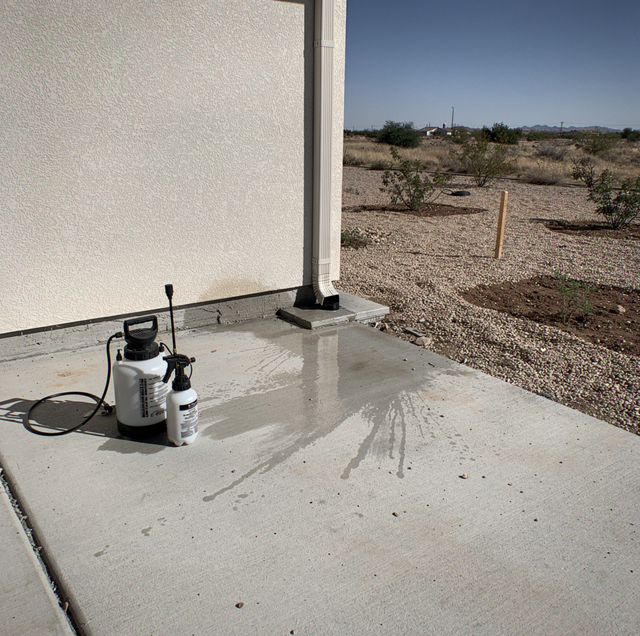
A recurring pest plan is a schedule built around a single question: how long does a single treatment cycle last before pests find a way back in? For some homes, a quarterly visit, roughly every ninety days, keeps pace with what is showing up. For others, that same ninety-day gap leaves a window wide enough for ants, roaches, or spiders to rebuild a presence before the next visit arrives, and a bi-monthly schedule, treatment every sixty days, closes that gap. The right answer depends less on personal preference than on how quickly pest pressure rebuilds around a specific property.
What a Treatment Cycle Actually Does
A standard recurring visit combines a liquid perimeter barrier applied around the foundation, entry points, and eaves with targeted baiting or dust application in cracks, crevices, and other harborage areas. The liquid barrier works as a residual, meaning it keeps killing insects that cross it for a period after application rather than only at the moment it is sprayed. That residual period is the basis for scheduling: once enough of the active ingredient has broken down due to sun exposure, heat, and rainfall, the barrier stops being effective, and pests that were being turned back at the perimeter start getting through again.
In hot, sun-intense climates, that breakdown happens faster than in milder climates. Ultraviolet light degrades many pesticide formulations chemically, and prolonged exposure to intense summer heat accelerates that process further. A residual barrier that might hold close to its full labeled duration in a cooler, shadier climate can lose effective strength noticeably sooner in intense heat and sun exposure, especially on south- and west-facing exposures that take the most direct sun through the afternoon. Seasonal heavy-rain storms compound the problem differently, since heavy rain physically washes some of the applied product off exterior surfaces and dilutes it in the soil near the foundation.
Why Pest Pressure Isn't the Same at Every House
Two identical treatment schedules can produce very different results depending on the surrounding environment. A property with mature landscaping, dense ground cover, or a block wall bordering a wash or open undeveloped lot faces a much larger, closer population of ants, scorpions, and spiders looking for a way in than a home surrounded by gravel and minimal plantings. Irrigation timers and drip lines create small, reliably moist pockets that ants and roaches gravitate toward, and a yard with several of those pockets effectively becomes a staging ground the treatment has to defend against continuously rather than occasionally.
Construction age and condition matter just as much as the surrounding vegetation. Older homes tend to have more small gaps: weep holes without screens, gaps around utility penetrations, settled expansion joints in the slab, and worn weatherstripping, all providing entry points a sixty-day product doesn't need to defeat as often as a ninety-day gap would demand. Newer, well-sealed construction with tight thresholds and screened weep holes gives a quarterly cycle a better chance of holding the line, since there are fewer paths in for pests to exploit during the gap between visits.
How the Two Schedules Actually Compare
| Factor | Quarterly (every ~90 days) | Bi-Monthly (every ~60 days) |
|---|---|---|
| Residual coverage gap | Longer gap between fresh applications | Shorter gap, fresher residual more often |
| Best fit for | Newer, well-sealed homes with light landscaping | Older homes, dense landscaping, or a history of recurring activity |
| Wet-season resilience | Barrier can wear thin before the next visit in peak storm months | Fresher barrier more often during the highest-pressure season |
| Visible activity between visits | More likely on properties with higher surrounding pest pressure | Lower, since the gap for pests to rebuild is shorter |
| Typical starting point | Homes with no active infestation history | Homes recovering from an infestation or with chronic seasonal pressure |
Seasonal Pressure Changes the Math Mid-Year
Pest pressure in hot, dry climates is not a flat, year-round constant, and a schedule that works fine in the cooler months can fall short once the seasonal pattern shifts. Scorpion and spider activity picks up as overnight temperatures remain warmer, driving more movement in search of prey and cooler hiding spots near a structure's foundation. Ant colonies expand their foraging range as soil moisture from seasonal storms creates new trail conditions, and roaches surge indoors when flooding or heavy rain displaces them from drains, storm systems, and irrigation boxes outdoors. Several properties that hold up well on a quarterly schedule through the cooler months see a noticeable uptick in activity in the weeks leading up to their next scheduled visit once the seasonal surge kicks in, which is the clearest sign that a tighter interval would better close the gap.
Signs Your Current Schedule Isn't Holding
A handful of patterns point to a scheduling mismatch rather than a treatment failure. Seeing live activity consistently in the final few weeks before a scheduled visit, rather than randomly throughout the cycle, suggests the residual is wearing out before the next application arrives. A property near a wash, greenbelt, or vacant undeveloped lot with a steady baseline of ant trails or scorpion sightings, even after treatment, often needs a shorter interval simply because the surrounding population pressure never really lets up. And any home that has dealt with an active infestation, whether roaches, ants, or another pest, benefits from a tighter interval for at least the first year after the problem is brought under control, since a previously established population can rebound faster than one starting from a truly low baseline.
Making the Switch Between Schedules
Moving from quarterly to bi-monthly, or the reverse, doesn't require starting a new plan from scratch. A technician familiar with the property's history, entry points, and surrounding conditions can usually recommend an interval change during a scheduled visit. Flexible plans built around monthly, bi-monthly, or quarterly cycles exist specifically so a property can shift as conditions change: tightening the schedule after a storm season with heavy activity, then relaxing it again if the following months stay quiet. Treating the schedule as adjustable, rather than fixed once chosen, keeps the plan aligned with what a property is actually dealing with, rather than what seemed reasonable when the plan started.
Scheduling Doesn't Replace Sealing Entry Points
A recurring treatment plan and physical exclusion work are two different layers of defense, not substitutes for each other. The residual barrier and interior baiting reduce and intercept pest activity on a schedule, but they do nothing to close the actual gaps: an unscreened weep hole, a worn door sweep, a utility penetration with a quarter-inch of open space that let pests reach the barrier's edge in the first place. A property with several unsealed entry points will always need a tighter interval than an identical home with those same gaps closed, simply because sealing removes opportunities for entry rather than just responding after pests are already close to the structure.
That relationship matters when choosing between quarterly and bi-monthly service. A homeowner who invests in sealing weep holes, adding sweeps to exterior doors, and closing gaps around plumbing and electrical penetrations often finds that a quarterly interval performs as well as a bi-monthly interval used to, since fewer pests reach the treated zone in the first place. Scheduling and exclusion work together: one manages what's already trying to get in; the other reduces how much is trying to get in in the first place.
Property Type Changes the Calculation Too
A single-family home surrounded by a private yard behaves differently from a townhome sharing walls with neighbors, or a small commercial property with loading docks, dumpsters, and constant foot traffic. Attached housing introduces a variable a standalone home doesn't face: pests moving through shared walls, utility chases, or attic spaces from a neighboring unit that may not be on the same treatment schedule. In that situation, a tighter interval on one unit can still see pressure from an untreated or lightly treated unit next door, and the gap between visits sometimes needs to be shorter simply to offset an inconsistency in coverage that a standalone home never has to deal with.
Commercial properties carry their own set of pressures, including food handling areas, frequent deliveries that introduce new pests on pallets and boxes, and larger square footage with more potential entry points per structure. Those properties often warrant a more frequent interval than a comparable residential schedule, not because the treatment itself differs, but because the volume of activity moving through the property on any given day is simply higher.
Frequently Asked Questions
No, the products and application methods are typically the same. The difference is entirely in timing: refreshing the residual barrier every sixty days instead of every ninety keeps the protective layer from thinning out as much between visits, which matters more for pressure and gap-closing than for product strength.
Yes, and this is one of the more common adjustments made after the first year of service, once a technician has a clearer picture of how a specific property behaves across a full seasonal cycle. A property that shows more activity than expected during the wettest months is a typical candidate for tightening the interval going into the next year.
Not always. Interior baiting for roaches or ants targets specific harborage points and can hold effectively longer than an exterior liquid barrier exposed to sun and rain, since it isn't degraded by UV light or washed away by storms. A home's exterior schedule and its interior baiting needs are evaluated somewhat independently for that reason.
Yes, measurably. Dense ground cover, mature shrubs against the foundation, and heavy irrigation create shaded, moist microhabitats that ants, roaches, and spiders use as staging areas close to entry points. Pulling plantings back even a foot or two from the foundation, so the treated perimeter is bare soil or gravel rather than mulch or ground cover, often does more to stretch a treatment's effective coverage than shortening the interval alone would.
Not necessarily, since matching the schedule to actual pressure works better than defaulting to the tightest option everywhere. There's a practical tradeoff too: a shorter interval means more frequent perimeter applications right around doors, patios, and play areas, and a property that doesn't need that frequency gains nothing from it beyond more visits on the calendar. A well-sealed, newer home with light landscaping and no infestation history often does perfectly well on a quarterly cycle.
That pattern is exactly the signal worth flagging at the next appointment or through a follow-up call, since a recurring plan is meant to adjust based on what's actually happening at the property rather than run on autopilot. A single early appearance might be a fluke, but a repeated pattern across more than one cycle usually means the interval or the entry points themselves need a closer look.
Quarterly and bi-monthly aren't a better-or-worse pair; they're two answers to the same question: how fast does pressure rebuild around this specific property? Age, landscaping, proximity to open land, and infestation history all push the answer in one direction or the other, and the specifics of a property, not a generic default, should set the interval.
Get a schedule built around your property's actual pest pressure — not a generic default. Russell Pest Control serves the Phoenix Valley. Call (623) 469-7583.
