
When Pigeon Droppings Turn Into a Real Health Risk
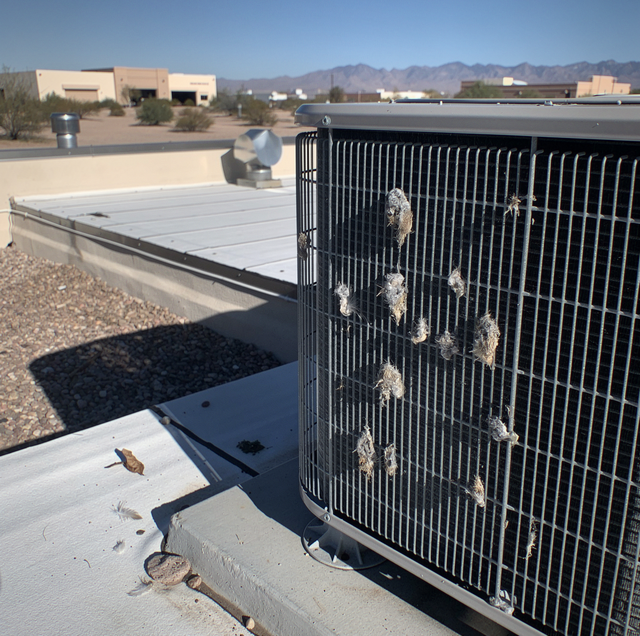
Why does a rooftop pigeon problem get treated as more than a cleaning issue? Because of what happens to droppings after they dry, not what they look like while they're fresh. A property manager walking a rooftop or loading dock sees a mess. What's actually happening underneath that mess is a slower process involving fungal spores, corrosive chemistry, and secondary pests that only becomes a genuine health and maintenance concern once droppings accumulate and dry undisturbed over weeks or months.
What Actually Makes Dried Droppings Risky
Fresh pigeon droppings are mostly a nuisance and a slip hazard. The real concern develops as accumulated droppings dry out, since dried droppings can support the growth of certain fungi, most notably one linked to a lung infection called histoplasmosis and, less commonly, one linked to cryptococcosis, a fungal infection that can affect the lungs and nervous system. Both fungi grow in soil enriched by bird or bat droppings, and a rooftop, ledge, or HVAC housing with a heavy, undisturbed accumulation of pigeon waste can become exactly that kind of enriched growing surface over time.
The exposure pathway is what turns this from a theoretical concern into a real one on commercial properties. Disturbing dried, spore-contaminated droppings, sweeping them, power-washing them, or simply having HVAC intake fans stir up dust near an accumulation, can aerosolize fungal spores into the air where they can be inhaled. Most healthy people who inhale a small spore load never develop symptoms, but larger exposures, or exposure in people with weakened immune systems, can lead to respiratory illness that sometimes requires medical treatment. That is why professional cleanup protocols call for wetting down droppings before removal and using respiratory protection, rather than simply sweeping a rooftop dry.
The Damage That Happens Before Anyone Gets Sick
Health risk isn't the only mechanism at work. Pigeon droppings are acidic, and that acidity corrodes a surprising range of building materials over time: rooftop membranes, HVAC condenser coils and fins, sheet metal flashing, and even stone or masonry facades on older commercial buildings. A thin layer might do little damage over a short period, but a heavy, repeated accumulation on the same equipment or surface, especially where droppings sit wet after rain or morning condensation before drying again, steadily degrades the material underneath. HVAC equipment takes some of the worst of it, since dried droppings packed into coil fins block airflow and reduce heat exchange efficiency, forcing a unit to run harder and wear out components faster than a clean unit would.
Slip-and-fall risk compounds the maintenance side of the problem. A buildup of droppings on a rooftop walkway, loading dock overhang, or exterior stairwell creates a slick surface when wet, which is a liability concern distinct from the health question but one that shows up on the same inspection checklist for a commercial property manager.
Why Nesting Sites Bring a Second Wave of Pests
An active pigeon roost rarely stays a pigeon-only problem. Pigeon nests commonly host mites, tiny parasites that feed on the birds while they're present, and when a nest is abandoned, whether the birds move on naturally or a nest is removed, those mites can migrate in large numbers looking for a new host, sometimes moving into a building through vents, light fixtures, or gaps around rooftop HVAC penetrations. A sudden, unexplained wave of biting insects reported by tenants on an upper floor is worth checking against rooftop pigeon activity before assuming an unrelated cause, since the timing frequently lines up with a nest being disturbed or a flock being displaced.
Where Pigeons Actually Nest on Commercial Buildings
Flat commercial rooftops offer exactly what pigeons look for: a flat, sheltered ledge or overhang for nesting, proximity to rooftop HVAC and swamp cooler units that provide condensation as a water source in a dry climate, and enough height to avoid ground-level predators. Parapet walls, rooftop equipment platforms, and the gaps behind signage or rooftop screening are common nest locations, and because these spots are rarely inspected as part of routine building maintenance, a colony can establish and grow for a long stretch before anyone notices droppings accumulating below.
What an Effective Response Actually Looks Like
Addressing an active pigeon problem involves more than a single cleanup. Physical deterrents, such as bird spikes along ledges and parapets, netting across larger open areas like loading dock overhangs, and sloped or electrified deterrent strips on equipment platforms, prevent birds from landing and nesting in the first place, which matters more in the long term than periodic cleaning alone. Cleanup of existing accumulation should follow safety protocols that wet material down before disturbance and use appropriate respiratory protection, rather than dry sweeping, which is exactly the action most likely to aerosolize spores. And any cleanup on a property with an active or recent roost benefits from checking for nearby mite activity, since that secondary pest problem is easy to miss if attention stays focused only on the droppings themselves.
Frequently Asked Questions
Most people who encounter pigeon droppings never develop histoplasmosis, since the fungus requires specific conditions for accumulation and growth, and most exposures involve too small a spore load to cause illness in a healthy person. It also isn't contagious between people, and simple contact with dried droppings isn't the route of exposure that matters, since inhaling airborne spores kicked up by disturbing an accumulation is what creates risk. That's why cleanup work on a heavy roost carries a higher exposure risk than routine building use in the same area ever would.
There's no fixed timeline, since it depends on moisture, temperature, and how much material accumulates in one spot, but weeks to months of undisturbed buildup, particularly in a spot that gets wet and dries repeatedly, is generally what allows fungal growth to establish. A rooftop cleaned on a regular maintenance schedule rarely reaches that point, which is part of why routine inspection matters more than reactive cleanup after a complaint.
Yes. The acidity in droppings affects membrane material regardless of the roof's overall condition or age, so a newer roof isn't immune to the slow degradation caused by heavy, repeated accumulation in one spot. Areas directly below a favored roosting ledge or equipment perch tend to show wear well before the surrounding membrane does.
Pigeon mites can and do bite people, particularly when a nest is disturbed or abandoned, and the mites disperse looking for a blood meal from any available host. The bites are typically an irritation rather than a disease transmission risk, but a sudden cluster of unexplained bites reported by building occupants is a reasonable trigger to check nearby rooftop or ledge areas for recent pigeon activity.
Because a cleanup addresses the mess but not the conditions that attracted the birds in the first place: a sheltered ledge, a nearby water source such as condensation from rooftop equipment, and the absence of any physical deterrent. Without spikes, netting, or another exclusion method installed, the same ledge or platform remains just as attractive to a new flock as it was to the last one.
Not usually to the same degree, but it's worth monitoring rather than ignoring, since a couple of birds scouting a rooftop for nesting potential can turn into an established roost within a single season if the site proves favorable. Catching pigeon activity before nesting begins is far simpler than dealing with an established colony, its droppings, and a possible mite dispersal later.
Why Commercial Properties Face More Exposure Than Homes
A single-family rooftop rarely gets the same pigeon pressure as a commercial building, mostly because of scale and structure. Flat commercial roofs, rooftop-mounted HVAC packages, parapet walls, and raised rooftop signage all create the ledges and sheltered platforms pigeons prefer, and a larger building simply offers more of them than a pitched residential roof ever will. Add in loading docks with spilled grain, produce, or food waste from deliveries, and a commercial property can become a reliable food source on top of a reliable nesting site, which is part of why pigeon pressure tends to concentrate around retail centers, warehouses, and food-service buildings more than residential neighborhoods.
That combination also raises the stakes for a property manager beyond the direct health and equipment concerns. Health inspectors and tenants both notice droppings accumulating near entrances, walkways, and HVAC intakes, and a visible pigeon problem left unaddressed can affect a tenant's perception of a property's overall maintenance, independent of whether anyone has actually been exposed to a fungal spore. Addressing pigeon activity early keeps it a maintenance line item rather than a visible complaint that tenants or inspectors raise on their own.
The droppings on a rooftop are only the part anyone notices first. Fungal growth, corroded equipment, and mite dispersal are what turn that mess into an actual health and maintenance liability, and each of those outcomes traces back to how long the accumulation sat undisturbed before anyone acted on it.
Get pigeon activity assessed and excluded — before droppings become a health or equipment problem. Russell Pest Control serves the Phoenix Valley. Call (623) 469-7583.
