
Problems with Pigeons and How to Get Rid of Them
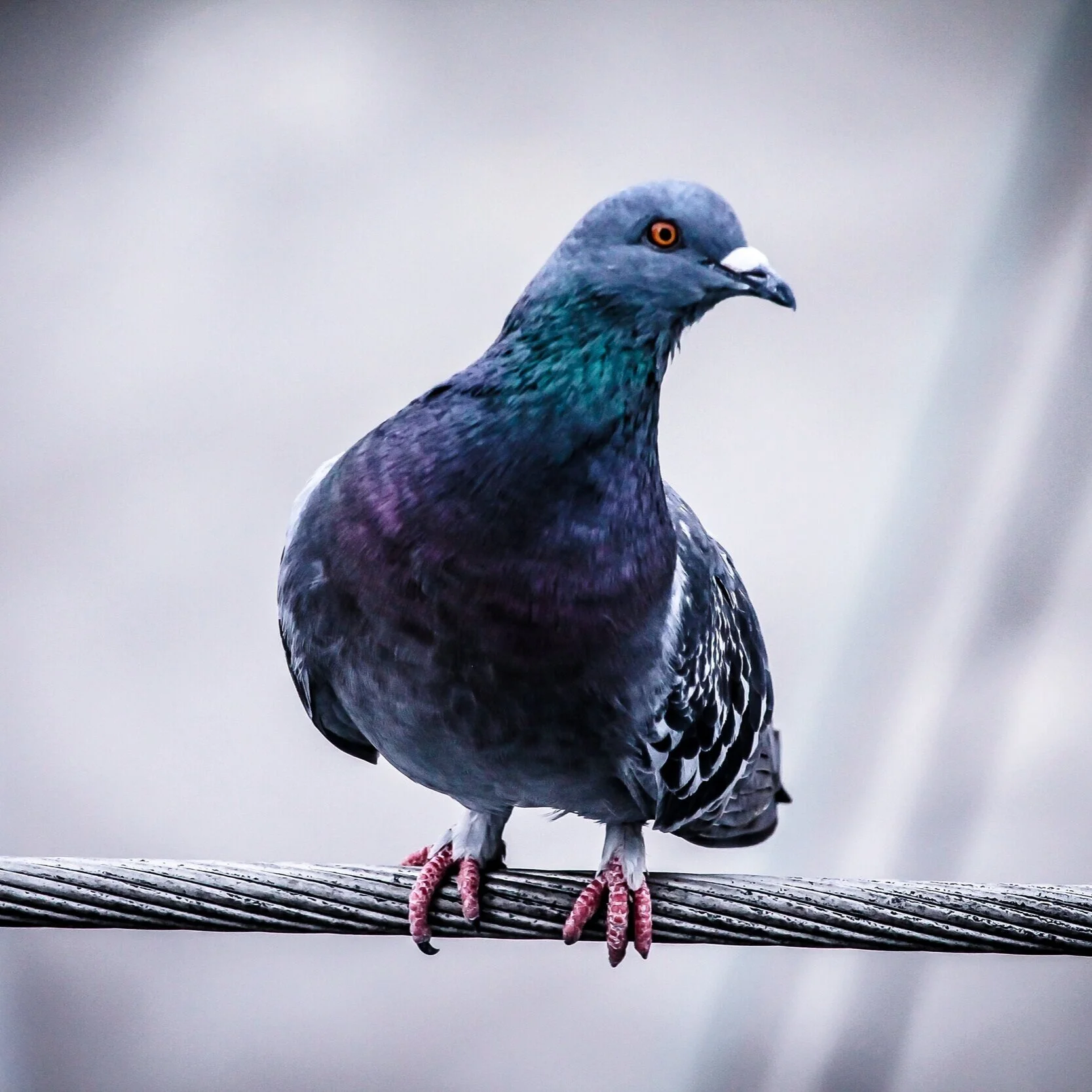
Your roof used to look clean. Now there are droppings streaking down the fascia, a nest jammed under the solar panels, and a flock that treats your eaves like a permanent address. In Phoenix, AZ, pigeons are not a minor inconvenience.
They are one of the Valley's most damaging urban pests, and the architecture of most Phoenix homes gives them more comfortable roosting options than they would find almost anywhere else. Understanding the problem honestly is the first step toward solving it.
Phoenix Was Practically Designed for Pigeon Problems
Feral pigeons are descendants of domesticated European rock doves, which means man-made structures feel completely natural to them. Phoenix, AZ, architecture is essentially paradise for this species, with flat foam rooftops, S-tile profiles, covered patios, open eaves, and solar panel arrays that mimic the cliff faces pigeons instinctively seek.
Unlike cooler cities where harsh winters reduce populations seasonally, Phoenix, AZ's year-round warmth allows pigeons to breed continuously. Feral pigeons lay two to three eggs every three to four months, which means a small roost that appears manageable in spring can grow into a large, established colony before summer ends.
The Valley's urban density and open-air commercial structures throughout Phoenix, Scottsdale, and Chandler, AZ, provide reliable food from dumpsters, restaurant patios, and unsecured trash. Once a flock establishes a reliable food source near your property, their homing instinct keeps them returning even after initial deterrent attempts. Solving the problem requires understanding that behavior, not just reacting to the birds you can currently see.
What Pigeon Droppings Are Actually Doing to Your Home
A single pigeon produces between 47 and 51 droppings per day. A roost of even a dozen birds deposits a substantial volume of highly acidic waste across your roof, gutters, air conditioning equipment, and any vehicle parked beneath a roosting zone. That volume accumulates faster than most Phoenix, AZ, homeowners realize until visible damage becomes difficult to ignore.
Pigeon droppings contain uric acid that actively corrodes metal surfaces, eats into roof coatings, breaks down the finish on vehicles, and can reduce the effective lifespan of a Phoenix rooftop by up to twenty percent over time. The damage is not cosmetic. Corroded gutters fail, blocked roof drains cause standing water during monsoon season, and nesting materials packed into ventilation systems create genuine fire hazards.
Solar panels are a specific and increasingly common vulnerability for Phoenix, AZ, homeowners. Pigeons nest under panels where the elevated gap provides shade, warmth, and predator protection. Accumulated droppings reduce panel efficiency, the nesting debris damages wiring, and the ongoing presence voids manufacturer warranties on panels that were a significant investment. Addressing a solar panel pigeon problem early costs far less than addressing the combined damage of a multi-season infestation.
The Health Risks Nobody Wants to Talk About at Dinner
Pigeon droppings are not just unpleasant. They are a documented health hazard that carries serious consequences when people are regularly exposed near heavily infested rooftops, eaves, or HVAC equipment. Feral pigeons have been associated with over 60 transmittable diseases and host more than 40 different parasites.
Histoplasmosis is one of the most significant concerns for Phoenix, AZ, homeowners. The fungal spores that cause it grow in accumulated droppings and become airborne when nesting material or dry fecal matter is disturbed. Breathing disturbed droppings near an infested roofline or while cleaning a nesting area without proper respiratory protection puts anyone in the vicinity at real risk.
The droppings are also slippery when wet, creating genuine fall hazards on walkways, patios, and driveways directly beneath roosting sites. Beyond the physical risks, the presence of bird mites in nesting areas can migrate into homes when pigeons vacate a roost, creating a secondary pest problem. Pigeon control in Phoenix, AZ, is not just about protecting property. It is about protecting the health of everyone who lives and works on it.
Why Plastic Owls and Shiny Objects Stop Working Within Days
The most common DIY pigeon deterrent mistake Phoenix, AZ, homeowners make is relying on visual scare tactics. Plastic owls, reflective tape, noise machines, and water sprayers produce a brief period of avoidance behavior that ends the moment pigeons learn the deterrent poses no real threat, which typically takes less than a week.
Feral pigeons are intelligent, adaptable birds with strong neophobia, meaning they fear new objects, but that response fades quickly with repeated non-threatening exposure. A plastic owl that worked for three days is being perched on by day five. The birds have not left. They have simply re-established their comfort with an object that turned out to be harmless. Scare tactics alone never produce lasting pigeon control results.
The only deterrents that produce lasting results in Phoenix, AZ, are physical exclusion methods that make landing and nesting structurally impossible. Stainless steel bird spikes installed on ledges, parapet walls, and roofline edges physically prevent pigeons from finding a comfortable flat surface to land on. Heavy-gauge bird netting blocks access to enclosed areas like patios, eave gaps, and solar panel undersides completely. Physical barriers do not require pigeons to change their behavior because they simply cannot use the space anymore.
Cleaning the Mess Is Not Optional, It Is Part of the Solution
Removing pigeons without cleaning the area they occupied is one of the most common mistakes made during pigeon control projects across Phoenix, AZ. Feral pigeons leave behind pheromone-based tracking scents in their droppings and nesting materials that actively signal to other pigeons that a location is safe, established, and worth occupying.
If those scent markers are not removed along with the birds, a new flock will find and colonize the same location within weeks of the original population being displaced. Professional pigeon cleanup involves brush cleaning and vacuuming to remove bulk material, followed by pressure washing and enzymatic disinfectant application that breaks down remaining organic matter and neutralizes the scent signals that attract returning birds.
The cleanup process also removes the actual health hazard. Disturbing dried droppings without respiratory protection, gloves, and appropriate containment creates the airborne exposure risk that makes pigeon infestations genuinely dangerous to address without professional equipment and training. The combination of proper removal, thorough sanitation, and physical exclusion is what produces lasting results rather than a temporary reduction in visible pigeon activity.
Humane Trapping When Exclusion Alone Is Not Enough
When a pigeon flock has grown beyond six to eight birds, physical exclusion alone often cannot address the problem because the existing population needs to be reduced before barriers can be effective. Humane trapping is the established professional approach for managing larger flocks across Phoenix, Glendale, and Mesa, AZ, properties.
Professional humane traps use fresh corn and water to attract and contain pigeons for relocation without injury. Trapping is most effective when conducted as part of a broader strategy that also includes exclusion installation and site cleanup, because trapping without physical deterrents in place simply creates space for new birds from the surrounding area to colonize the now-vacant roosting site within days.
It is important to note that discharging a firearm within city limits in Arizona is a Class 6 felony if you are within one mile of an occupied structure. Poisoning pigeons creates secondary risks to raptors, pets, and neighborhood wildlife that consume affected birds. Humane trapping and professional exclusion are not just the ethical approaches to pigeon control in Phoenix, AZ. They are the legally appropriate and practically effective ones.
Solar Panels and the Problem Every Phoenix Homeowner Needs to Know
Solar panel adoption across Phoenix, AZ, has grown dramatically, and so has the concentration of pigeon activity on Valley rooftops. The gap between a roof surface and the bottom of a solar array is an almost perfect nesting environment: elevated, shaded, protected from wind, and offering a clear view of the surrounding area. Pigeons discover it quickly and return to it persistently.
Mesh screen barriers installed around the perimeter of solar arrays at the roofline level physically close that gap without affecting airflow or panel performance. Professional installation uses UV-resistant hardware and appropriately gauged mesh that withstands Phoenix, AZ's intense sun exposure without degrading. Properly installed solar panel bird proofing protects both the investment in the panels and the structural integrity of the roof beneath them.
Homeowners who ignore solar panel pigeon activity often discover compounding damage well after the original infestation began. Nesting debris accumulates against wiring connections and in drainage paths. Droppings build up beneath panels where they cannot be seen from ground level and cannot be removed without a licensed technician accessing the roof safely. Proactive solar panel protection is consistently less expensive than reactive remediation once an established colony has caused visible damage.
Stop Sharing Your Roof. Call Russell Pest Control Today
If pigeons have claimed any part of your Phoenix, AZ, property, the problem is not going to resolve itself. Russell Pest Control provides humane pigeon removal and control solutions across the Phoenix Valley, including trapping with fresh corn and water, complete nesting material removal, professional site cleanup, and deterrent installation that keeps them from coming back.
Our licensed team handles everything from initial inspection to follow-up prevention, with home seal services that close the structural gaps pigeons exploit across Phoenix, Scottsdale, Mesa, Chandler, Gilbert, Glendale, Tempe, Peoria, and Surprise, AZ. No hidden fees, no pressure, and a free estimate every time.
Call Russell Pest Control today and take your roof, your solar panels, and your peace of mind back from the birds.
