
Why Scorpions Glow Under UV Light — and How It Finds Them
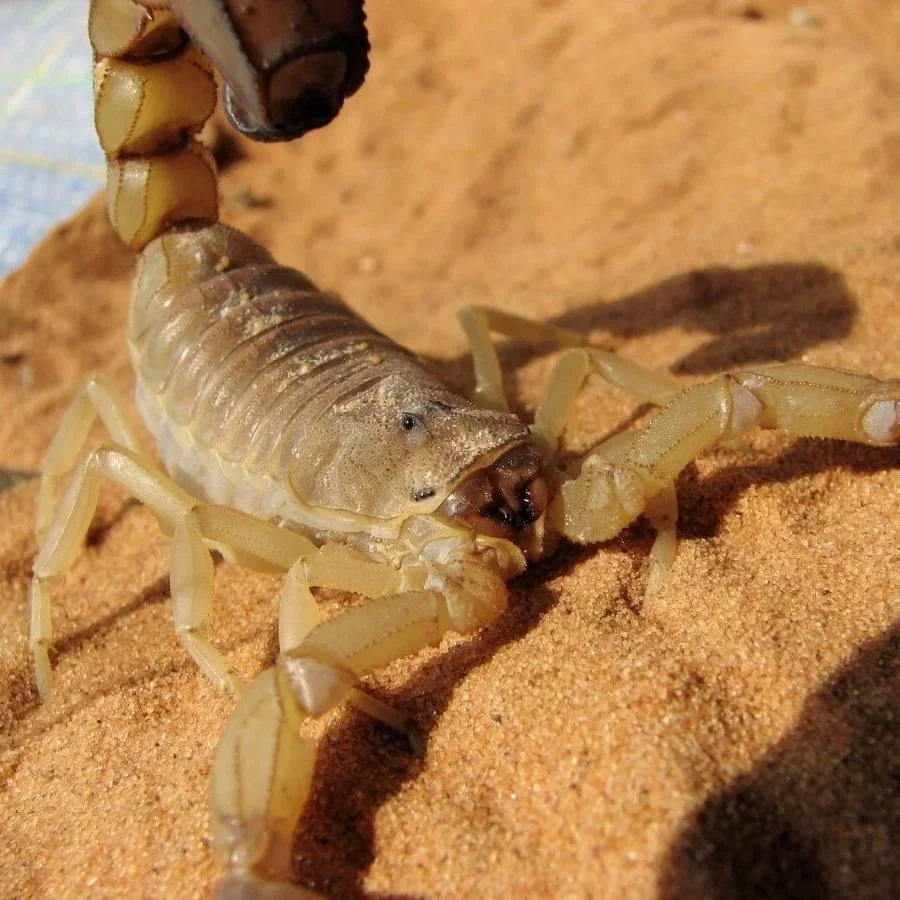
Quick Answer: Scorpions glow a vivid blue-green under ultraviolet (blacklight) because of fluorescent substances in their exoskeleton — the cuticle absorbs UV light and re-emits it as visible light. Nearly all scorpions do this, which makes a UV blacklight a remarkably effective tool for finding them in the dark, when they're most active. Shining a blacklight along walls, baseboards, the yard, and entry points reveals scorpions that would otherwise be nearly invisible against their surroundings. This is genuinely useful for spotting them, checking for their presence, and guiding control efforts — though finding them is only the first step toward keeping them out of your home.
It's one of nature's odder tricks: shine a blacklight on a scorpion in the dark, and it lights up like a glow stick, a vivid blue-green against the night. Beyond being fascinating, this glow is genuinely practical — it's one of the most effective ways to find scorpions, which are otherwise masters of blending in. Understanding why they glow and how to use it turns curiosity into a real tool.
The Science of the Glow
Scorpions glow because of fluorescence. Their exoskeleton — specifically the outer layer of the cuticle — contains substances that are fluorescent, meaning they absorb ultraviolet light (which is invisible to us) and re-emit it as visible light, in the scorpion's case, a bright blue-green. So under a UV blacklight, the otherwise drab, camouflaged scorpion suddenly stands out vividly. The glow comes from the structure of the exoskeleton itself, which is why it's such a consistent trait across scorpions.
Interestingly, this fluorescence develops as the exoskeleton hardens, and it's durable enough that scorpions glow strongly once mature. Nearly all scorpion species share this property, which is what makes the blacklight method so reliable.
Why This Matters for Finding Them
The practical payoff is huge because scorpions are otherwise very hard to spot. Their coloring blends into desert ground, walls, wood, and other surfaces, and they're most active at night when you can't see them well anyway. A UV blacklight flips that around: in the dark, a glowing scorpion is obvious from feet away, standing out against a background that doesn't glow. This makes a blacklight an excellent detection tool for finding scorpions you'd otherwise walk right past.
Because scorpions are nocturnal, the technique works best at night. Many people in scorpion country head out after dark with a blacklight to scan the yard, the foundation, walls, and entry points — and check inside in dark corners, closets, and along baseboards.
| Where to scan with a blacklight | Why |
|---|---|
| Exterior walls and foundation | Climbing bark scorpions, entry points |
| Yard, patio, around lights | Scorpions active and hunting at night |
| Woodpiles, block walls, rocks | Common harborage |
| Indoor baseboards and corners | Scorpions that got inside |
| Closets, behind furniture | Dark daytime hiding spots |
How to Use a Blacklight Effectively
Using a blacklight is simple, but a few things make it more effective. Scan at night when scorpions are active, and the glow shows best against the dark. Move the light slowly and deliberately along walls, edges, the ground, and up onto walls (since bark scorpions climb), since a glowing scorpion can appear suddenly. Check the perimeter of the home and known harborage areas, such as woodpiles and block walls, as well as entry points where they might get in. Inside, scan dark, sheltered areas. The glow makes them easy to see, but you still have to look in the right places — which is also why it's useful for understanding where scorpions are concentrated around your property.
Scan in the dark and let your eyes adjust. The blue-green glow is dramatic against true darkness, so turning off other lights makes scorpions pop. A slow, methodical sweep of walls, edges, and the ground at night turns up scorpions that are effectively invisible by day.
Finding Them Is Only Step One
Here's the important caveat: a blacklight is excellent for finding scorpions, but finding them doesn't eliminate them. Spotting a glowing scorpion tells you they're present and where they're active, which is valuable information — but reducing and keeping them out takes more. Because scorpions hide in tiny cracks, climb, are active at night, and can be numerous, real control involves identifying harborage, sealing entry points, reducing the conditions that attract them, and treating effectively. The blacklight is a detection and monitoring tool that supports those efforts; it's not a control method on its own. Used together with a real plan, though, it helps target where attention is needed.
Why Professional Help Adds Value
If your blacklight scans are turning up scorpions regularly — especially climbers that look like bark scorpions — it's a sign of an established presence worth addressing. A pest control professional can use detection methods to assess the scope, identify the species, determine how scorpions are entering and harboring, and develop a plan to reduce their numbers and seal them out. The blacklight shows you the problem; professional control addresses it. For ongoing scorpion activity, combining what you find with expert treatment is the most effective path to a scorpion-free home. Think of the blacklight as the eyes of the operation and the control plan as the hands: one shows you exactly where the problem is, and the other does something lasting about it. Neither is as effective alone as the two are together.
Frequently Asked Questions
Because their exoskeleton contains fluorescent substances that absorb ultraviolet light and re-emit it as visible blue-green light. The outer layer of the cuticle is responsible, and the property is consistent across nearly all scorpion species. So under a blacklight, a scorpion that's normally camouflaged glows vividly, making it easy to see in the dark.
Yes, very effectively. Scorpions blend into their surroundings and are active at night, making them hard to spot normally. Under a UV blacklight in the dark, they glow blue-green and stand out clearly from feet away. This makes a blacklight one of the best tools for detecting scorpions around a home, especially at night when they're out and active.
At night, because scorpions are nocturnal and most active after dark, and the blue-green glow shows best against true darkness. Turning off other lights and letting your eyes adjust makes the glow more dramatic. A slow, methodical nighttime sweep of walls, edges, the ground, and entry points is the most effective way to spot them.
Nearly all scorpion species fluoresce under ultraviolet light, glowing blue-green, because of substances in their exoskeleton. The glow develops as the exoskeleton hardens, so mature scorpions glow strongly. This near-universal trait is what makes the blacklight method reliable for detecting scorpions in general, including the bark scorpion.
No. A blacklight is a detection tool — it finds scorpions and shows where they're active, but it doesn't eliminate them. Real control involves sealing entry points, addressing harborage, reducing attractive conditions, and effective treatment. The blacklight supports those efforts by revealing where scorpions are, but keeping them out of your home requires a control plan, not just detection.
Regularly finding scorpions, particularly climbers resembling bark scorpions, points to an established presence worth addressing. Use the blacklight to understand where they're concentrated, then have a pest control professional identify the species, find entry and harborage points, and reduce and seal them out. Combining your detection with professional control is the most effective approach.
A Glow That Works in Your Favor
Scorpions glow under UV light because of fluorescent substances in their exoskeleton, and that quirk makes a blacklight one of the best tools for finding these otherwise well-hidden, nocturnal pests. Scanning walls, the yard, and entry points at night reveals scorpions you'd never spot by day. Just remember the glow only finds them — keeping them out takes sealing, harborage reduction, and effective control, ideally with professional help when activity is ongoing.
Blacklight turning up scorpions around your home? — Get the species identified and a plan to reduce them and seal them out. Russell Pest Control serves the Phoenix Valley. Call (623) 469-7583.
