
Roof Rats vs Mice: The One Sign That Ends the Guessing
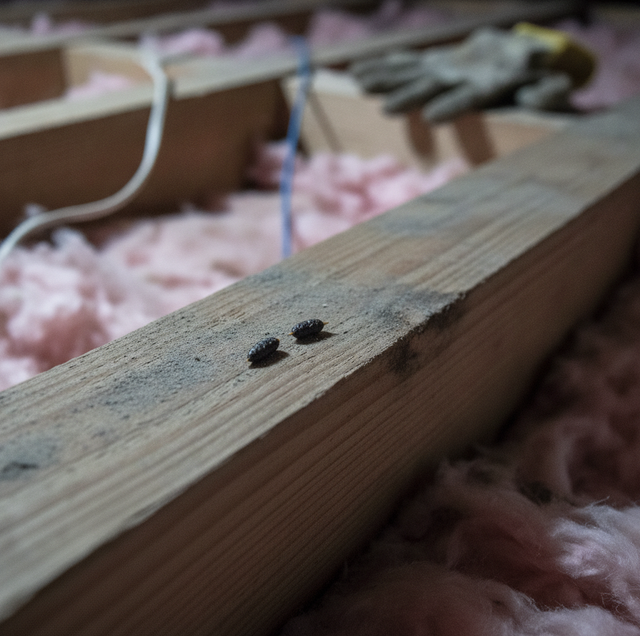
Quick Answer: The fastest tell is the droppings. Roof rat droppings run about a half inch long, capsule-shaped with pointed ends. Mouse droppings are rice-grain small, roughly an eighth to a quarter inch. Everything else (sounds, gnaw marks, greasy rub lines) confirms what the droppings already told you.
It's a little after eleven, and you're lying in bed under the ceiling that separates you from the attic. Then it starts: a slow, deliberate scratching that moves along one line, pauses, and drags a small object a few inches. Not the frantic patter you half-expected. Something with weight to it. You lie still and try to map where it's walking, because the answer to "rat or mouse" decides almost everything you do next, the trap you buy, the gap you seal, whether one visitor becomes a colony by fall.
The two get confused constantly, and it isn't a small mistake. A mouse and a roof rat leave different evidence, exploit different openings, and shrug off different traps. Set the wrong hardware in the wrong spot, and you'll spend weeks sure "nothing is working" while the animal walks past it every night. Before you buy anything, learn to read what's already up there.
Start With Size, But Don't Trust Your Ears Alone
An adult roof rat has a body running roughly 6 to 8 inches, and here's the part people miss: the tail is longer than the body. Stretch one out, and you're looking at something that can measure 13 to 16 inches nose to tail-tip. They're lean and dark, built to climb, with big ears and a pointed face.
A house mouse is a different animal entirely. The body runs about 2.5 to 3.5 inches (small enough to sit in a tablespoon) with a tail roughly as long as the body and a coat that's usually gray-brown. An adult mouse weighs less than an ounce. A roof rat can run five to ten times that.
The trouble is you rarely get a clean look. You hear them, find their leavings, see the damage, but the animal itself stays in the dark. So the real ID work happens with the evidence they leave behind, which is far more honest than a two-second glimpse of something ducking behind a rafter.
Read the Droppings, This Is the One That Settles It
If you only learn one tell, learn this one. Droppings are the single most reliable way to name the animal, because size and shape sort cleanly, and you'll find plenty of samples.
Roof rat droppings are about a half inch long, sometimes a bit more. They're shaped like a capsule or a spindle, think of a grain of brown rice scaled way up, with ends that taper to a point. You'll find them scattered rather than piled, often in a rough trail along the beam or insulation the animal travels.
Mouse droppings are tiny by comparison, roughly an eighth to a quarter inch, about the size and shape of a grain of rice, with pointed ends. A mouse leaves a lot of them; an active mouse can produce dozens in a single day, so you tend to find them clustered near wherever it's feeding or nesting.
Fresh droppings from either animal are dark and slightly soft. As they age, they dry out, lighten, and crumble. That aging gives you a bonus read: a mix of glossy-fresh and gray-crumbly droppings means the problem isn't new, something has been living up there long enough to leave layers.
Sounds, Gnaw Marks, and the Gaps They Slip Through
Sound: Rats are heavier, and they sound it. Their movement reads as a slower, purposeful scurry, and their gnawing is a deeper, more persistent grind you can sometimes place to a spot on the ceiling. Mice move in quick, light, skittering bursts (here, gone, here again), higher and faster, easy to mistake for something electrical.
Gnaw marks and the openings they use: Both animals chew constantly because their incisors never stop growing, but the scale differs, and so does the hole size that lets them in. A mouse can pass through a gap about a quarter inch, the width of a pencil. A roof rat needs roughly a half inch, near the diameter of a quarter turned on edge. That single number changes your whole sealing plan: seal to a quarter-inch, and you stop mice, but leave a half-inch gap around a roofline pipe, and rats keep their front door.
Grease and rub marks: Rodents follow the same runways night after night, and the oil in their fur leaves a dark, smudgy line along whatever they brush against, the top of a beam, the edge of a joist, the rim of an entry hole. Rat rub marks sit higher and read heavier and greasier; mouse trails are fainter and lower. Find a greasy smudge on a rafter six feet off the attic floor, and you're almost certainly dealing with a climber.
Where they nest: This is where the "roof" in roof rat earns its name. Roof rats live up high. They travel utility lines and tree limbs like tightrope walkers, run along the top of a block fence, and enter buildings at the roofline, soffit gaps, gable vents, or the spot where a cable or pipe punches through. Mice are ground-oriented and nest close to food, so they favor lower cavities, wall voids, and clutter near a pantry or garage. Two animals, two elevations.
The Citrus Connection
Here's the part tied to warm, dry regions, and it's the reason roof rats stay busy year-round rather than following a season. Roof rats have a deep appetite for citrus, and the older neighborhoods are full of mature orange, lemon, and grapefruit trees. A roof rat will climb a fruit tree at night, hollow an orange out from the inside, and leave the rind hanging on the branch like an empty shell. If you've found neatly gutted citrus in your yard (skin intact, insides scooped clean), that's a signature you can't miss, and it means climbers are already working your property.
From that tree, it's a short trip to your attic: the rat runs a fence line or power line to the roof, finds a gap at a soffit or vent, and moves in above your head. Trim a branch back from the roof, and you've cut one of their main bridges. Mice don't play this game, which is one more way the evidence outside points to what's inside.
Rat vs Mouse, Side by Side
| Trait | Roof rat | House mouse |
|---|---|---|
| Body length | ~6–8 in, tail longer than body | ~2.5–3.5 in, small |
| Droppings | ~1/2 in, capsule/spindle, pointed ends | ~1/8–1/4 in, rice-grain size |
| Sound at night | Heavier, slower scurry; deeper gnawing | Light, fast, skittering |
| Smallest gap used | ~1/2 in | ~1/4 in |
| Where it travels | High (wires, limbs, rooflines | Low) near food, wall voids |
| Rub marks | Higher, heavier, greasy | Lower, faint |
| Telltale sign | Hollowed citrus on the tree | None |
Why Naming the Animal Changes the Fix
Get the ID wrong and the whole treatment misfires. Snap traps come in mouse and rat sizes for a reason: a mouse trap set for a rat is a nuisance, the rat learns to rob, and a rat trap that never triggers under a light mouse just sits there empty. Bait stations size the same way. Placement differs too: rat traps belong up on the beams and along the high runways where the grease marks are, while mouse traps go low, snug against the wall where mice actually travel. Put rat traps on the attic floor, and you're guarding a road the animal never uses.
Sealing follows the same logic. Close every gap to a quarter inch, and you've locked out mice but left rats a half-inch invitation at the roofline. That's why a job that "isn't working" is often a misidentified one, the right hardware aimed at the wrong animal.
There's a health reason to get it right, too. Rodent droppings and urine can carry disease and contaminate the insulation and stored items they soil, and the mess only grows the longer the animal stays. Naming the animal early is what keeps a quiet attic tenant from becoming a contaminated one.
Frequently Asked Questions
You can, though it's less common than one or the other, because rats will sometimes prey on mice and push them out of shared space. When both are present, you'll usually see it in the droppings, two distinct sizes in the same area, the half-inch capsules mixed with the rice-grain specks. If your evidence looks like two different animals, trust it and treat for both, sizing traps and sealing to the smaller gap so you don't solve half the problem.
Treat them as a contamination hazard, not just a mess. The dangerous move is dry sweeping or vacuuming, which can throw contaminated dust into the air you're breathing, the concern behind hantavirus and other rodent-borne illnesses. Instead, ventilate the space first, wear gloves and a mask, then dampen the droppings and nest material with a disinfectant spray and let it soak before you wipe everything up with paper towels and bag it. Never stir a dry mess. For a heavily soiled attic, that's a job worth handing off.
Usually one of three reasons: wrong size, wrong place, or a smarter animal than you gave it credit for. A rat can rob or trip a mousetrap without getting caught, and rats in particular are neophobic; they avoid new objects for days, so a trap that sits untouched hasn't failed yet, it's just being studied. Anchor traps on the actual runway marked by the grease line, leave them out long enough to lose their "new" smell, and match the size to the animal your droppings identified.
Look at the roofline first, since that's a rat's highway. Soffit gaps, gable and roof vents, and the spots where pipes, cables, or the A/C line set pass through are the usual doors. Seal to a quarter inch to stop mice and a half inch to stop rats, and since a rat opening will also admit mice, sealing everything down to a quarter inch covers both. Steel wool packed into a gap and backed with sealant resists chewing better than foam alone, which rodents cut through easily.
They take the edge off the population outdoors, and a resident barn owl or a hunting cat can pressure the animals moving across your yard. What they can't do is follow a rat into a sealed soffit or clear a colony already nesting in your insulation. Predators thin the numbers outside; they don't evict what's already established inside. Exclusion and trapping do the actual work once the animals are in the structure.
Fast enough that waiting is the expensive choice. A female mouse can produce a litter of five to eight roughly every three weeks, and the young are breeding within a couple of months, so a single pair compounds into dozens before a season turns. Roof rats breed at a similar clip, several litters a year with multiple pups each. That math is why the noise you hear this week and the noise you hear next month are rarely the same head count, and why early identification matters more than it feels like it should.
Get an attic rodent inspection and a sealing plan matched to the animal — so the fix works the first time. Russell Pest Control serves the Phoenix Valley. Call (623) 469-7583.
