
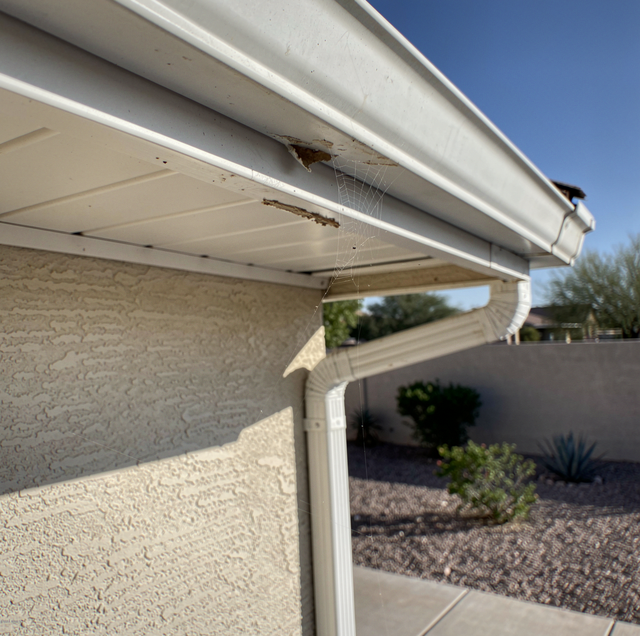
Knocking a paper wasp nest off an eave ends that nest and leaves the nest site in place. The corner itself is what a founding queen chose in the first place: enough overhang to block rain and direct sun, and a quiet spot away from wind and foot traffic. None of that changes when the nest comes down. A site that raised one colony still offers every reason the next scouting queen needs to start over in the same place, sometimes before the season that lost its first nest is even finished.
The pattern the return takes indicates what is happening at that event and determines which fix applies.
| Return Pattern | What's Driving It | What Breaks It |
|---|---|---|
| A new nest starts in the same corner within one season | The corner's conditions did not change, and a queen found them usable again | Site treatment along with removal of the nest |
| Several small starts appear along one eave line | The favorable conditions run along the whole eave, so more than one point qualifies | Treatment along the whole run of the eave |
| A nest reappears each year once the weather turns | The corner's shelter and shade hold steady year to year, and queens raised there can return to it the next spring | A check and treatment of the known corner before the weather turns |
| A nest comes back after a spray-only treatment | The spray ended that colony but left the corner's shelter in place, along with any old nest paper still hanging there | Nest removal plus a residual treatment of the nest site |
| Wasps are seen entering a gap in the eave with nothing built on the surface | A nest can sit inside the void behind that gap, out of sight from the ground | A void nest, treated at its entry |
How a Paper Wasp Nest Starts
A paper wasp nest begins with a founding queen and no workers. A mated queen that survived the off-season finds a site, builds a short stalk anchored to a surface, and adds the first handful of paper cells hanging from it, each one opening downward. The stalk is the nest's only attachment, and the queen coats it with a secretion that repels ants, which would otherwise raid the brood. She lays an egg in each cell, feeds the larvae chewed caterpillars and other insects she catches, and forages alone until that first batch of workers emerges. When a larva is ready to pupate, it spins a white silk cap over its cell, so a nest showing capped cells holds wasps close to emerging. From that point, the workers take over building and foraging, adding cells outward from the stalk while the queen stays on the nest laying eggs. In a nest she founded alone, every worker is one of her daughters. The nest that eventually hangs visible under an eave started as a single stalk and a few cells easy enough to walk past without noticing.
Why the Same Eave Keeps Drawing Them Back
Shelter and a history of nesting draw a founding queen to a spot. An overhang that blocks rain and cuts direct sun keeps a paper nest from softening or overheating, which is why a nest on an eave or patio ceiling holds up while one on an unshaded surface can soften or overheat before it gets far. On a hot day, paper wasps cool their comb by fanning their wings and spreading water droplets over the cells, work a queen building alone does by herself until her first workers emerge. History matters because paper wasp queens can return to the spot where they were raised, so a corner that produced one colony's new queens can draw some of them back as founders the next spring. A spot brushed or walked past daily loses its starts early, since a single knock ends a nest while it is still a stalk and a few cells.
Late in the season, a colony raises new queens, which mate and spend the off-season tucked into sheltered crevices, and gaps around eaves, siding, and attics serve that purpose on a house. A corner with shelter and a nesting history keeps offering both to the next queen regardless of what happened to the last nest, while a corner in full sun, or one that gets brushed or walked past daily, gives a founding queen little to work with. That is the difference between an eave that produces one nest and an eave that produces a new one every season.
A founding queen spends stretches of the day away from the nest foraging, so a stalk and a few cells with no wasp on them can still be an active start that she returns to.
What a Knock-Down Alone Leaves Behind
Removing the visible nest, by any method, ends that nest's place on the eave. It does nothing to the overhang or the sheltered corner that made the spot worth building on in the first place. Those conditions are what the next scouting queen evaluates, and queens raised in the old nest can come back to the spot. A knock-down alone is a fix aimed at the nest; the corner itself is untouched and available again the moment a new queen checks that corner.
The same limit explains why a spray-only pass sometimes looks like it worked, only to fail. A spray that reaches the nest and its occupants removes that colony the same way a knock-down does, and it leaves the corner as it was. A nest knocked to the ground can still hold live larvae and pupae in its cells, and workers away foraging at the time return to the spot and circle where the nest hung. If nothing changes about the corner's shelter, the eave remains just as usable to the next queen as it was before the spray was ever applied.
A nest sprayed or knocked down from a ladder risks a fall amid stings, and wasps sealed in a gap seek another exit; both are technician work. Anyone with a sting allergy stays clear, and trouble breathing or throat swelling means 911.
Treating the Eave Line and the Surrounding Sites, Then Follow-Up
Because the conditions that draw a founding queen run along an entire eave, a treatment aimed at ending the cycle covers the corner where a nest was found and the rest of that eave line, as well as nearby overhangs that share the same shelter. That is different from treating the single point where a nest was seen, which leaves every other qualifying spot on the same run untouched and available. A residual treatment leaves a film on the eave surface that a queen contacts as she lands to scout or build.
A follow-up check later in the season is the other half of the approach, since a treated eave that still offers shelter can attract a fresh queen as any other favorable corner would. A close check of a known site can find a restart at the stalk-and-first-cells stage, a size that can go unseen from the ground.
When the Activity Is a Wall-Void Nest Behind a Gap
Wasps entering and leaving an eave gap with nothing built on the surface may indicate a nest in the void behind it; the void is treated at the entry and sealed only once no wasps remain inside.
Telling Wasps from Bees Before Watching the Corner
Treating an eave for wasps assumes the builder is a wasp: an open comb of gray paper cells under the eave is a wasp nest, while honey bees build their comb from wax.
Frequently Asked Questions
It can. Paper from an old nest carries the colony's scent, and queens raised in that nest can return in spring, perch on the old paper, and use it as a cue before building a fresh nest nearby. Taking old nest material down removes that cue.
Early in the season, it happens. More than one mated queen sometimes starts building on the same stalk site, and one becomes the dominant egg-layer while the others stay as helpers or leave, which is one reason a very early-season start can look different from the single, established nest that eave later carries.
Easy to underestimate. A brand-new start can be no larger than a coin, with only a handful of open cells and its foundress tending it; it's easy to miss against the eave's own shadow until added cells make it hang visibly.
Yes. A foundress working alone, before her first workers emerge, is still capable of restarting nearby if the spot itself is untouched, and removing her nest at that early stage leaves the corner's shelter in place for the next queen.
Not by itself. A paper wasp's nest stalk holds on painted wood, vinyl, and metal alike, so a fresh coat of paint or a smoothly sealed trim board leaves the overhang's shelter, the part that drew the original queen, unchanged.
No. An early nest has only its foundress, or a small group of cofounding queens, to respond to a disturbance, while a mature nest has a full crew of workers. A paper wasp's stinger has only fine barbs, so it pulls free of the skin after a sting and the same wasp can sting more than once.
Enlist wasp control for the eave — nest removal and a residual treatment of the nest site and eave line. Russell Pest Control serves the Phoenix Valley. Call (623) 469-7583.