
Home Seal in Tempe, AZ — Start Where the Air Conditioner Went In
Most houses in Tempe have had their cooling equipment replaced, and the older ones more than once. Each swap means a sleeve, a curb, or a line-set penetration gets opened and closed again by whoever was on the roof that day. In Tempe, a like-for-like replacement in the same spot, at equal or lower rating, serving a single dwelling unit, needs no mechanical permit, which is sensible and keeps a hot-weather repair moving. It also means that on those jobs nobody from the City ever inspects the opening. That's where we start a seal.
Where We Look, In Order
The mechanical penetrations first
The line-set entry, the sleeve for a wall unit, the curb where a package unit meets the roof, the condensate line, the flue, or the old flue that no longer has anything on the end of it. On most Tempe houses, this is where the biggest openings are, and it is the last place people look.
Then everything else, ground line to roofline
Weep screed, slab joints, hose bibs, the gap under a roll-up door, the equipment pad, the conduits out of the dirt, then tile edges, gable and soffit vents, and the point where a patio cover meets the wall. We seal to a sixteenth of an inch, because that's the gap a bark scorpion gets through. Rodent work uses a wider threshold, and bee work is different again, so a scope should tell you which standard applies where. If somebody quotes you sealing without naming a gap size, ask.
Close it or screen it, on purpose
Anything with a job to do gets screened or fitted so it keeps doing it, and dead penetrations get closed with materials picked to last where they sit. That principle runs through the whole job: an opening with a function keeps it and gets screened or detailed, and an opening with no remaining purpose gets closed properly.
Hand over the list
What was closed, what was screened, what was left and why, in writing. One clarification on the badge above and the terms below: the 15-day re-treat warranty covers treatment service. Home Seal carries its own one to two year warranty, and the two are separate things.

What Home Seal Is
Home Seal is a whole-house exclusion: the ground line, the roofline, and every penetration between them, closed or screened to a stated standard and listed in the scope. Where the building is the problem, sealing gets scoped and priced as its own job, separate from a service visit, so you can see exactly what it covers.
Sealing reduces how much gets in, which is what makes a treatment program hold. It doesn't replace treatment, and a quote implying otherwise is selling you something. Where a property needs both, we price them separately so you can see what you're buying.
Weep holes get screened rather than plugged, because they ventilate the wall cavity. Anyone offering to fill them should be asked what happens to the cavity afterward.
Three Units, Three Holes, One Wall
A house from the seventies, on its third or fourth cooling system. The first was a wall unit, and the sleeve is still in the block behind a shrub with a piece of plywood over the outside. The second was a split system, and its line set came through in a different spot; that penetration is now a dead hole with a bead of foam that dried and cracked out years ago. The third is what's running today, and its line set is neatly done.
Each installer closed up their own work and moved on, and the two older openings were somebody else's from the start. But a scorpion doesn't care whose hole it is, and a foam plug that has been in the Arizona sun for a decade is a doorway. Finding the abandoned ones is what most of a survey of an older Tempe house is actually for.
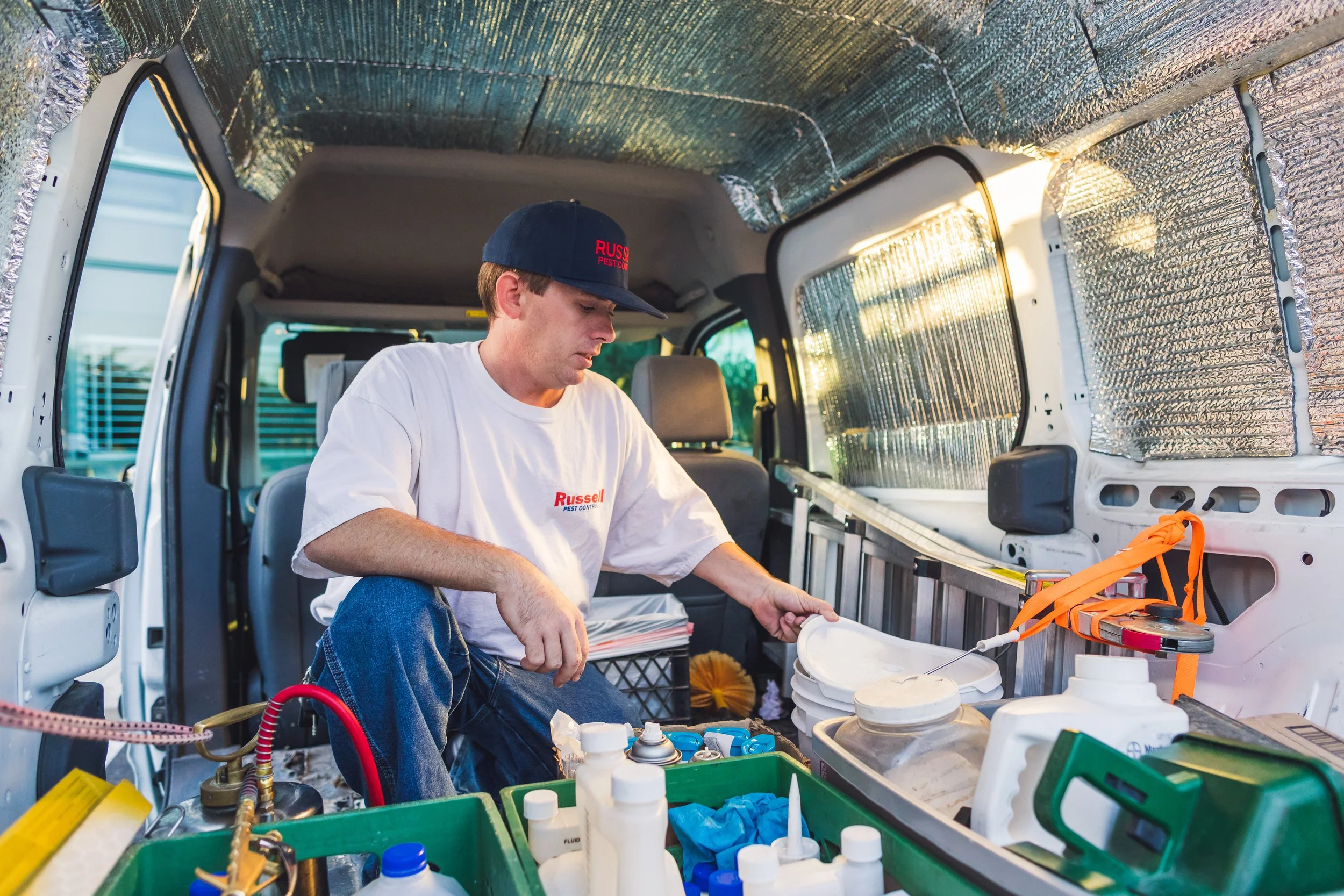
The Opening Nobody Inspects
What Tempe exempts
Tempe's mechanical permit exemptions include the replacement of an air conditioner, furnace, heat pump, or evaporative cooler in the same location, at equal or lower BTU, airflow, and amperage rating, where the appliance serves an individual dwelling unit, with only minor modification to the electrical, plumbing, and mechanical connections needed to serve it. That covers houses, duplexes and townhomes, and the individual units inside apartment and condo buildings. It does not cover any commercial building. Read the shape of it: same spot, no bigger, small changes at the connections, no permit.
What it means for the hole
It means that where the existing opening is reused, it gets closed up by the installer and signed off by no one. There is no inspection of that seal, because there is no inspection of the job. On a permitted job somebody eventually looks; on an exempt swap the quality of that closure comes down to the installer, and there's no record of it either way.
What the exemption does and does not cover
Not every valley city writes the exemption this way, and that's the useful bit. Some don't exempt a cooling swap in the first place, so the job gets permitted and somebody inspects it. Tempe's language allows minor modifications to the electrical, plumbing, and mechanical connections required to serve the new appliance. That is the wiring, the lines, and the duct connections. It does not cover cutting or enlarging an opening in a wall or roof, nor does it cover moving the equipment. So the exempt job is the one that reuses the existing opening, and that opening comes back closed with no one having looked at it.
What that means for a survey
Nothing above says anything about whether your equipment is sound. It says the openings around it carry no record. So on a Tempe house we survey those openings as unknowns and check every one, including the ones under a cover plate and the ones nothing is connected to any more.
What Tempe Homeowners Ask Us
Are you saying my AC installer did something wrong?
No, and we'd push back on anyone who read it that way. An exempt swap is a legal job done legally. The point is narrower: legal and inspected are different things, and nobody checked the hole.
How do I know if my replacement was exempt?
You often can't, years later, and it doesn't change what we do. We survey every mechanical penetration on every house regardless, because an inspected opening can also have aged out.
What's actually wrong with a foam plug?
Nothing on the day it goes in. Expanding foam in full Arizona sun goes brittle, shrinks back from the edges, and crumbles; it's soft enough for a rodent to open in the evening. It's a temporary closure treated as permanent.
Do you close the dead openings too?
Those are usually the important ones. A live penetration has something in it. An abandoned sleeve behind a shrub has nothing in it but air, and it's the straightest route into a wall cavity on the whole building.
Will sealing hurt my cooling?
It shouldn't, and we're careful about it. Anything with an airflow function gets screened or fitted to keep it working. If a closure would affect equipment, we'd tell you and leave it for your HVAC contractor.
Should I do this before or after replacing my unit?
After, if a replacement is already scheduled. A new install reopens the penetration, so seal the version that will stay. If nothing is planned, there's no reason to wait.
Does Home Seal replace my pest service?
It reduces how much gets in, which is what makes a treatment program hold. Most people run both, and the service gets easier once the building stops leaking.
How long does it take?
Most houses are a day or two once the scope is agreed. Older stock with several generations of mechanical work can run longer, and you'll know which one you have before anything starts.
Can I just have the worst openings done?
Yes, and we'll rank them for you. Partial sealing gives partial results, and we'll be honest about that, but a prioritized list you can work through is better than a full scope you don't do.
Can you do same-day service in Tempe?
Often, yes. Call or text before noon, and same-day is realistic more often than not, and an indoor sighting is the kind of call we try hardest to fit in. After hours, the phone reaches Steve's cell for triage.
Do you treat termites in Tempe?
No, and we're straight about it. We'll identify termite signs honestly and refer you to a licensed termite specialist, then handle everything else on the property. Straight lanes, straight answers.
What Home Seal Costs in Tempe
The walk and the written list are free either way, whoever ends up doing the work.
Square footage, roof pitch and access, how many mechanical generations the house has been through, and how many openings the survey finds are what move the number. The survey comes before the price, always, because a sealing quote given without one is a guess
The standing Russell terms apply here: no initial fees, no contracts, and a 15-day re-treat warranty
Black Light Scorpion Search: $125 per hour, after dark. We'll tell you what we expect your property to take before we start
Home Seal is quoted as its own job, typically $600 to $2,500 with a one to two year warranty depending on the work
Estimates are free. Attic and hive searches can carry a charge, waived if you hire us
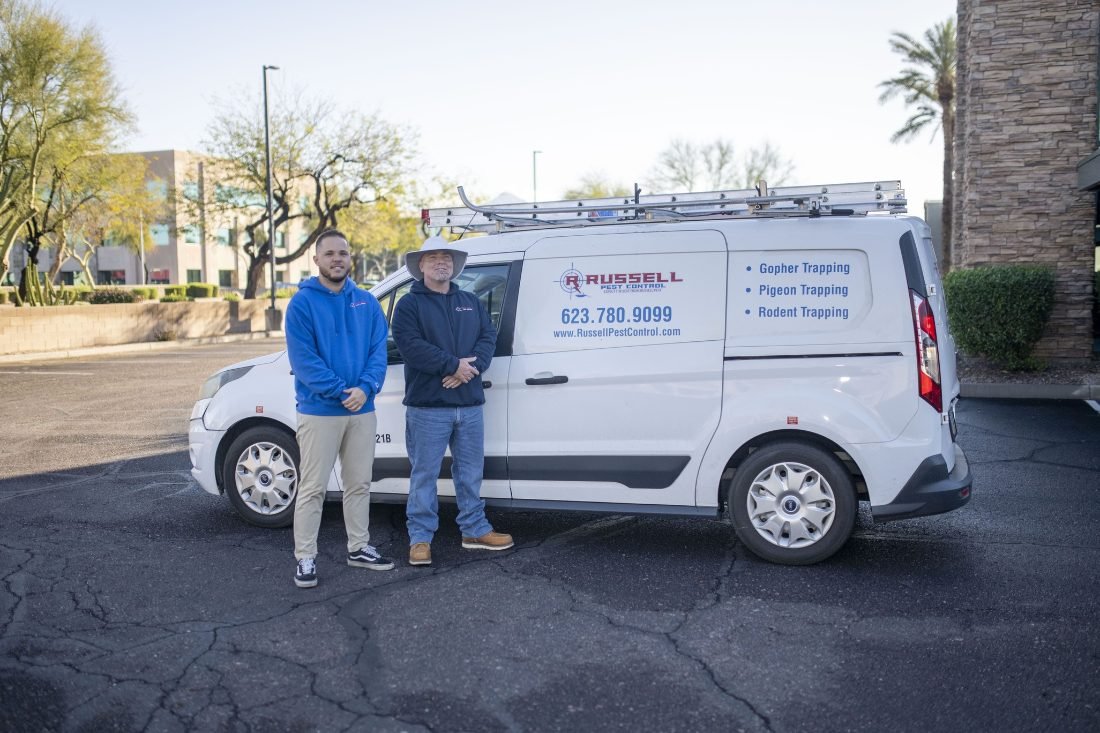
Why Tempe Homeowners Choose Us for Sealing
Thirty years of Arizona desert work, with a second generation on the routes. One call gets Steve, Steven Jr., or the office. Never a call center.
We survey the mechanical penetrations as unknowns, including the abandoned ones, because where the swap was exempt, those openings carry no inspection record and often no record at all.
No contracts and no initial fees on residential service, and a 15-day re-treat warranty if something comes back inside the window.
We screen what ventilates and close what doesn't, and we write down which we did to every opening on the list.
Arizona OPM License #I5321B, and a family company that's been answering its own phone in the Valley since 1996.
What Else We Run in Tempe
General Pest Control Plans
Monthly, bi-monthly or quarterly, with no contracts and a 15-day re-treat warranty.
Rodent Control and Exclusion
Roof rats removed before anything gets sealed, then screened out at the roofline.
Scorpion Control
Black light searching after dark, and sealing to the gap a bark scorpion actually gets through.
Cockroach and Fly Control
German roach work at the plumbing chase, and drain-line and fixture work for food service.
Mosquito and Bee
Station-based mosquito work, and live bee relocation where a beekeeper can take the colony.
Weed Control, Commercial and Property Management
Pre-emergent timed to both desert weed seasons, and documented programs for buildings and food service.
All Tempe services: /tempe
Have the Openings Looked At
If your house has been through more than one cooling system, there are openings in it that nobody has inspected and possibly nobody remembers. Have us survey them, write the list, and price the closing as its own job. The survey is what tells you which openings are actually open.
Expect the best from Russell Pest, and have a bug-free day.
Hours
- Monday–Friday: 8:00 AM – 5:00 PM
- Same-day & emergency service available — after hours and weekends, owner-answered
(623) 780-9099 · Call or text · 6750 N 7th Ave, Phoenix, AZ 85013