
Home Seal in Fountain Hills — Somebody Already Sealed Part of Your Property
Go and open your electrical panel. In a newer Fountain Hills house, and in any house that has had substantial work done, there may be a small sticker inside that nobody in the household has ever noticed. It gets left by an inspector who has just satisfied themselves that a buried system on your lot was properly closed. That system is the one part of the property somebody else already sealed to a written standard, and knowing where it surfaces is a better starting point for a sealing job than anything you can see from the street.
Follow the Buried System Up to the Building
Find where it surfaces on the lot
There is more of it above ground than people expect. A clean-out with a concrete collar set at finished grade, and sometimes a marking post standing up near the lot line. Both are places the ground opens into something.
Read the fittings rather than the pipe
A clean-out is designed closed: a plug with a gasket, countersunk, under a cover. When one is loose, cracked, missing its gasket, or sitting proud of a collar that has broken up, that is not a plumbing complaint. It is an opening at ground level with a void behind it, and it is one of the easiest things on a property to walk past, because nobody has any reason to look at it.
Only then the building itself
Where the finish meets the ground, the garage threshold and the gap under a roll-up door, hose bibs, the equipment pad, and every point where a pipe or a conduit crosses into the structure. We seal to a sixteenth of an inch, because that's the gap a bark scorpion gets through. Rodent work uses a wider threshold, and bee work is different again, so a scope should tell you which standard applies where. If somebody quotes you sealing without naming a gap size, ask.
Overhead, where some openings have to stay open
Weep holes get screened rather than plugged, because they ventilate the wall cavity. That principle runs through the whole job: an opening with a function keeps it and gets screened or detailed, and an opening with no remaining purpose gets closed properly.
What a Fountain Hills Seal Usually Covers
On the building
- The stem wall and weep screed line, where the stucco meets the ground
- Garage thresholds and the gap under a roll-up door
- Irrigation and valve boxes, hose bib penetrations, and pool equipment pads
- Block wall voids, weep holes, and gate posts along the property line
At ground level, which is where this town differs
The fittings the sanitary district installed and inspected: the clean-out, its plug and collar, and the lateral stub at the lot line. They get opened, photographed and written up, and they are on the walk whether or not anything else is.
Two Things You Can Go and Find Right Now
Start with the evidence, because you have some on this one. There may be a green post near your lot line, and a small inspection sticker inside your electrical panel. Neither belongs to the house. Both were left by someone from the Fountain Hills Sanitary District, which operates the town's sewers in place of a town department, and each records a step in a closure that was inspected and signed off.
What the sticker is a record of
The district inspects the connection before it can be buried and leaves a sticker on site indicating that backfill may proceed. At the end of the job, a second sticker goes inside the nearest electrical panel: green under the district's current procedure and black on houses signed off under the older one. Where there is no sticker, the Town takes it up with the district before a Certificate of Occupancy is issued. So the sticker is a small, findable, physical record that the buried part of your property was closed and checked by somebody whose job it was.
What the post is a record of
The end of a sewer lateral, plugged or capped at the lot line, with the post set vertically so the stub can be found later. The plug is specified countersunk and gasketed. Nobody puts a gasket on a plug for tidiness; a gasket is there because the thing behind it is supposed to stay shut. The standard behind both of them says what it expects to be dealing with The district publishes design and construction standards for everything it will end up owning, and one clause is worth the whole document to somebody in this trade: the inside of every new manhole is to be coated with insecticide paint, by product name, with a certification letter and a warranty on that coating required from the contractor. We are not aware of another Valley jurisdiction that writes that down. The people who built the system underneath this town were not guessing about what would try to live in it.
One more detail that repeats here
Where a line crosses under a retaining wall, the standards call for it to be sleeved, which is a pipe inside a larger pipe running under the structure and out the other side. A sleeve is a closed conduit by design and an open one by neglect, and the annular space at either end is exactly the size of thing that matters on a sealing job. On a town with as many retaining walls as this one, that detail is not rare.
One limit worth stating plainly
These are new-construction standards for facilities that the district takes over, and the current version dates back to the last few years. They describe how the system is built now. They do not tell you how the lateral under a house from the seventies was put in, which is why the walk includes them rather than assumes them. Everything built to that specification was closed when it was new, and it opens the way anything opens, through weathering, movement, and covers that get lifted and put back badly.
Why Fountain Hills Households Choose Us for Sealing
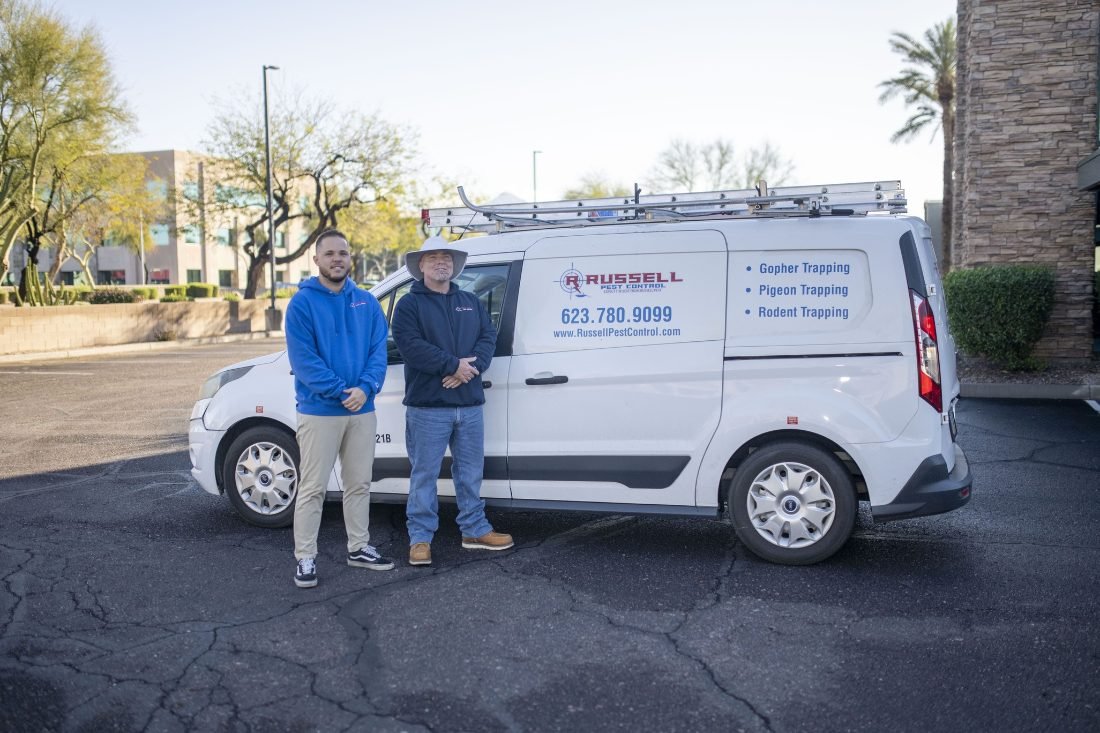
Thirty years of Arizona desert work, with a second generation on the routes. One call gets Steve, Steven Jr., or the office. Never a call center.
We start at the fittings in the ground, because those are the openings on the property that came with a written standard and a signature behind them.
No contracts and no initial fees on residential service, and a 15-day re-treat warranty if something comes back inside the window.
We write down what we could not reach and why, so you are not paying for a guess about it.
Arizona OPM License #I5321B, and a family company that's been answering its own phone in the Valley since 1996.
What Home Seal Costs in Fountain Hills
One clarification on the badge above and the terms below: the 15-day re-treat warranty covers treatment service. Home Seal carries its own one to two year warranty, and the two are separate things.
Sealing reduces how much gets in, which is what makes a treatment program hold. It doesn't replace treatment, and a quote implying otherwise is selling you something. Where a property needs both, we price them separately so you can see what you're buying.
House size, how much of the ground line and roofline needs work, and how many fittings the walk finds at grade are what move the number. Nothing described on this page requires excavation, and where a job would, we say so before we quote it
The standing Russell terms apply here: no initial fees, no contracts, and a 15-day re-treat warranty
Black Light Scorpion Search: $125 per hour, after dark. We'll tell you what we expect your property to take before we start
Home Seal is quoted as its own job, typically $600 to $2,500 with a one to two year warranty depending on the work
Estimates are free. Attic and hive searches can carry a charge, waived if you hire us
What Fountain Hills Households Ask Us
Is there really a sticker in our panel?
On a house built or substantially altered since the district began working this way, usually. It is small, it is on the inside face, and it will not mean anything to you until somebody explains it. On an older house, there may be nothing there at all, which tells you something in itself.
What does a clean-out have to do with pests?
It is an opening at ground level with a void behind it, sitting in the part of the yard nobody looks at. When the plug is sound, it is a closed system and no concern of ours. When it is loose, cracked, or missing, it is one of the easiest entry points on a property to find and one of the quickest to close.
Do you open the sewer clean-out?
No. We look at the cover, the collar, and the plug from above, and we photograph what we see. Anything requiring the plug to come out is a plumber's job. We will say so and give you the district's number.
There is a green post in our yard. What is that?
Almost certainly the marker for the end of a sewer lateral, set vertically so the stub can be found later. It is not a defect, and there is nothing to do about it. For us, it tells us where the buried line runs without anyone guessing.
Our house is older than all this. Does the page still apply?
The standards do not describe how your lateral was built, and the fittings on your property still exist and need to be inspected. If anything, an older property is the one where a walk pays, because nobody has had a documented reason to inspect any of it since it went in.
Can you seal the retaining wall sleeve?
Sometimes, and it depends entirely on what is reachable. Where the annular space is accessible at the end, closing it is straightforward. Where it is not, we say so on the report and do not quote a number for work nobody can do.
Does the sealing standard change on a hillside lot?
The gap size does not. What changes is how many of the openings are at a level you would never walk past, because a house stepped into a slope puts fittings, vents and thresholds at heights a flat-lot checklist does not go looking at.
Will sealing remove what we already have?
No, and any quote implying otherwise is worth a second look. Sealing changes what gets in from here. What is already inside is a treatment or a removal question, and on this company those are separate jobs with separate prices.
Do we need permission for any of this?
For work on your own building, no. Where something sits within a utility easement, the utilities with rights in it must agree before anyone digs or builds there, and the district issues a permit for that work. We will tell you when we think you are looking at one.
Can you do same-day service in Fountain Hills?
Often, yes. Call or text before noon, and same-day is realistic more often than not, and an indoor sighting is the kind of call we try hardest to fit in. After hours, the phone reaches Steve's cell for triage.
Do you treat termites in Fountain Hills?
No, and we're straight about it. We'll identify termite signs honestly and refer you to a licensed termite specialist, then handle everything else on the property. Straight lanes, straight answers.
What Else We Run in Fountain Hills
Scorpion Control and Black Light Search
An after-dark pass that counts what is on the surface and maps the routes it travels.
View Fence and Snake Screening
Screening at the one place it works: the ground line, not the fence face.
Rodent Control and Exclusion
Removal before anything gets closed, then screening at the roofline and the ground line.
General Pest Control Plans
Monthly, bi-monthly or quarterly, with no contracts and a 15-day re-treat warranty.
Bee, Wasp, Mosquito and Weed
Live relocation where a beekeeper can take a colony, station-based mosquito work, and pre-emergent timed to both desert weed seasons.
Commercial and Property Management
Documented programs for buildings, food service, hospitality, and multi-tenant sites.
All Fountain Hills services: /fountain-hills
Open the Panel Door and Look
It takes ten seconds. Open your electrical panel and look at the inside face of the door. A sticker there means somebody inspected the buried connection on your lot and signed it off before anybody could move in. Nothing there tells us something too, and neither answer is bad news. Either way, it is the most useful information you can provide about the property before anyone walks it. The walk and the written list are free either way, whoever ends up doing the work.
Expect the best from Russell Pest, and have a bug-free day.
Hours
- Monday–Friday: 8:00 AM – 5:00 PM
- Same-day & emergency service available — after hours and weekends, owner-answered
(623) 780-9099 · Call or text · 6750 N 7th Ave, Phoenix, AZ 85013