
Bee Removal or Extermination? What Actually Decides It
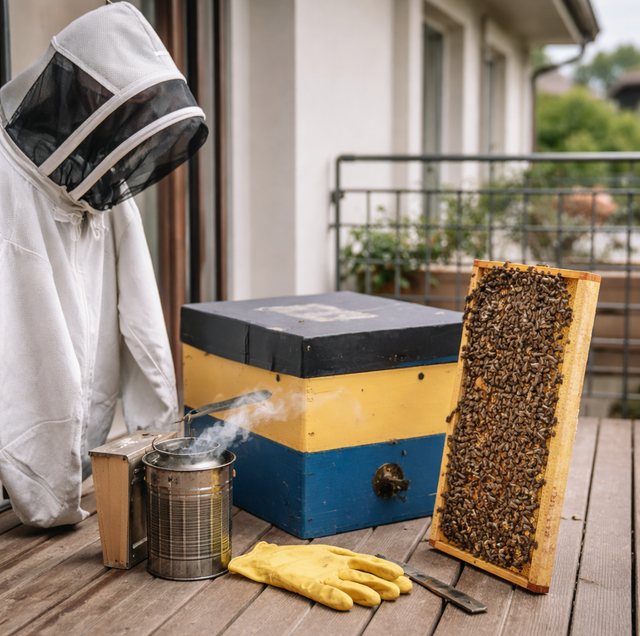
Will the bees be killed? Sometimes, yes. A colony that can be reached without tearing a structure apart, boxed with its comb intact, and handed off to a beekeeper who has room for it gets relocated alive in most cases. A colony that's buried too deep in a wall void to reach cleanly, or one that's already stinging anyone who walks near the gap it's using as a door, usually doesn't get that option.
That's not a hedge, and it isn't a failure. An unconditional no-kill promise is a hard one to keep honestly across every job, because the colonies that are hardest to reach and the ones behaving most defensively are exactly the ones where relocation is least likely to be possible. The more useful question is what a particular colony's access and behavior actually allow. Four practical questions settle that before anyone climbs a ladder.
Can a Beekeeper Actually Take This Colony?
Live relocation is its own trade, not a feature bolted onto general pest work. It takes a beekeeper's judgment about the colony itself, and the equipment to open a wall or roof void safely: a full bee suit sealed at the wrists and ankles, plus respiratory protection, because opening a void releases years of insulation dust and comb debris along with the bees.
Even when a colony can physically be reached, not every one is worth taking. A queenless colony, a diseased one, or one that is simply too small to survive being moved and re-established somewhere new isn't a good relocation candidate even if the access is easy. That judgment depends as much on the colony's own strength as on the time of year. Taking a colony that won't survive the move just delays the same problem.
When relocation does go ahead, the comb and honey come out with the bees, not after them. Leaving comb behind in a void is what turns a successful removal into a second call a few weeks later, because old comb and lingering honey draw ants, wax moths, and rodents even with the bees long gone. The entry gap, and any obvious siblings near it, get sealed once the void is empty so the same opening doesn't advertise itself to the next scout bee that passes by.
Can It Be Reached and Boxed Intact?
This is the physical question, separate from whether anyone wants to try. A colony hanging in the open on a branch is a different job than one built inside a block wall, a chimney flue, or behind a meter box. Getting comb out of a cavity intact is closer to sliding a full drawer out in one piece than it is to knocking a hole in the wall and hoping for the best: broken comb drops soft wax and running honey into insulation and framing, and a colony that scatters mid-extraction is far harder to work safely or completely.
Some colonies get "trapped out" instead of cut out: a one-way cone or screen is fitted over the entrance so bees can leave but not re-enter, and they're encouraged to join a nearby hive box over several weeks. It sounds gentler, but it's slow, it doesn't always work, and it leaves the original comb and honey sitting in the void regardless of whether the bees eventually move out on their own. A trap-out that fails still ends the same way a cut-out does: someone has to open the cavity and deal with what's inside.
Ask whether a proposal is a cut-out or a trap-out before agreeing to it. A trap-out can run for weeks, leaving the comb and honey in the void, so the cavity still has to be opened at the end.
How Is It Behaving?
Africanized honey bees and European honey bees are the same species. The difference between them is behavioral and statistical, not something you can see by looking at one bee, and even trained specialists confirm it with laboratory work rather than eyesight, either by measuring wing and body proportions against reference samples or by genetic analysis. Because that call can't be made on-site with confidence, a feral colony living in a wall or a tree is generally worked as if it could be defensive, regardless of how calm it looks from the yard.
What actually gets watched is behavior in real time: how many bees respond and how quickly when someone approaches at a normal working distance, whether guards are already stationed at the entrance before anyone touches anything, and whether a light knock on the siding draws a noticeable buzz change from inside the void. A colony that answers fast and in numbers gets handled differently than one that barely registers a person standing nearby, independent of what species anyone assumes it is.
Spraying an entrance is the classic mistake. It kills only the guard bees at the doorway, leaves the colony and comb untouched inside the void, and leaves a scent that later draws a new colony to the same gap.
Who Is Within Its Response Radius?
The last question has nothing to do with the colony and everything to do with the people around it. A relocation isn't a five-minute job; it takes time to open the void, work the comb-out section by section, and box the colony without losing track of the queen. During that window, anyone walking a regular path near the work zone, whether that's a side door, a mailbox route, a shared driveway, or a patio someone uses daily, is inside the response radius whether they mean to be or not.
That changes the calculus even for a colony that could technically be reached and boxed. If the defensive radius already overlaps foot traffic that can't realistically be rerouted for the duration of the job, or if someone nearby has a known bee-sting allergy, the safer call is to remove rather than a multi-hour relocation a few feet from where people pass through every day. A tethered pet inside that radius counts the same way.
Frequently Asked Questions
Longer than most people expect, often across more than one season. What delays discovery is usually the entrance rather than the colony: a gap behind a fascia return, above a tile course, or where a hose bib penetrates the wall reads as ordinary bee traffic from the yard. Traffic volume at the opening is a poor guide to age, too, since a small entrance carries about the same visible flow whether the comb behind it is six weeks old or two years old. That gap between what shows on the outside and what is actually inside is why the first estimate gets revised once someone is on a ladder.
Access changes the method rather than the answer. A gable void near a roof peak, a chimney flue, or a colony above a tile course gets reached from whichever side gives the shortest working path, and that is sometimes the interior: opening the room-side face of a wall or a section of ceiling instead of the cladding outside. Which side that is gets settled in person, since the reach available from a driveway and the reach available from inside a bedroom are rarely the same, and whether a lift or scaffold is needed changes what is worth attempting in one visit.
Often, yes, and it's rarely the same colony returning. A cavity that already held one colony proved it can hold bees, and residual comb scent at the opening makes it even more attractive. That is why the cleanout and the sealed gap have to happen together: clearing the void while leaving the opening, or closing the opening while leaving comb behind, each leaves half the invitation in place.
Some of them try. Foragers that were out working when the void was opened orient to the old entrance and circle it for a day or two before giving up, which is normal rather than a sign the job failed. It is also part of why the gap gets sealed the same day rather than left open. The colony itself is a different matter: moved with its queen and her brood, it re-orients to the new site within a few days, and a removal that loses the queen struggles.
Yes. Comb and honey left inside a wall or ceiling void can stain drywall as they seep, and the wax itself is flammable enough that it's treated as a real consideration around chimneys and light fixtures, not just a pest concern. That's part of why a full comb-and-honey cleanout matters even when relocation, not extermination, was the outcome.
Often, and usually in the homeowner's favor. A shed wall, a block pillar, a stored stack of patio furniture, or a compost bin can frequently be taken apart or lifted rather than cut, which makes intact removal more likely and reassembly afterward simple. Size is the exception. Colonies that set up in very small enclosures, irrigation valve boxes and meter boxes in particular, are frequently too small a prize to be established as a hive, so a detached location can make the access question easy and the relocation question harder in the same breath. A beekeeper taking one on inherits a colony whose temperament, health, and queen are all unknowns, which is why willingness to take it is a judgment rather than a formality.
What the In-Person Look Settles That a Phone Call Can't
All four of these questions get asked again in person before any work starts, because a description over the phone and a look at the actual gap rarely line up perfectly. A homeowner might describe a "small hole under the eave" that turns out to be one visible opening into a much larger void that's been colonized for more than a season, or a "calm" colony that responds differently once someone is standing at the base of a ladder instead of watching from the far side of the yard. The lean toward relocation or removal that gets discussed on the phone is a starting point, not a promise, and the person standing at the wall with a flashlight is the one who actually answers it.
Request a free estimate — a technician will assess the colony in person and give you a straight answer on relocation or removal before any work starts. Russell Pest Control serves the Phoenix Valley. Call (623) 469-7583.
