
A Phoenix Homeowner's Guide to Local Spiders
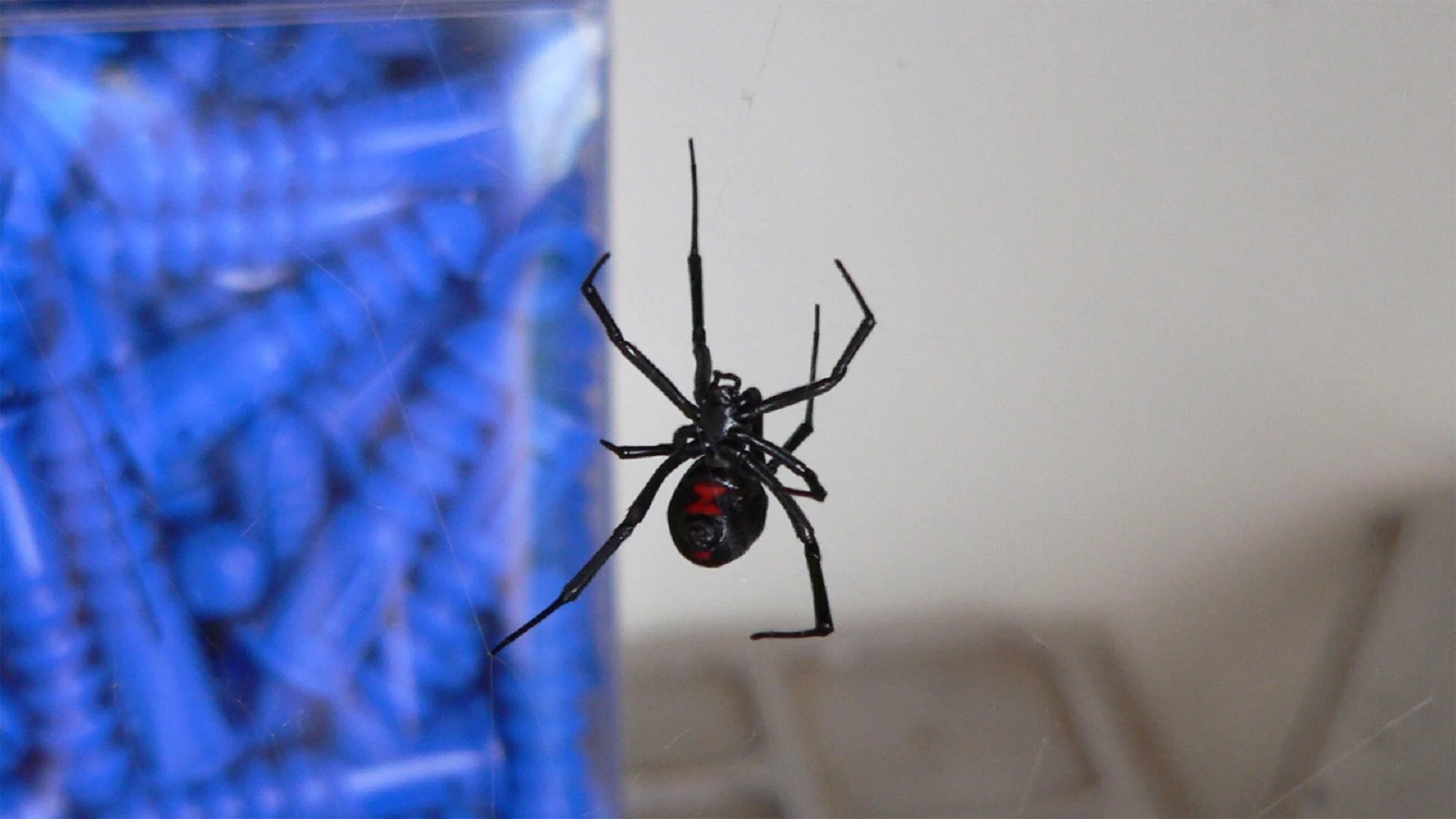
You may not always see the distinctive hourglass shape, but black widows are shiny and have spindly legs.
You reached under the patio chair, shook out a shoe, or opened a box in the garage and something was already living there. In Phoenix, AZ, that experience is not unusual, and not everything you find is harmless.
Arizona hosts an impressive and occasionally alarming variety of spider species, including several that require immediate medical attention after a bite. Knowing what you are actually looking at makes the difference between a calm response and a dangerous one.
Black Widows Are Under Your Patio Furniture
Arizona is home to 22 of the 39 known black widow species in the world, making the Phoenix Valley one of the densest black widow habitats in North America. Females are the dangerous ones, identifiable by their glossy black body and the red hourglass marking on the underside of their abdomen. Males are smaller, often spotted, and pose no venom risk to people.
Black widows build messy, irregular webs close to the ground in dark, undisturbed locations. Woodpiles, garage corners, the underside of patio furniture, children's play equipment, and infrequently opened storage containers are their preferred sites across Phoenix, Scottsdale, and Chandler, AZ. Finding the web without seeing the spider is more common than a direct sighting, which is exactly why accidental contact is the most typical cause of a bite.
Black widow venom is a neurotoxin roughly 15 times more potent than rattlesnake venom by concentration. Symptoms include immediate pain at the bite site, muscle cramps, severe abdominal and chest spasms, nausea, and breathing difficulty. Anyone bitten by a confirmed or suspected black widow in Phoenix, AZ, should seek emergency medical attention rather than waiting to see whether symptoms develop on their own.
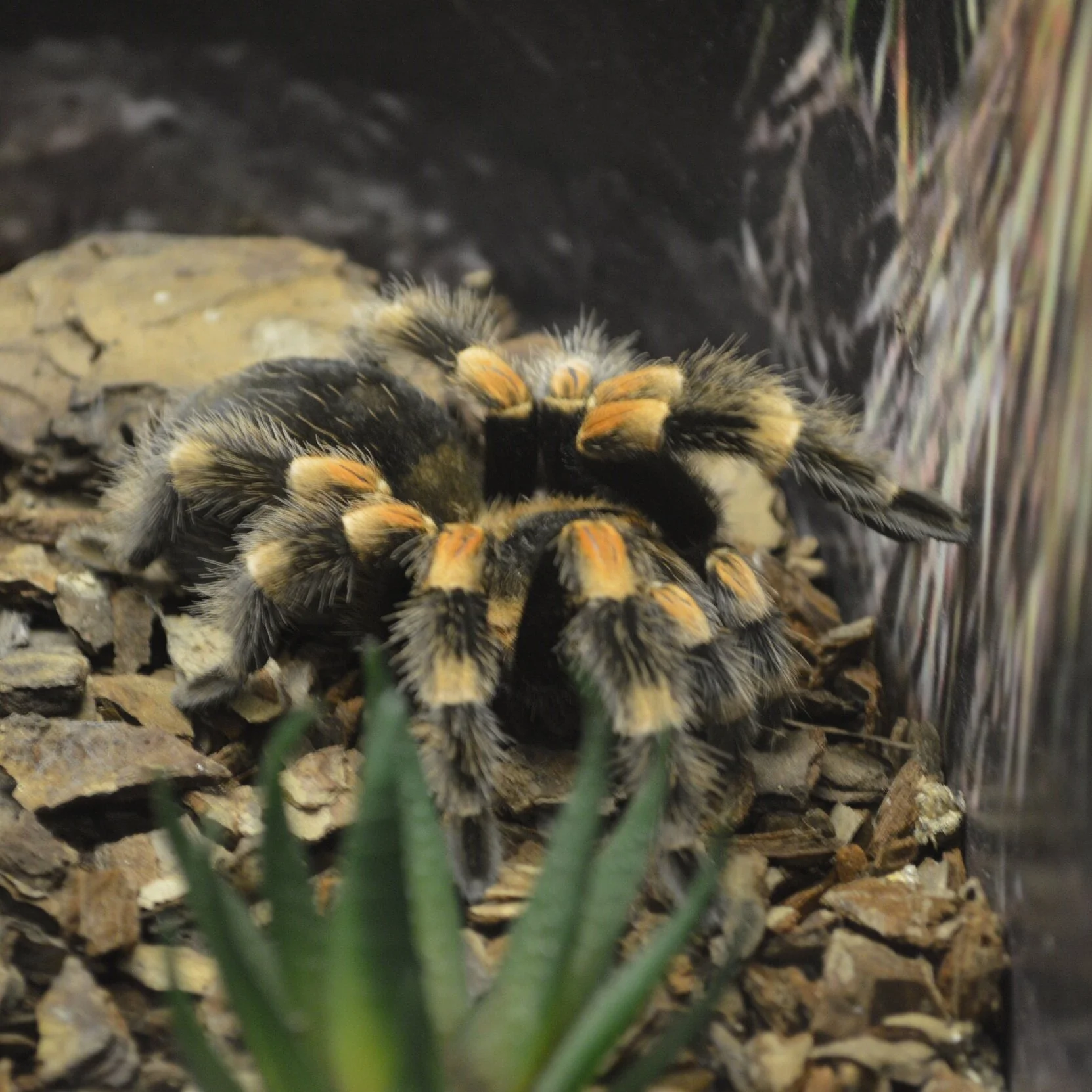
Tarantulas in Your Yard Are Scary Looking but Mostly Harmless
The desert tarantulas found throughout Phoenix, AZ, and the broader Sonoran Desert have a well-established reputation that dramatically exceeds their actual threat to people. They are large, hairy, and visually imposing, with body lengths reaching two and a half inches. Despite their appearance, they are among the more docile spider species that Valley homeowners encounter in their yards and on their driveways.
Tarantulas are most visible in late summer and early fall when males leave their underground burrows to search for females. That window from August through October accounts for the increased sightings across Gilbert, Mesa, and Chandler, AZ. A tarantula crossing a backyard or residential street during those months is almost certainly a searching male, not an aggressive individual displaced from its natural habitat.
A tarantula bite is most often compared to a bee sting in discomfort, and their venom causes no systemic symptoms in healthy adults. Their primary defense is releasing irritating hairs from their abdomen that can cause skin and eye irritation if handled. The practical advice for Phoenix, AZ, homeowners is simply to avoid handling and allow the spider to move on naturally at its own pace.
Brown Recluse Spiders Love Your Closet and Garage Boxes
The Phoenix, AZ, area hosts its own recluse species, including the desert recluse and the Arizona brown spider, which closely resemble the Midwest brown recluse. All share the characteristic violin-shaped marking on their backs and six eyes arranged in three pairs. They are small, typically under an inch in body length, and easily overlooked until one has already established itself in a seldom-used space.
Recluse spiders are experts at finding undisturbed environments. Closets packed with seasonal clothing, cardboard boxes in garages, beneath furniture that rarely moves, and the inside of shoes left in storage are all confirmed hotspots across the Valley. Desert recluse spiders are notably resilient, capable of surviving up to six months without food or water, which makes Phoenix, AZ's dry climate genuinely hospitable rather than limiting for this species.
A recluse bite may initially cause little or no pain, which is part of what makes it dangerous. The spreading skin lesion that develops over several days can cause significant tissue damage and permanent scarring if left untreated. Anyone in Phoenix, AZ, who notices an expanding sore with no obvious cause should mention possible spider exposure to their healthcare provider right away.
Wolf Spiders Are Not Brown Recluses but They Move Fast
Wolf spiders are among the most frequent sources of alarmed calls to pest control companies across Phoenix, AZ, because female wolf spiders can reach two inches across and move at speeds that startle anyone who encounters them unexpectedly. Their brown and gray coloring with two dark back stripes causes regular misidentification as brown recluse spiders, which they emphatically are not.
Unlike most spider species, wolf spiders do not build webs to catch prey. They are active nocturnal hunters that chase down insects on foot using excellent night vision. When they wander indoors, they typically enter through foundation-level gaps and remain on the ground floor, which is why they appear under furniture, along baseboards, and behind appliances in Phoenix, AZ, homes.
Wolf spider venom is not considered dangerous to healthy adults, and a bite generally causes localized swelling that resolves within 24 hours. The psychological impact of encountering one is entirely real, however. Their size, speed, and sudden appearance from beneath a couch or behind a garage cabinet are enough to turn a routine evening into a memorable one across the Valley.
Desert Recluse Spiders Have Been Hiding in Your Storage Since Winter
The desert recluse, native to Arizona and the Sonoran Desert, presents a locally specific concern that Phoenix, AZ, homeowners should take seriously. It favors dry, undisturbed microhabitats and has adapted fully to Valley heat and low humidity, making it more common in residential environments than most people realize. Cardboard boxes in garages, outdoor storage sheds, and seasonal furniture covers are the most frequent encounter points.
Moving or disturbing stored boxes without gloves, particularly during spring cleanup after winter dormancy, accounts for a significant number of bites reported across Maricopa County each year. The spiders are not aggressive, but the confined space inside a storage box leaves little room for retreat when a hand reaches in unexpectedly. That scenario is where most bites occur across Glendale, Peoria, and Surprise, AZ, homes.
Wearing gloves when handling stored items, shaking out clothing and footwear before wearing, and keeping garage storage as organized as possible are all practical habits that meaningfully reduce accidental contact. Spring is the highest-activity period for desert recluse spiders in Phoenix, AZ, which makes March through May the time when prevention habits matter most for Valley homeowners.
Jumping Spiders Are Small Curious and Watching You Right Now
Jumping spiders are a genuinely interesting species that Phoenix, AZ, homeowners often notice on exterior walls, window screens, and garden plants during the warmer months. Small, compact, and surprisingly curious, they have large forward-facing eyes that give them exceptional vision. It’s not unusual for one to turn and watch you as you approach, which tends to catch people off guard.
Unlike many other spiders, these are active daytime hunters. They stalk their prey and use precise jumps that can span several times their body length. Spotting one on a sun-facing wall in the afternoon is one of the most common spider encounters across Phoenix neighborhoods. Their presence outdoors is completely normal and typically indicates a healthy level of insect activity rather than any kind of infestation.
Although they can bite, it’s rare, and reactions are usually limited to mild irritation. Overall, they’re among the least concerning spiders you’ll come across. In fact, they serve as a good reference point for normal outdoor spider activity. A single sighting on an exterior wall in October isn’t a reason for concern, but finding egg sacs, heavy webbing, or more dangerous species inside your home is a different situation entirely.
Monsoon Season Sends Every Spider Closer to Your Front Door
Arizona's year-round warmth eliminates the seasonal population reduction that homeowners in other climates rely on naturally. Spider activity in Phoenix, AZ, persists through every month, with peaks occurring in late spring through fall when insect prey is most abundant and breeding activity is highest across the Valley.
Monsoon season from June through September brings a specific surge in spider encounters. Increased insect activity driven by monsoon moisture expands the food supply that supports larger spider populations both outdoors and indoors. Black widows produce multiple egg sacs during summer months, with each containing up to 400 spiderlings. That reproductive output compounds quickly under Phoenix, AZ's favorable conditions.
The spider activity homeowners notice increasing in August and September is the direct result of that summer breeding cycle reaching maturity. Populations that grew through July emerge visibly in late summer, and the seasonal movement of prey insects toward building foundations draws spiders closer to structures at the same time. Professional spider control timed during or before monsoon season addresses peak populations before they establish more deeply around the home.
Phoenix Spider Experts
If you have found a venomous species in or around your Phoenix, AZ, home, or if spider populations have reached the point where egg sacs, dense webs, or regular indoor sightings have become routine, professional pest control is the right response. Russell Pest Control has been serving Phoenix Valley homeowners since 1996 with licensed technicians who know Arizona's spider species, their behavior, and the treatments that actually work.
We offer spider control across Phoenix, Scottsdale, Mesa, Chandler, Gilbert, Glendale, Tempe, Peoria, and Surprise, AZ, using an eco-conscious approach that protects your family and pets. No hidden fees, no gimmicks, and a free estimate on every call.
Contact Russell Pest Control today and stop guessing what is living around your home.
