
How to Get Rid of Giant Crab Spiders in Phoenix, AZ
You turned on the bathroom light and something the size of your hand sprinted sideways across the wall and disappeared before you could process what you were looking at. In Phoenix, AZ, that experience is far more common than most homeowners expect, and it almost never happens just once.
Giant crab spiders are not rare visitors in the Valley. They are active, territorial hunters that follow prey into homes with purpose, and understanding what draws them in, where they hide, and what their presence actually signals is the only way to resolve the problem rather than just relocate it.
It Looks Like a Crab, Moves Like a Flash, and Lives in Your Walls
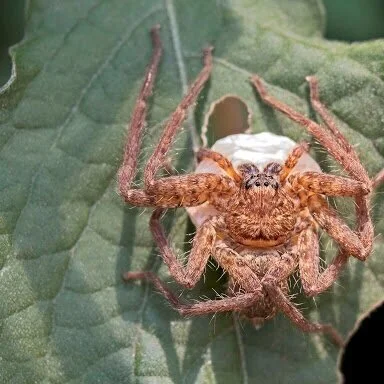
The giant crab spider, known scientifically as Olios giganteus and sometimes called the huntsman or golden huntsman spider, ranks among the largest spider species found anywhere in the United States. Females commonly reach leg spans of two and a half inches, with a broad, flattened body and legs that extend at sharp right angles from the torso.
That leg positioning is where the crab comparison earns its name. Giant crab spiders move sideways at speeds that make them genuinely difficult to track, and unlike most large spiders, they climb smooth vertical surfaces with ease, including the stucco walls, plaster interiors, and painted drywall common throughout Phoenix, AZ, homes. A spider that appears on your bedroom ceiling at midnight got there without any difficulty.
Their coloring runs from light tan to warm golden brown, which blends almost perfectly with Arizona's desert surfaces, dry bark, decorative rock, and the textured exterior walls found throughout Scottsdale, Chandler, and Mesa, AZ. That camouflage is an active hunting tool, not a coincidence, and it makes them nearly invisible until they decide to move. Most homeowners never see one until it is already crossing a wall at close range.
Phoenix Is Basically Their Ideal Habitat and Always Has Been
The year-round warmth of the Phoenix Valley gives giant crab spiders a biological advantage they do not have in most other parts of the country. Without a hard freeze to reduce populations each winter, Valley spiders remain active and reproductive across a much longer annual window, which is why Maricopa County homes deal with these spiders in every season rather than just in summer.
Phoenix, AZ, landscapes are purpose-built for this species without anyone intending that outcome. Dense foundation plantings, irrigated garden beds, decorative rock, saguaro cacti, citrus trees, and the bark mulch covering most residential lots throughout Peoria, Gilbert, and Glendale, AZ, provide exactly the textured, shaded concealment giant crab spiders use for daytime shelter and nighttime ambush positions.
Outdoor lighting makes things worse in ways most homeowners never connect. Bright patio lights, garage floodlights, and walkway fixtures draw insects after dark, and insects draw giant crab spiders directly to those lit surfaces. Homes with strong exterior lighting near entryways and patio covers are consistently more likely to see these spiders on nearby walls because the concentrated insect activity there represents a nightly food source too reliable to ignore.
They Don't Stumble In by Accident, They Follow Their Food
Most spiders found indoors arrived because they squeezed through a structural gap near the foundation. Giant crab spiders are different. They enter Phoenix, AZ, homes with deliberate intent, following insect prey through gaps around plumbing penetrations, under weatherstripped doors, through torn window screens, and along the cracks common where stucco meets door and window frames throughout the Valley.
What genuinely unsettles most homeowners is what happens after they get inside. Giant crab spiders use ventilation ducts as travel routes once they have accessed the interior, which explains how they appear in bedrooms, bathrooms, and hallways far from any obvious entry point. A spider that enters through the garage can surface in a master bedroom on the opposite side of the house by navigating through the duct system overnight.
They spend daylight hours completely motionless beneath furniture, inside closets, behind appliances, and under garage clutter. That stillness makes them invisible during the hours when homeowners are most alert. A giant crab spider that has been living under a guest room bed for several days can go entirely undetected until it crosses the floor at midnight and walks directly into someone on the way to the kitchen.
Terrifying to Look At but Not Actually Dangerous
Giant crab spiders are not aggressive toward people, and every experienced pest professional working in the Phoenix Valley will confirm that these spiders consistently run rather than confront when encountered. Their extraordinary speed is a defense and a hunting tool, not an attack posture. The vast majority of Valley encounters end with the spider disappearing before anyone can respond.
A bite from a giant crab spider is painful but not medically dangerous to most healthy adults. The venom is not considered toxic to humans in the way that a black widow or brown recluse presents genuine medical risk. Bites occur almost exclusively when the spider is cornered, accidentally grabbed, or unknowingly pressed against skin inside clothing or bedding. Symptoms typically involve localized pain, swelling, and occasionally mild nausea or headache, most of which resolve without medical attention.
The practical concern for Phoenix, AZ, homeowners is not the bite risk. It is what the spider's consistent indoor presence tells you about conditions in and around the home. Giant crab spiders follow insects. Regular sightings inside the house almost always mean there is a meaningful insect population already established indoors or immediately around the foundation, and that is the condition that deserves attention rather than the spider itself.
One Spider Inside Usually Means Something Bigger Outside
Seeing a giant crab spider inside your Phoenix, AZ, home occasionally may mean a wandering individual followed prey through a door left open too long. Seeing them regularly means something else. A reliable sighting pattern signals that insects are abundant enough indoors to sustain an active predator, which requires a food supply that does not maintain itself without underlying conditions supporting it.
Food debris behind appliances, plumbing drips under sinks, poor ventilation in bathrooms or laundry rooms, cardboard stacks in garages, and accumulated organic clutter in infrequently used storage areas all create the kind of insect-friendly conditions that bring giant crab spiders indoors and keep them there. Removing the spider without addressing the insects that drew it provides a few days of relief before the next one arrives.
Structural conditions around the perimeter of the home play an equally significant role. Homes throughout the Phoenix Valley where stucco has cracked, weatherstripping has worn down, or garage door seals have deteriorated provide consistent insect and spider access through the same gaps. A professional inspection that identifies and closes those entry points removes the ongoing access that keeps the cycle repeating, which is a result no amount of interior spraying can duplicate.
What Actually Works and What Just Moves the Problem
Reducing giant crab spider activity in and around a Phoenix, AZ, home starts with eliminating the conditions that attract them. Clearing woodpiles and cardboard stacks from garages, pulling dense vegetation back from direct foundation contact, and removing debris that accumulates along exterior walls all reduce the harborage sites both spiders and their insect prey rely on near the perimeter.
Outdoor lighting management produces more impact than most homeowners expect. Switching patio and entryway bulbs to yellow or sodium vapor options significantly reduces the insect gathering that draws giant crab spiders to those walls each night. Motion-activated lighting further reduces that draw without eliminating the security benefit, and the combination of both changes can visibly reduce spider activity on exterior surfaces within a week.
Residual perimeter treatment applied by a licensed technician addresses the problem where it originates. Targeting the foundation perimeter, areas around utility penetrations, the underside of eaves, and gaps around doors and windows with an appropriate professional product creates a barrier that affects both the insect population and the spiders following it. Over-the-counter sprays applied to interior surfaces miss the perimeter entirely and produce results that rarely last more than a few days before activity resumes.
Russell Pest Control Has Kept Phoenix Homes Spider-Free Since 1996
If giant crab spiders are showing up inside your home with any regularity, the perimeter of your property needs a professional look before another one finds its way through a duct and onto your bedroom ceiling. Russell Pest Control has been serving homeowners across the Phoenix Valley since 1996, and our licensed technicians know exactly where these spiders enter, what insect activity sustains them, and how to treat the conditions that bring them back.
We take an eco-conscious approach to spider control and all residential pest services, using targeted applications that address real pest pressure without unnecessary chemical exposure. No hidden fees, no contracts you did not ask for, and no vague estimates. Every service begins with a clear inspection, a straightforward explanation of what we found, and a treatment plan built around your specific property and situation.
Russell Pest Control serves homeowners throughout Phoenix, Scottsdale, Mesa, Chandler, Gilbert, Glendale, Tempe, Peoria, and Surprise, AZ. Whether you need spider control, scorpion control, Africanized bee removal, or comprehensive residential pest services across the Valley, our team brings nearly three decades of local experience to every call. Contact us today for your free estimate and let us handle what ran across your wall last night.
