
Gentle Honey Bee Relocation with a Purpose
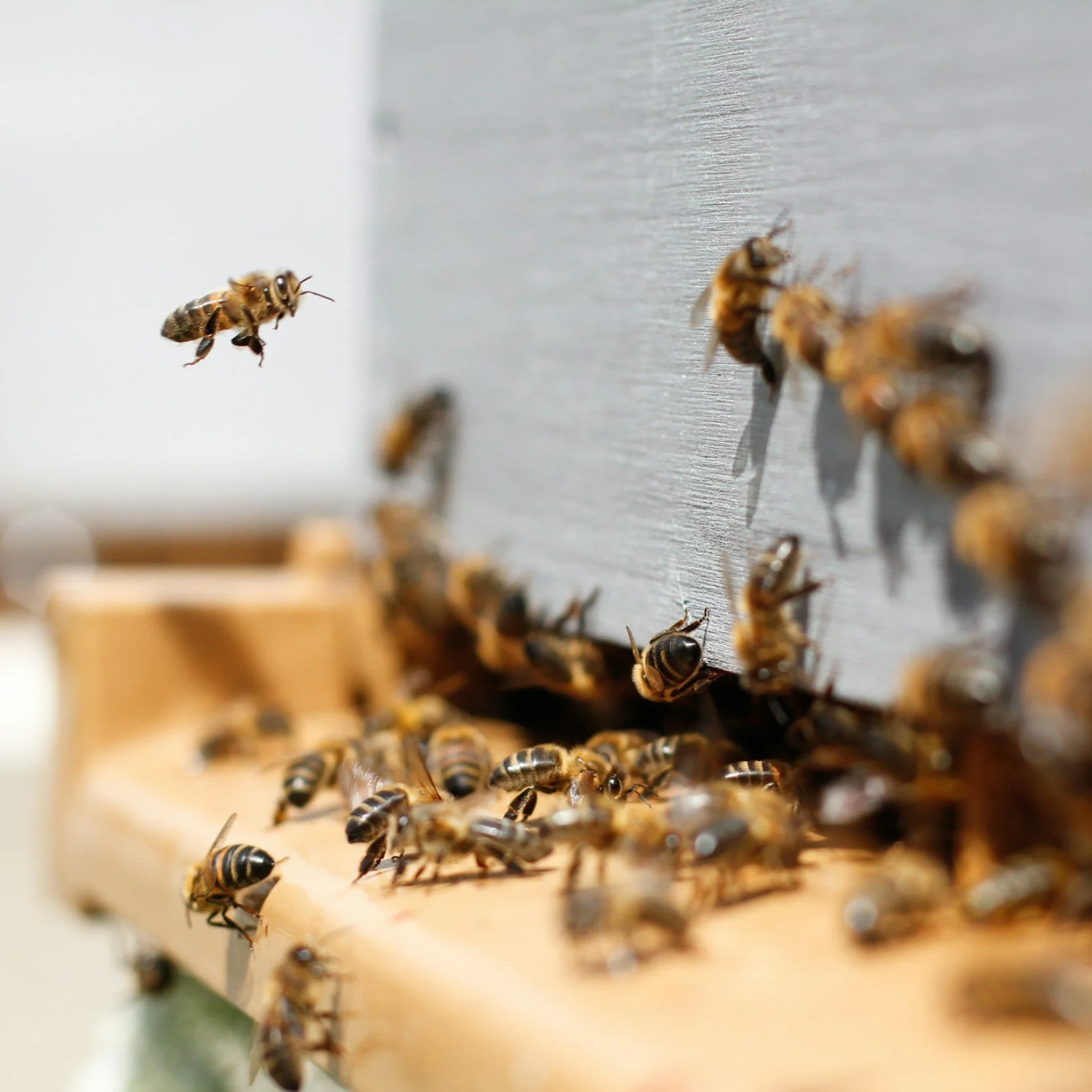
When bees choose the wrong address, it doesn’t mean they need to be eliminated.
That buzzing inside your wall is not a passing visit. In Phoenix, AZ, when honey bees move in, they are building a permanent home inside your structure, and every day you wait, there is more honeycomb expanding behind your drywall.
Most Phoenix, AZ, homeowners either ignore the problem hoping bees will leave on their own, or reach for a can of spray and make everything significantly worse. Neither approach works. Live bee relocation done by a trained professional is the only decision that protects your home, your family, and the colony at the same time.
Why Phoenix Homes Attract Honey Bee Colonies
Honey bees look for cavities that are sheltered, dark, and large enough to support a growing colony. In Phoenix, AZ, walls, soffits, chimneys, water meter boxes, and roof voids check every one of those requirements. Homes near desert landscaping or irrigated yards carry even higher pressure from scout bees actively searching for a new address each swarm season.
Arizona's warm climate means bee colonies stay active well beyond the spring swarm season most homeowners expect. Phoenix, AZ, swarm season peaks between March and May, but colonies can establish inside structures from late winter through early fall. Homeowners often do not notice activity until a colony has been building for weeks and the buzzing becomes impossible to ignore.
Monsoon season adds a layer of pressure that catches many Phoenix, AZ, homeowners completely off guard. Heavy July and August rainfall can destabilize existing colonies and trigger secondary swarms just when most people assume bee season has long since passed. Shifting monsoon temperatures send bees searching for new shelter at the least expected time of year.
The Africanized Honey Bee Reality in Arizona
Are the bees on my Phoenix property Africanized? It is the first question every Valley homeowner should ask, and the answer requires professional assessment rather than a visual guess. Africanized honey bees have dominated Arizona's feral bee population since the early 1990s and are nearly identical in appearance to European honey bees without laboratory testing.
The behavioral difference between the two species is significant and directly affects how removal must be handled. Africanized colonies defend their hive far more aggressively, mobilize hundreds of bees within seconds, and pursue perceived threats across a much larger radius than European bees. In Phoenix, AZ, treating any unidentified feral colony as potentially Africanized is the only reasonable and safe approach for everyone involved.
Attempting removal without knowing what species you are dealing with puts homeowners, neighbors, and pets at genuine risk. A professional technician assesses colony behavior, location, and response patterns before any work begins. That assessment shapes every decision about protective equipment, removal technique, and how the colony gets handled safely from start to finish.
What Happens When You Spray Instead of Relocate
Many Phoenix, AZ, homeowners reach for pesticide spray when they first spot bees near a wall vent or roofline. The instinct is understandable, but killing bees inside a wall without physically removing the comb creates a far larger and more expensive problem. Arizona heat melts abandoned honeycomb, leaking honey directly into wall cavities and soaking into framing and drywall within weeks.
That leaked honey ferments, grows mold, and attracts secondary pests including ants, roaches, and rodents drawn to the sugar source inside your wall. A single untreated comb can cause structural damage that costs significantly more to repair than professional removal would have. The consequences of spraying without extraction are consistently and seriously underestimated by Phoenix, AZ, homeowners who consider the problem solved once the bees stop flying.
Killing the colony without cleaning the cavity also leaves a pheromone scent marker inside the wall that actively attracts new swarms the following season. A space that housed bees once will house them again if it is not physically cleaned and sealed. Phoenix, AZ, homeowners who spray in spring and consider the job finished frequently find a new colony establishing in the exact same wall cavity twelve months later.
How Live Bee Relocation Actually Works
What does professional bee removal actually involve from start to finish? Live bee relocation is a multi-step process requiring the right equipment, full protective gear, and a genuine working knowledge of bee behavior. The first step is locating the full extent of the hive, which often requires opening a wall section, soffit panel, or structural cavity to access the comb and colony directly.
The technician removes comb and brood carefully, transferring them into a secure transport container along with as many bees as possible. Specialized low-pressure bee vacuums collect bees from the cavity without causing harm. Capturing the queen is the central priority because where she goes, the workers follow without resistance or further defensive behavior from the colony.
Once the colony is secured, the cavity gets cleaned of all residual comb and honey, treated to remove pheromone markers, and sealed against future entry. The relocated colony typically goes to a local beekeeper or conservation apiary in the Phoenix Valley, where it continues pollinating and contributing to the surrounding desert ecosystem productively and safely.
Why Timing Your Removal Decision Matters
When is the best time to deal with a bee swarm on your Phoenix property? The answer is always immediately. A swarm that has just arrived and has not yet begun building comb is significantly easier and less expensive to relocate than an established colony that has been building inside a wall for weeks or months.
Arizona's warm temperatures mean bees begin building comb quickly after selecting a cavity. A colony inside a wall for four to six weeks may have filled the entire space with comb, requiring far more extensive structural access and cleanup. The common homeowner instinct to wait and see if the bees leave on their own almost never results in departure once a queen has chosen the site.
Once workers begin building, the colony considers that location permanent. In Phoenix, AZ, the window between spotting a fresh swarm and that colony becoming fully established can close within a matter of days. Early contact with a professional is consistently the decision that saves time, money, and avoidable structural damage for homeowners across the Valley.
The Environmental Case for Relocation Over Extermination
Why does live bee relocation matter beyond solving a property problem? Honey bee populations across North America face sustained pressure from habitat loss, pesticide exposure, and colony collapse disorder. Each colony relocated rather than killed represents thousands of individual bees that continue pollinating crops, gardens, and desert plant species that depend on them for reproduction.
In Arizona, agriculture and native desert ecosystems both depend heavily on active pollinator populations. Saguaro cactus, palo verde, and desert wildflowers all benefit from honey bees moving through the Phoenix Valley. Choosing relocation over extermination connects what feels like a routine property decision to something with genuine and lasting environmental consequence.
Local beekeepers across the Phoenix Valley who receive relocated colonies gain productive hives contributing to honey production and regional crop pollination. Russell Pest Control has always prioritized live relocation over extermination because of exactly that consequence, and because a complete removal with full comb extraction simply produces a better, more permanent outcome for the property as well.
Protecting Your Property After the Bees Are Gone
What should Phoenix homeowners do after a bee colony is professionally removed? Removal is only part of the job. A thorough post-removal process addresses the specific conditions that made the property attractive in the first place. Sealing every entry point bees used, including gaps around utility penetrations, weep holes in brick, and deteriorated caulk around window frames, removes future accessibility for new swarms.
In Phoenix, AZ, older homes with stucco exteriors, block wall construction, or mature landscaping near the roofline carry higher bee pressure than newer builds because more gaps and cavities develop naturally over time. Scout bees from new swarms actively seek out those vulnerabilities each season. A post-removal inspection that identifies and seals those points reduces repeat colonization significantly and makes the entire outcome far more durable.
Yard conditions matter too. Standing water, overripe fruit from citrus trees common across Phoenix, AZ, properties, and dense flowering plants immediately adjacent to the structure all increase the likelihood that scout bees identify your home as a candidate in the next swarm season. Addressing those attractants after removal gives the professional work a much longer and more reliable shelf life.
When to Call Russell Pest Control for Bee Removal
How do you know when a bee situation has moved past the point of watching and waiting? The straightforward answer is the moment you hear consistent buzzing inside a wall, ceiling, or floor cavity. Bees audible from inside the structure have already selected a nesting site and are actively building comb. That is not a situation that resolves without professional intervention.
Visible swarm clusters on fencing, trees, or exterior walls warrant an immediate call in Phoenix, AZ, particularly during spring and monsoon season when Africanized colony activity runs highest. Swarms that appear calm can become defensive within seconds if disturbed, and species cannot be confirmed without trained on-site assessment. Waiting while a swarm settles is the decision most Phoenix, AZ, homeowners later regret.
Russell Pest Control has served homeowners across the Phoenix Valley since 1996 with licensed technicians trained in live honey bee relocation, Africanized bee assessment, and complete post-removal structural sealing. With no hidden fees, no contracts, and no start-up costs, every removal is built around your property and your situation. Contact Russell Pest Control today for a free estimate and a removal plan that protects both your home and the colony.
Russell Pest Control boasts a team of licensed, trained and trustworthy technicians for providing comprehensive residential pest control solutions in the Phoenix Valley. From silverfish control, ants control, and roach control to wasp control and honey bee removal, expect nothing but the best from our family-owned business. Trust our decades of local expertise to keep your home pest free. Call today.
